Counties and Ancestry
Am I Irish Enough? An Honest Answer
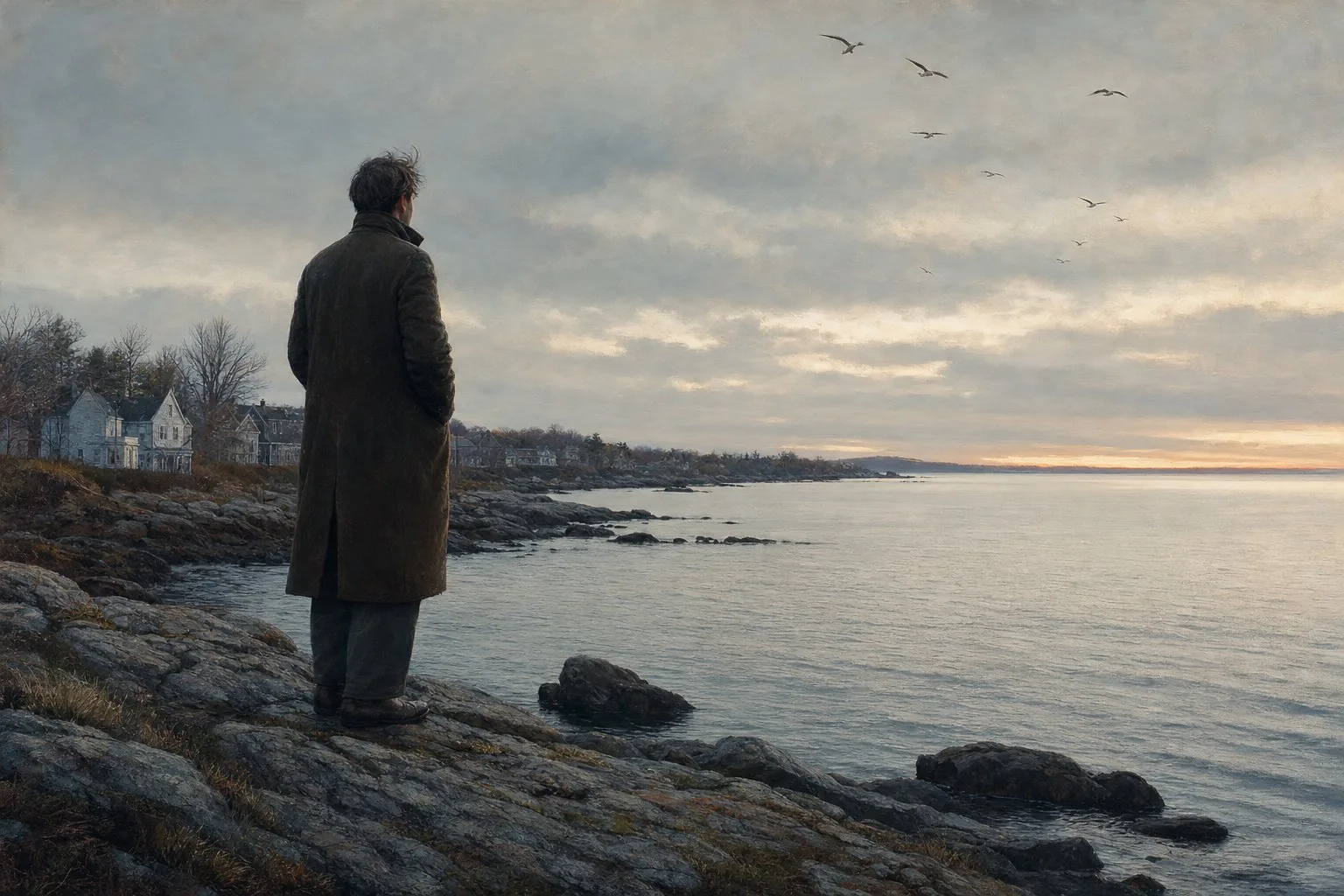
In October 1847, a young man from a smallholding in north Mayo boards a ship at Liverpool, bound for Boston. He is not leaving because Ireland has stopped mattering to him. He is leaving because he is a second son, the land will only ever go to his older brother, and there is no way for him to stay and eat. He tells the girl he loves that he will send for her the moment he has the fare. Then he goes, and the townland walks him partway down the road, the way every departure like his was walked that decade: with no date fixed for a return, and no way yet of knowing if there would be one.
That parting is the honest answer to the question underneath “am I Irish enough”. The connection so many people feel today, and cannot always prove with a document, was not lost through carelessness. It was cut, on purpose, by people who had no other choice, and by an ocean that made staying close to home a luxury most families could not afford even once, let alone every generation after.
If you are asking the question sincerely, you have already answered the hardest part of it. What follows is the history of why the rest, the county you cannot name, the fluent Irish you never had a chance to learn, was taken out of your hands before you were born.
The question underneath the question
Nobody typing “am I Irish enough” into a search bar is usually asking about paperwork. Most people asking already know the legal answer, or know it does not apply to them. What they are really asking is harder to say out loud. Do I have the right to feel this much about a place I may never have stood in? Is it embarrassing to care, when I cannot name a townland, do not speak a word of the language, and have never once sat in an Irish kitchen?
The anxiety usually has a specific trigger. A DNA result that came back lower than hoped for. A remark from someone Irish-born that landed harder than it was meant to. A family tree that runs three generations back into a wall of silence. A St Patrick’s Day that felt, the next morning, like it had belonged to somebody else.
None of that is a verdict. It is what a connection looks like after it survives a forced, badly documented, mostly silent separation lasting a century and a half. The strange thing is not how much got lost along the way. It is that anything came through at all.
Why the connection broke in the first place
Start with the arithmetic families like Patrick’s lived inside. A smallholding might feed one household, not four or five grown children and the households they would each go on to start. Custom and law both said the land passed whole to the eldest son, because dividing it further would eventually have starved everyone who depended on it. Every other child, most second and third sons, most daughters, had to leave and build a living somewhere the inheritance rules did not reach. Patrick’s own younger brother took a cheaper, shorter road to England rather than America. It was a quieter leaving than the transatlantic one, and it is remembered less, though the wrench of it was no smaller for the families who lived through it.
Patrick O’Donnell and the sweetheart he left waiting in Ballycastle, Mary Cafferky, are invented. The arithmetic that separated them was not. In the years after the potato failed, well over a million people left Ireland for good, and the numbers stayed high for a decade afterward. It was not a trickle of the restless or the adventurous. It was whole generations routed off the land they had grown up on, by a system that had already decided who got to stay before any of them were old enough to have an opinion about it.
The historian Kerby Miller spent years studying how that generation wrote and talked about its own departure, for a book called Emigrants and Exiles. His conclusion, still debated and still cited, is that most of them understood their own leaving not as a choice made in search of something better, but as an exile, forced by circumstances they had no say in. That is not a sentimental reading. It matches the arithmetic exactly. Nobody sends a child away for good over a mere difference of opinion about scenery.
That is not a story about people deciding to stop being Irish. It is a story about people losing access to the physical place, while the part of it that travels, a name, a face, a way of saying grace, a particular kind of longing, went with them whether anyone had planned for it to or not.
What distance did to memory
A letter home in 1847 took the better part of a month to cross the Atlantic, longer if the weather turned against the ship carrying it. News of a birth or a death could arrive weeks after the event it described was already old news at home. A visit back cost a working family years of wages that were usually already spoken for, sent home to help bring out the next brother or sister rather than saved toward a ticket to see the ones already gone. Most people who emigrated in that generation never set foot on Irish ground again. Not because Ireland had stopped mattering to them. Because a labourer’s wages did not usually stretch to a homecoming, not once, and certainly not twice.
The next generation grew up under a different pressure again. Irish arrivals in American cities met “No Irish Need Apply” in hiring notices and want ads, and a political movement, the Know-Nothings, built openly on hating them by name. For a family trying to get a foothold, a strong accent, or a child sent home to be minded by grandparents, could cost a wage the whole household depended on. Many people made the hard calculation to blend in fast, for their children’s sake, and quietly let go of whatever they had decided was no longer safe to keep. A great-grandchild today who cannot name a county is not usually looking at a failure of memory. Often, they are looking at a decision someone made a century ago in order to survive somewhere new.
And some of the record does not exist to be found, at any price or with any amount of patience. In 1922, in the opening days of the Civil War, an explosion at the Four Courts in Dublin destroyed the Public Record Office and, with it, most of the census returns taken before 1901. For a great many families researching their own history now, the paper trail does not stop because nobody kept it. It stops because it was destroyed, in a fight that had nothing to do with them.
Where the unkind phrase actually points
There is an unkind phrase for a narrow, specific target: the visitor who arrives for one long weekend in a shamrock costume, treats the island like a theme park, and leaves having learned nothing true about it. Plastic paddy. It was coined for costume, not for grief. It was never really aimed at a woman in Boston who still keeps her great-grandmother’s rosary beads, or a man in Melbourne who has spent fifteen years trying to trace the townland his family left and has not managed it yet.
From a distance, performance and longing can look alike for about as long as it takes to notice the difference between them. They are not the same thing. A costume gets put on for a weekend and taken off again afterward, no worse for the wear. What is left of a connection that was severed by force does not get taken off. It keeps asking questions, for decades if it has to, because asking is the one thing distance never managed to take away from it.
So what actually makes someone Irish enough
Nobody is issued a licence to belong to a place. Irish identity was never a test with a passing score, not for the people who stayed and not for the people who were made to leave. It runs on an older logic than a test: a name carried forward, a story handed down half finished, a pull toward a place that outlasted every specific fact that would once have explained it.
The not-knowing is not a disqualification. It is evidence. If the connection had never mattered to anyone along the way, nobody would have bothered keeping enough of it alive to make you wonder about the rest of it now. You did not fail to inherit the whole story. You inherited what survived a century and a half of forced distance, and here you are, still asking after it. That is not “not enough”. That is a connection doing the only thing it has ever known how to do: reaching back across whatever put the gap there in the first place.