THE JOURNAL
The Journal
The history behind each Book, the counties families left, the craft of a letter worth keeping, and how to give one that means something.
Gift and Giving
How to Ask Your Parent About the Family Story
Vague questions get rehearsed answers. Here are the specific ones that work, how to record them, and what to ask when a parent goes quiet.
The Retirement Gift for Tracing Irish Roots
Why retirement is the moment Irish ancestry finally gets attention, and what makes a heritage gift worth returning to rather than shelving.
An Irish Sympathy Gift With Meaning
Irish sympathy gift ideas for the loss that leaves a family history search unfinished, and what to give when a tree is not the right answer.
Subscription Boxes for Grandparents, Honestly Compared
An honest comparison of GrandBox, Senior Joy Box and Letters to Grandma, including exactly where each one beats a story from Ireland.
Gifts for Elderly Parents Who Have Everything
Screen-free and experience-gift lists land on the same shape by accident. The honest version, for a parent who is downsizing, not collecting.
Gifts for an Irish Dad Who Has Everything
Signet rings and whiskey glasses only go so far. What an Irish dad who has everything really wants is time, attention and a slice of real history.
Christmas Gifts for an Irish Mother or Grandmother
Skip the claddagh ring and the tea towel. What to give an Irish mother or grandmother whose Ireland is a memory, not a souvenir shelf.
DNA kit vs letter subscription gift: which one lasts?
AncestryDNA and 23andMe changed in 2025 and 2026. A DNA kit vs letter subscription gift comparison, with database sizes and discounts sourced.
Gifts for an Irish Grandparent Who Misses Home
The best gift for an Irish grandparent who misses home is paper, not an object: something that keeps arriving, county over country, posted from Ireland.
The gift that prompts parents to share stories
A dated, specific cue opens a memory an open question cannot, with a printable list of family history questions for parents.
Irish heritage gift box alternative: letters instead of a hamper
An Irish heritage gift box alternative: what a hamper costs to store and ship, and what changes when letters replace it.
Is an Irish Letter Subscription Worth It?
A letter subscription review with real prices: how it compares with other history-by-post services and the average gift, and who it suits.
Meaningful gift for elderly Irish mother: what actually reaches her
Not another object to find a home for. What actually reaches an Irish mother who says she wants nothing, and why arrivals beat objects every time.
Mother's Day Gifts for an Irish Mother Far From Home
For the mother who misses Ireland. A hand-written letter posted from home each month, starting with Mother's Day. Ships from Ireland.
A St Patrick's Day Gift for Irish-American Parents
Skip the shamrock mug. Give a letter from home that lands all year, not just on 17 March. A St Patrick's Day gift with meaning.
70th birthday gift Irish mother: what to give at 70, 80 or 90
What actually works as a 70th birthday gift for an Irish mother, and why the same approach carries through to an 80th or 90th birthday too.
Emigration History
Irish Christmas Traditions Families Still Follow
The candle in the window, the Wren Boys on St Stephen's Day, Nollaig na mBan on 6 January: real Irish Christmas customs, and what they meant.
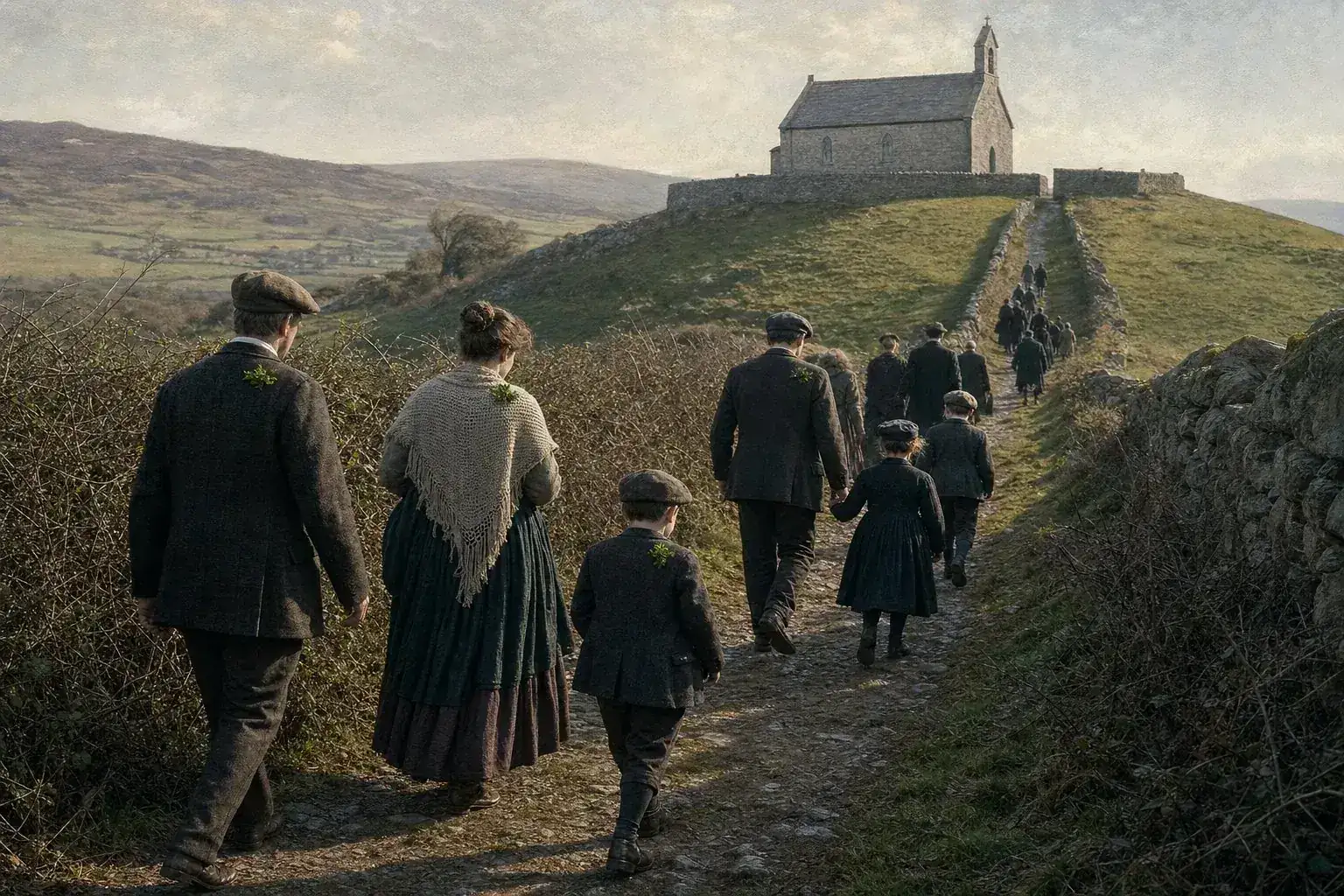
What Is Actually Irish About St Patrick's Day
The parade is American, green replaced blue, and the pubs were shut by law. What is genuinely Irish about 17 March.
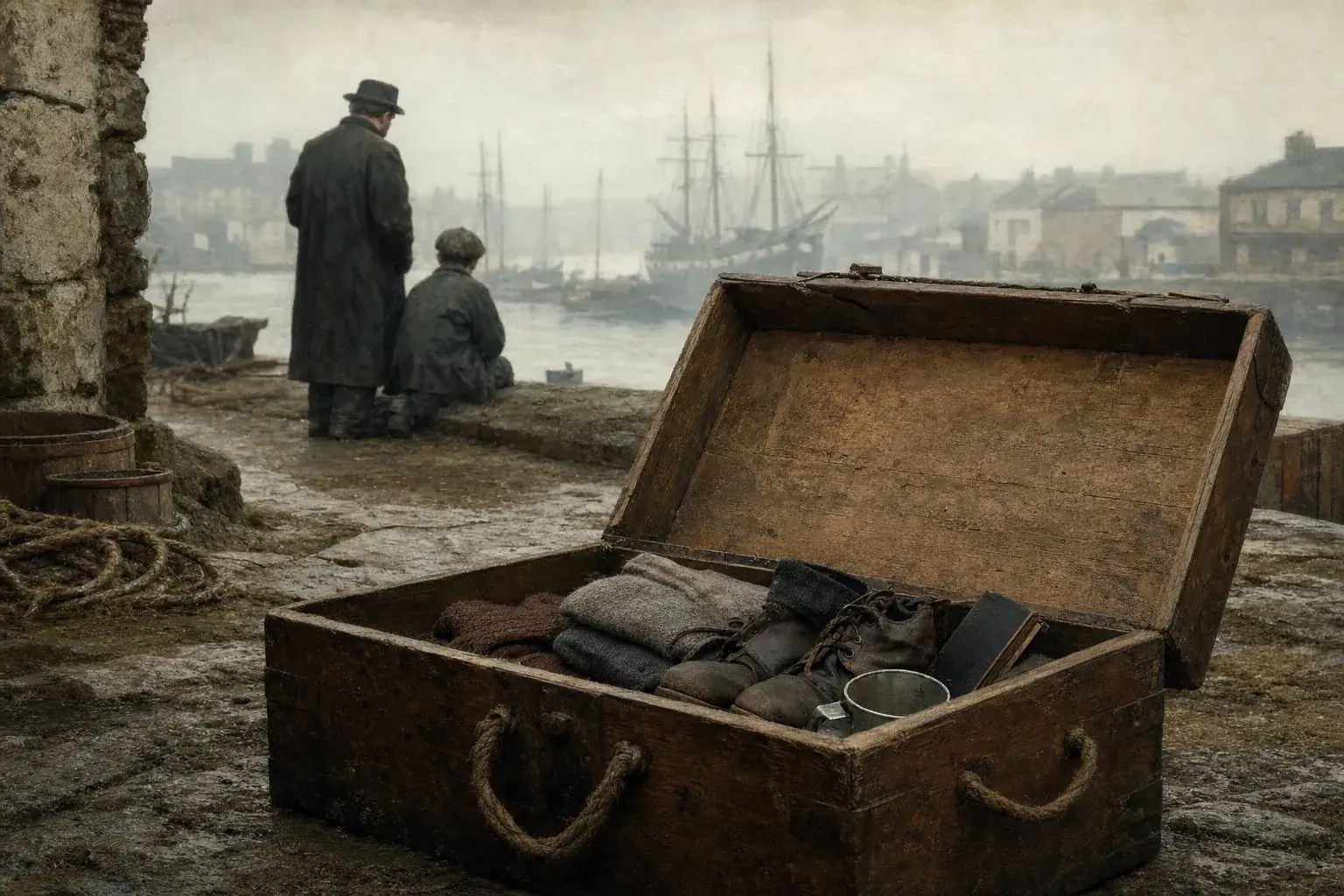
What the Crossing Actually Cost
The fare, the food, the weeks at sea. What an Atlantic steerage crossing actually cost, and what a passenger carried to survive it.
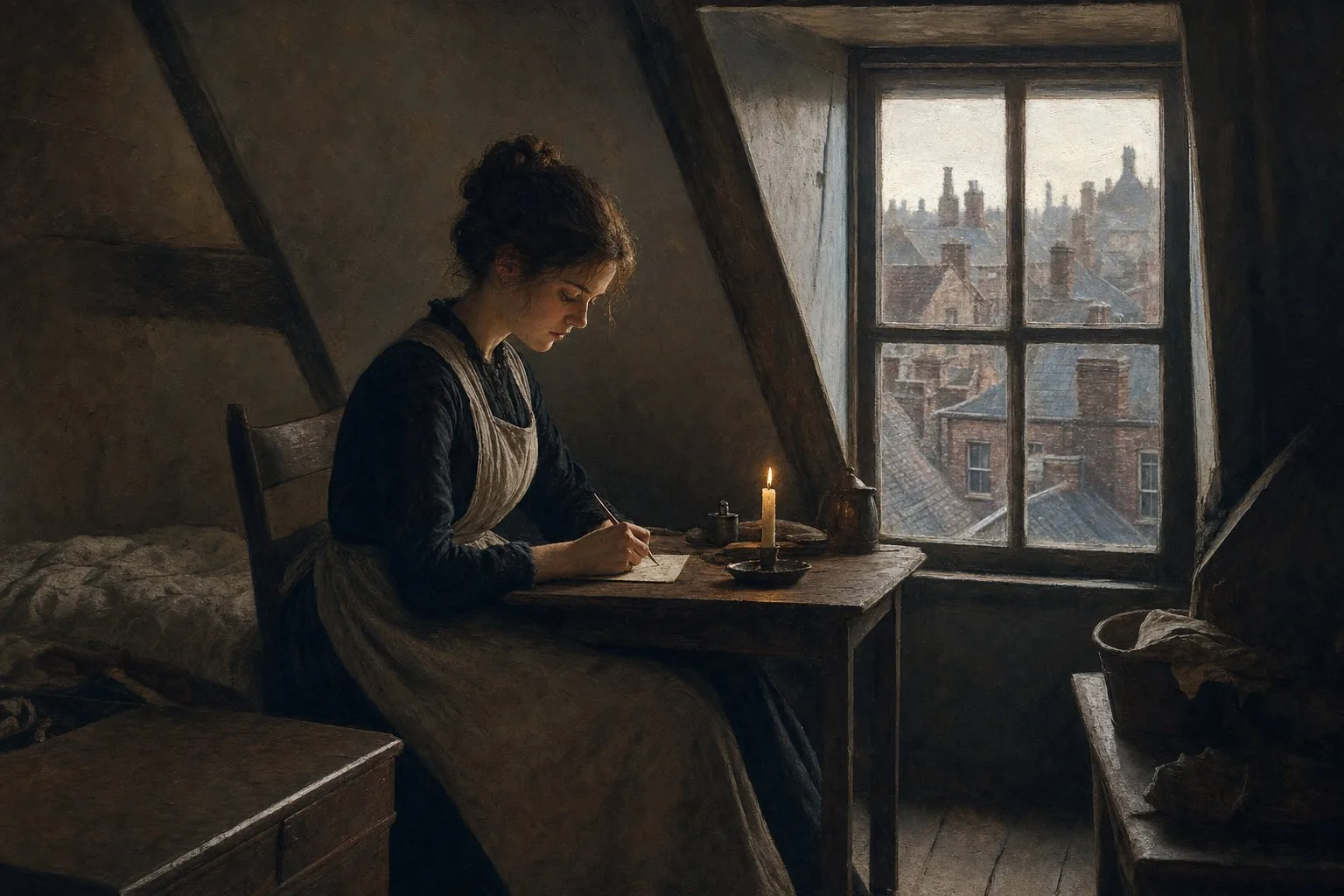
The Irish Bridget: The Women Who Built Irish America
Irish domestic servants emigrated alone in numbers no other group matched. Their wages, not their status, built Irish America.
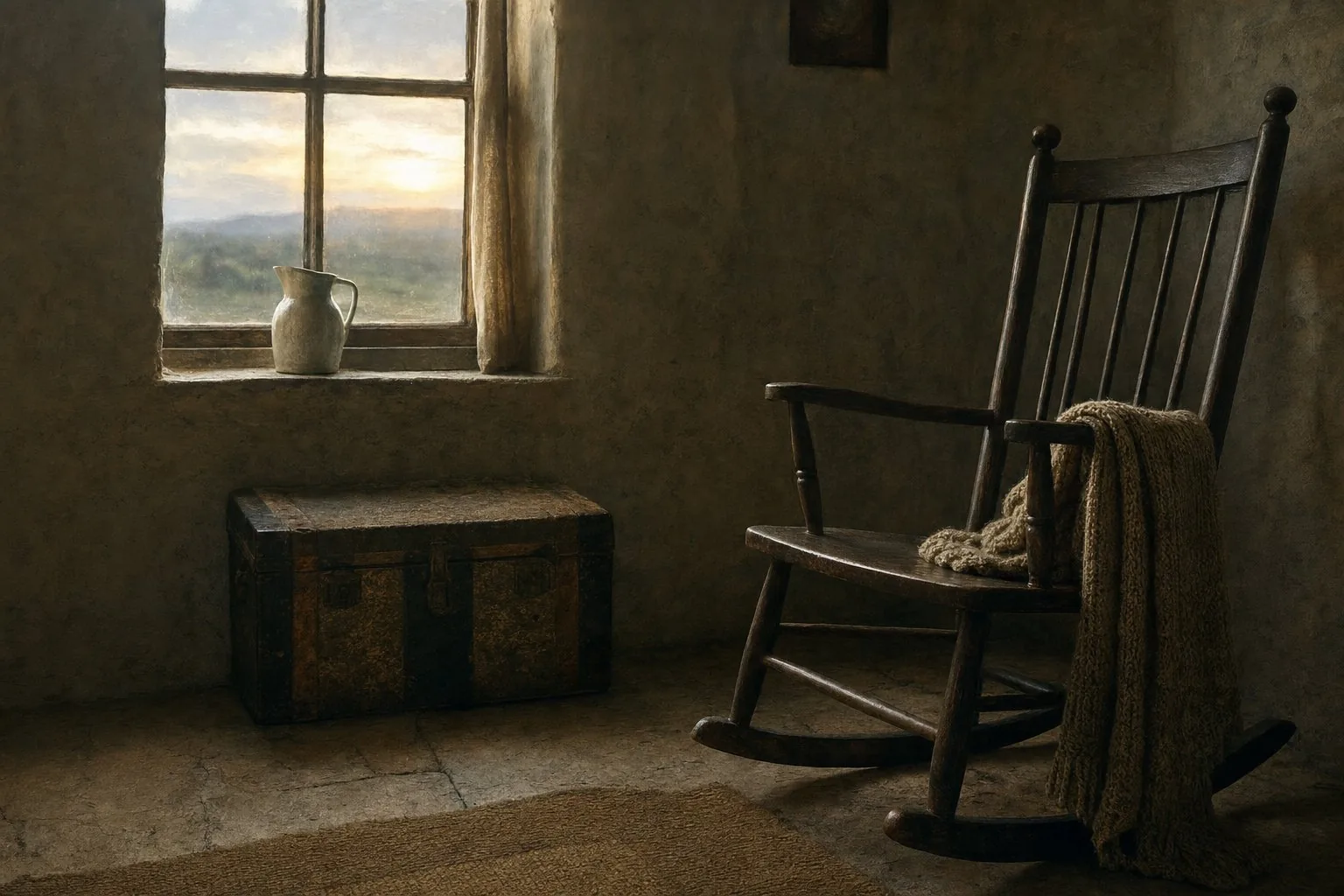
Why Your Grandmother Never Talked About Ireland
Shame, a farewell ritual that mourned the living, pressure to assimilate and the cost of letters: why the emigrant generation went quiet.
American letters Irish emigrants: the envelope that held families together
How Irish emigrants and their families used American letters to send money, news and passage tickets across the Atlantic between 1847 and 1857.
Castle Garden vs Ellis Island: Where Ancestors Landed
Most Irish who came before 1892 never saw Ellis Island. Where famine-era emigrants actually arrived in New York, and how to tell.
The Coffin Ships: Crossing the Atlantic in Black '47
What the famine-era Atlantic crossing was really like, and why the ships earned their name. Handled with the gravity it is owed.
The Easter Rising and Irish America: Watching 1916
How Irish America funded, followed and reacted to the 1916 Rising, and why the executions changed diaspora feeling overnight.
Emigrant remittances Ireland history and prepaid passage tickets
How Irish emigrants in America funded prepaid passage tickets and sent money home, and what the surviving bank and government record actually shows.
The GAA and the Diaspora: Irish Games Cross the Atlantic
Founded in 1884, the GAA followed the emigrants to America and kept a scattered people together. How Irish games crossed the sea.
The Irish Brigade: Emigrants in the American Civil War
Why tens of thousands of Irish emigrants fought for the Union, and how the war reached families back home in the west of Ireland.
Irish Neutrality and "the Emergency" in World War Two
Why Ireland stayed neutral in the Second World War, what "the Emergency" meant at home, and how emigrant sons still went to fight.
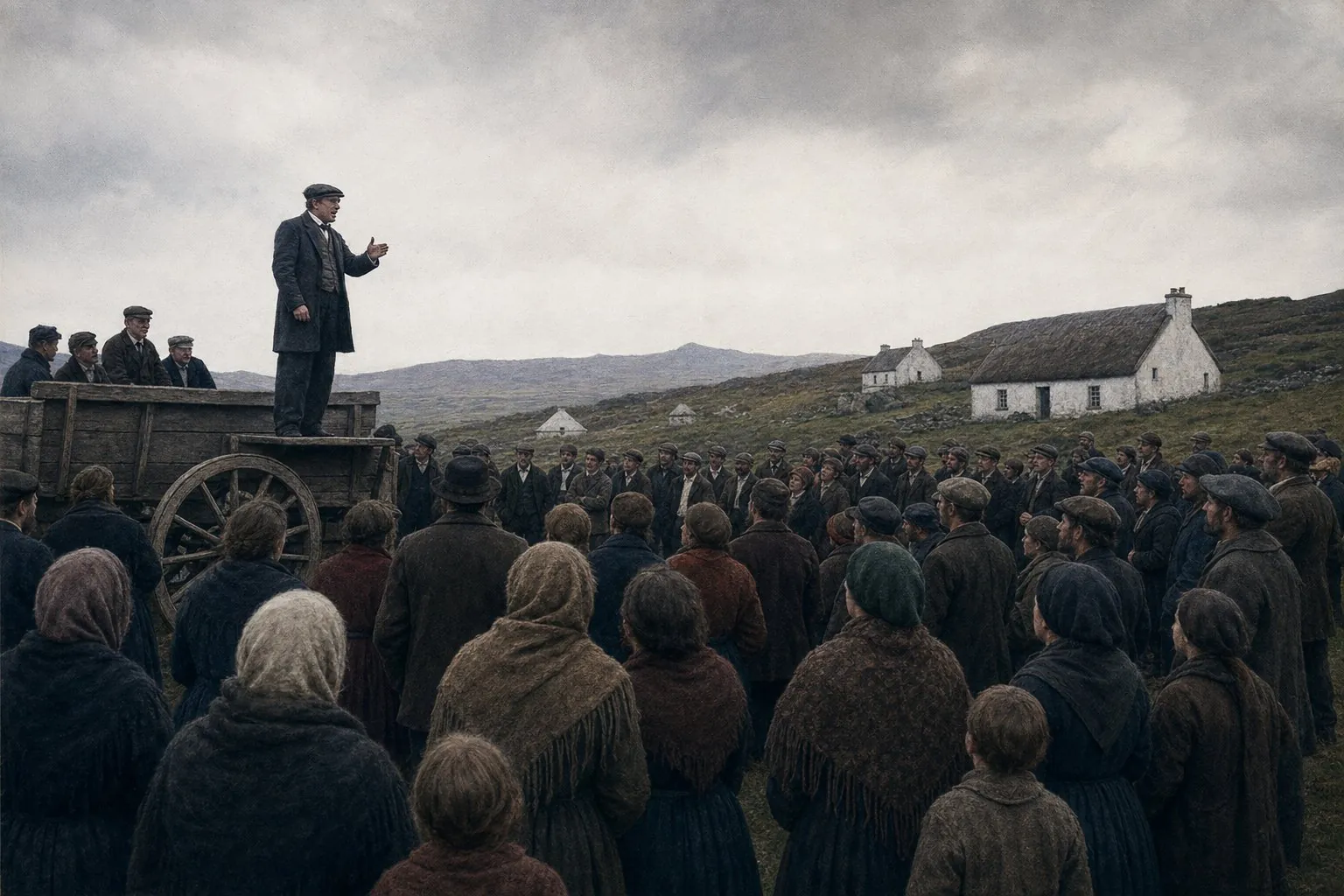
The Land War: How Mayo Started the Fight for the Land
The Land League began in County Mayo in 1879 and changed who owned Ireland. Michael Davitt, Irishtown and the fight for tenant rights.
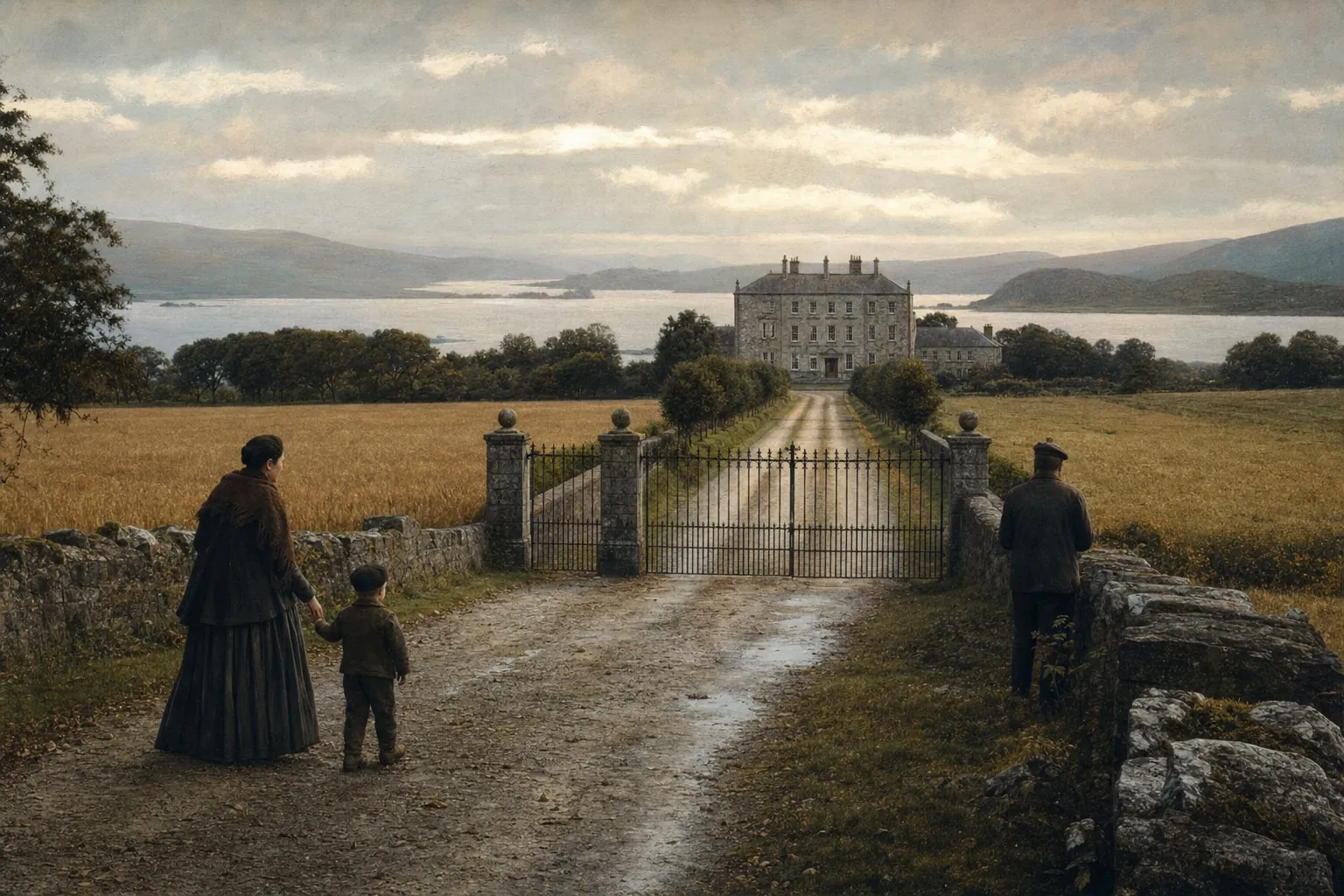
Where the Word "Boycott" Comes From: Lough Mask, Mayo
One County Mayo land agent gave his name to the English language in 1880. The true story of Captain Boycott and Lough Mask.
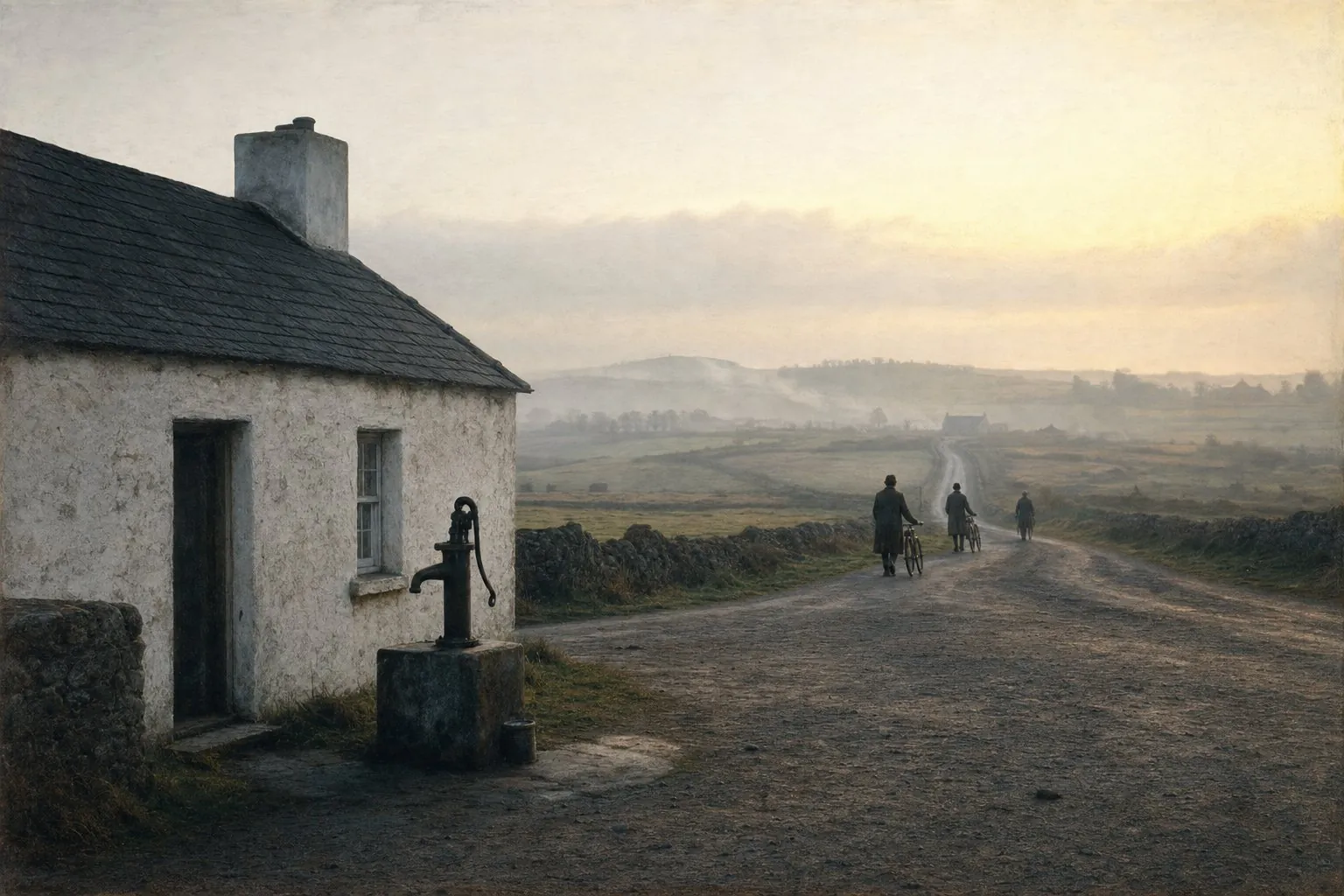
The Irish War of Independence: A Plain Timeline
From the first Dail in 1919 to the Treaty and Civil War, a clear year-by-year timeline of how the Irish Free State was born.
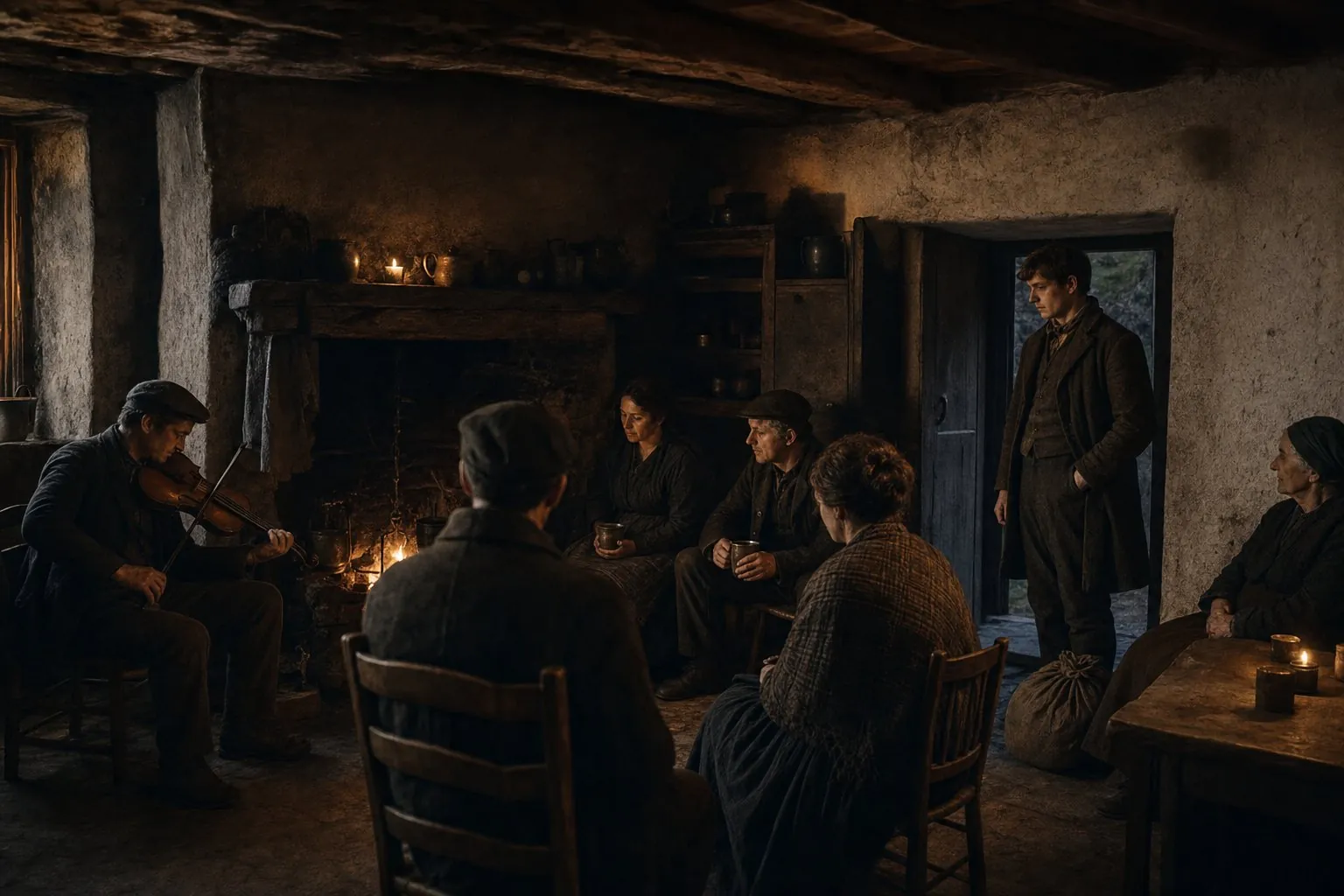
What Was an American Wake? The Irish Farewell
What an American wake was: the all-night send-off rural Ireland held for emigrants it never expected to see again, keening included.
Irish-speaking Mayo and the question of literacy
Irish speaking Mayo literacy 1840s: what the 1851 census, hedge schools and national schools reveal about a county caught between two languages.
Farming and potato dependence in pre-famine Mayo
Potato dependence in pre-famine Ireland peaked in Mayo, where subdivided holdings, conacre lettings, and the lumper variety left no margin for failure.
A rural Irish house in the 1840s: daily life inside a north Mayo cabin
What a rural Irish house looked like in the 1840s: the one-room cabin, the byre shared with cattle, and what a Mayo family actually ate.
Ballycastle, County Mayo in the 1840s
Ballycastle, County Mayo in the 1840s: fishing and kelp economy, the parishes of Kilbride and Doonfeeny, and how the famine reshaped Tirawley barony.
Assisted emigration: workhouse and landlord passage
Assisted emigration landlord schemes and Poor Law unions moved Irish tenants and paupers off the land after 1847, with real numbers from Mayo's workhouses.
Women, land and survival in famine Ireland
How women held, lost and fought for land during the Great Famine, from Devon Commission testimony to the widows the Poor Law almost forgot.
How a famine family raised the passage money
How Irish families raised passage money during the famine: selling stock, gale day rent, tenant right, and landlord or workhouse schemes.
Relief works and the famine roads of Mayo
How Ireland's Board of Works turned famine relief into road building across Mayo, and what the wage books and Quaker reports still show.
The Distress Papers: famine Ireland in its own words
What the Distress Papers are: the Relief Commission letters and petitions at the National Archives of Ireland, and what they do and do not tell us.
Famine relief soup kitchens Ireland: the 1847 Soup Kitchen Act
How the Temporary Relief Act of 1847 fed millions through Ireland's soup kitchens, from a Dublin model kitchen to Quaker relief in Mayo.
How historians use emigrant letters as evidence
How historians use emigrant letters as evidence, from Kerby Miller's archive to the survivorship bias built into what got kept.
Women's Irish emigrant letters in the archival record
Women's Irish emigrant letters were often dictated, sent home with wages, and later collected in archives such as Fitzpatrick's Oceans of Consolation.
Why Irish emigrants stopped writing home
Why Irish emigrants stopped writing home: cost, lost addresses, shame, and letters that vanished before they ever arrived, 1847 to 1857.
How transatlantic postage rates worked in the 1850s
Transatlantic postage rates in the 1850s: the 1848 treaty that fixed the price, prepaid versus unpaid mail, and the packet contracts that carried it.
Dictated letters: who wrote letters for illiterate Irish emigrants
Who wrote letters for illiterate Irish emigrants: family scribes, priests, and schoolmasters, and what Ireland's 1841 census reveals about literacy.
Irish emigrant letters read aloud: why families gathered
Irish emigrant letters read aloud filled Irish kitchens with news from America. Here is why nineteenth-century families never read a letter alone.
How news travelled from America to Ireland: Boston to Mayo
How news travelled from America to Ireland in the 1850s: a Boston paper, a provincial press and a chain of readers that carried word into Mayo.
How Famine migration changed Boston
How Famine migration changed Boston: population figures, Deer Island, the 1854 Know-Nothing backlash, and the labour market arrivals entered, footnoted.
Catholic parishes and mutual aid: how Boston's Irish survived
Irish Catholic parishes and mutual aid societies carried Boston's famine immigrants through hunger, disease, and Know Nothing hostility, 1847 to 1857.
Boston docks Irish labourers: hiring on the waterfront
How Irish labourers found daily work on Boston's docks in the 1850s: hiring, day rates, and a trade shaped by ice and the shipping season.
Where Irish immigrants lived in Boston: Fort Hill and the North End
Where Irish immigrants lived in Boston, 1847-1857: the tenements of Fort Hill, the North End's crowded courts, and the waterfront blocks of Broad Street.
Irish immigrants arriving Boston 1847
Irish immigrants arriving Boston 1847 met a hastily built quarantine hospital on Deer Island, port fees, sworn passenger lists, and a wary city.
The Panic of 1857 and Irish workers in Boston
How the Panic of 1857 hit Boston's Irish day labourers and domestic servants first, and what a New York immigrant bank's ledgers reveal.
Irish migration to Britain famine years: the other emigration
Irish migration to Britain during the famine sent hundreds of thousands to Liverpool, Glasgow, and English harvest fields, not just across the Atlantic.
The Know-Nothing party and Irish Catholics in Massachusetts
How the Know-Nothing party targeted Irish Catholics in 1850s Massachusetts, from convent raids to deportation orders and a two-year voting delay.
Photography and Irish emigrants in the 1850s
How photography reached Irish emigrants in the 1850s: daguerreotype and ambrotype costs, durable tintypes, and what a likeness cost in Boston and Dublin.
Made matches: land, marriage and second sons in Ireland
Made matches Ireland marriage: how post-Famine inheritance rules tied a wedding to a farm's fate and left younger sons with little choice but to leave.
What the 1851 census Irish emigration record measured
The 1851 census of Ireland recorded a population fall of 1.6 million in a decade. Here is what the count actually measured, county by county.
No Irish need apply Boston: what the record shows
No Irish need apply Boston: what the 1850 census and the contested newspaper advertisements reveal about Irish labour and prejudice.
Cholera in Boston's Irish tenements, 1849
In summer 1849, cholera killed more than 500 Irish immigrants in Boston's Fort Hill tenements, the outbreak that forced the city to inspect its slums.
Why the potato blight returned in 1848
Why the potato blight returned in 1848 after a hopeful 1847: the fungus, the Gregory Clause evictions, and relief funds run dry.
Ballina workhouse famine: Black '47 in Mayo
What the Ballina workhouse recorded in Black '47: overcrowding, debt and 1,138 deaths, and what it shows about north Mayo's worst famine year.
Counties and Ancestry
Cobh, Derry or Galway: The Port Your Family Left From
Cobh, Derry, Galway, Liverpool, Sligo and Limerick: which counties left from which Irish port, and why the port on a record can mislead.
County Limerick Emigration History
Limerick city and County Limerick are two different emigration stories: a port city, a rich Golden Vale, and a poorer west. History, era by era.
County Roscommon Emigration History
Roscommon lost close to a third of its people to the Famine, and the Strokestown evictions became one of its best documented assisted emigration schemes.
County Donegal Emigration History
Donegal sent people to Scotland every year, not just to America once. The emigration history behind the letters of Yours, From Ireland.
County Sligo Emigration History
County Sligo sent emigrant ships straight to Quebec through the Famine. The real history behind a severe famine county and its American diaspora.
What Your Irish Surname Says About Your County
Irish surname meaning often points straight to a county of origin. The real patterns genealogists trust, and why none of them are proof.
Your DNA Says Connacht. What Does That Mean?
DNA results naming a region like Connacht are estimates, not addresses. What they can honestly tell you, and what they cannot.

Am I Irish Enough? An Honest Answer
An honest answer to 'am I Irish enough': the connection is real, and history explains why it can feel impossible to prove.
After the DNA Test: Turn Your Irish County Into a Story
Your results found the county. Here is how to turn a coloured percentage into a story you can hold, and share with the family.
County Clare Emigration: Leaving the West of Ireland
The evictions and clearances that emptied Clare, and where its emigrants went. County Clare's emigration history in full.
County Cork Emigration: From Queenstown to America
Cobh, once Queenstown, was the last sight of Ireland for millions. County Cork's emigration story and the port that shipped it.
County Galway's Emigrants and the Road to Boston
Galway and Connemara families made Boston a second home. The county's long emigration history and its deep Massachusetts ties.
County Mayo emigration history: the Great Emigration
County Mayo's population fell by close to a third between 1841 and 1851. The emigration history behind that collapse, and where the county's people went.
County Kerry and the Emigrant Trail to America
From the Blaskets to Springfield, Kerry sent its people across the Atlantic for generations. The county's emigration history.
County Tipperary and a Century of Leaving
From the Golden Vale to the cities of America, Tipperary's people left over generations. The county's emigration history.
How to Find Which County in Ireland Your Family Left
A practical guide to pinning down your ancestral county in Ireland, from surnames and records to the free tools that actually help.
What Irish Emigration Records Can and Can't Tell You
Passenger lists and manifests hold more gaps than families expect. What emigration records reveal, what they miss, and why.
Tracing Irish Roots: Ancestry, RootsIreland or Parish Records?
Ancestry, RootsIreland or the free parish registers? What each Irish genealogy source covers, and where to start your search.
Genealogy sources for north Mayo families
Where north Mayo genealogy sources sit: Killala diocesan registers, Ballina Union workhouse records, Griffith's Valuation for Tirawley, and their gaps.
What is a townland in Ireland, and why it still matters
What is a townland in Ireland? A working guide to its smallest land division, how it differs from a parish, and why Griffith's Valuation still runs on it.
Letters and the Craft
What "Shipped From Ireland" Actually Means
Most gift shops that say Ireland ship from a US warehouse instead. Here is the paper trail that separates a real Irish postmark from a decorated box.
Irish Postmarks and Stamps, 1847-1946
Ireland used British stamps until 1922. The honest history of Irish postmarks, mail coaches, the Penny Post, and a genuine period letter.
The Real Emigrant Letters That Survive Today
The real Irish emigrant letters archive: where letters survive, the historians who study them, and how our O'Donnell family was researched from it.
Letter Subscription Boxes Compared
History By Mail, Letterjoy and The Flower Letters, weighed honestly against a letter subscription built as a two-way correspondence.
Letters That Never Arrived
Shipwrecks, wartime censorship and plain bad luck: the real history of why so many nineteenth-century letters between Ireland and Boston never arrived.
Are the letters real or fiction? The truth behind the letters
Are the letters real or fiction? The family is invented, but the famine, emigration and the decade around it are checked against archival sources.
How Much Does a Historical Letter Subscription Cost?
What historical letter subscriptions cost across the category, why overseas postage has always cost more, and what the price actually covers.
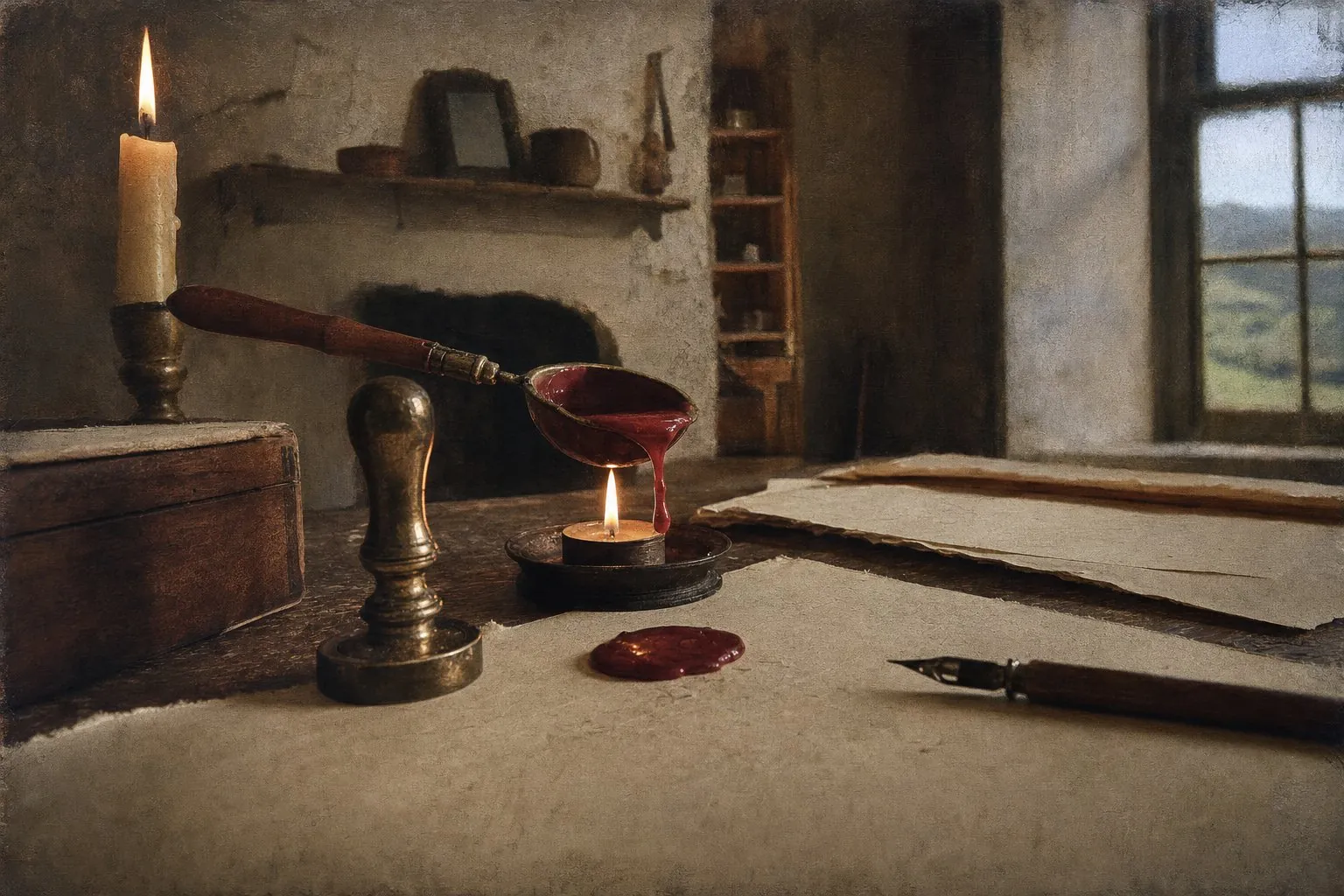
Aged Paper and Wax Seals: How the Letters Are Made
From aged paper to the wax seal, how each letter is made to feel like a real letter home. The craft behind it.
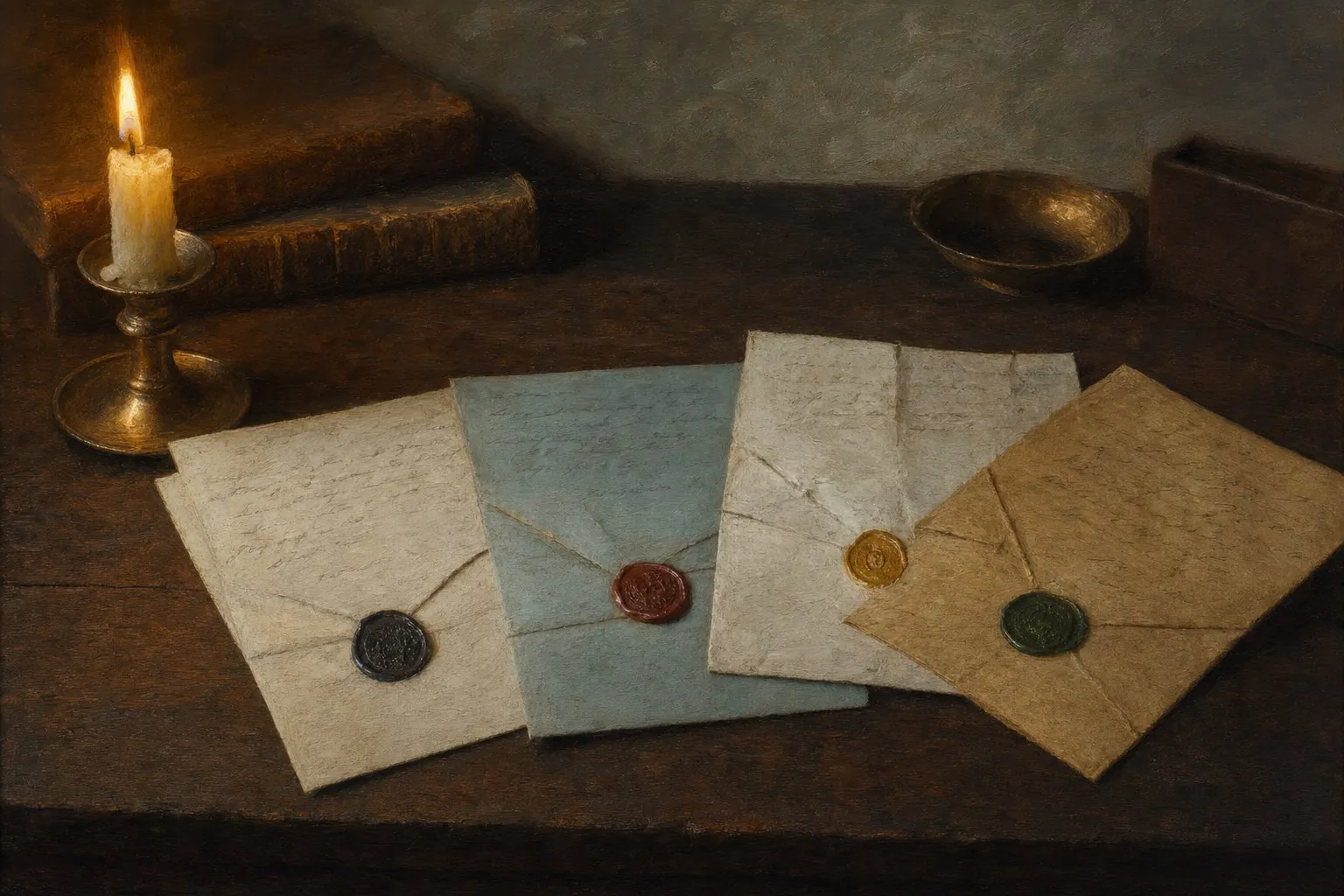
Irish letter subscription comparison: what actually differs
An Irish letter subscription comparison of the real archive services, the story services, and what changes once a letter is actually posted from Ireland.
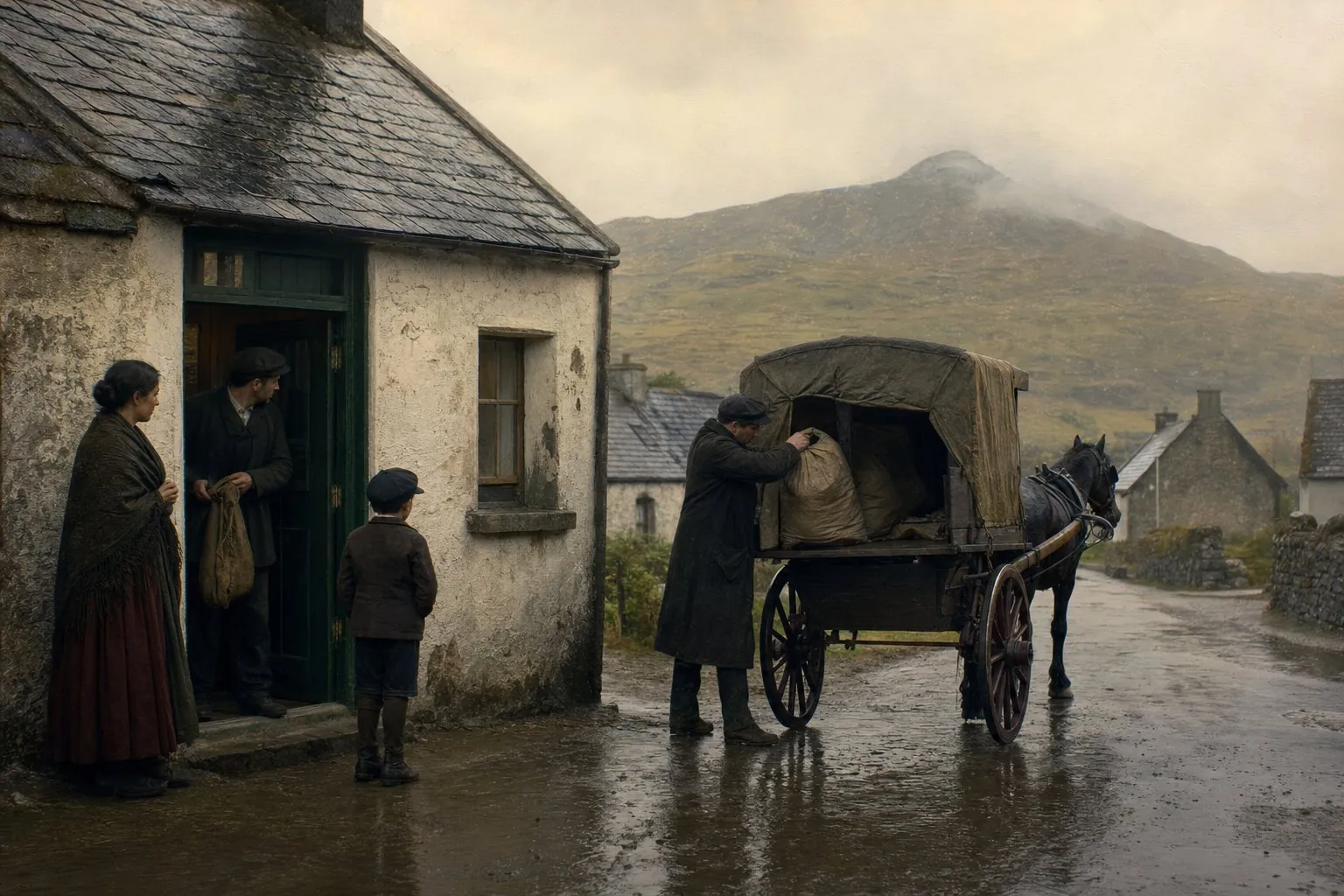
The Real Irish Postmark: Why Where a Letter Is Posted Matters
Every letter is posted from Ireland with a genuine Irish postmark. Why that stamp of place is the heart of a letter from home.
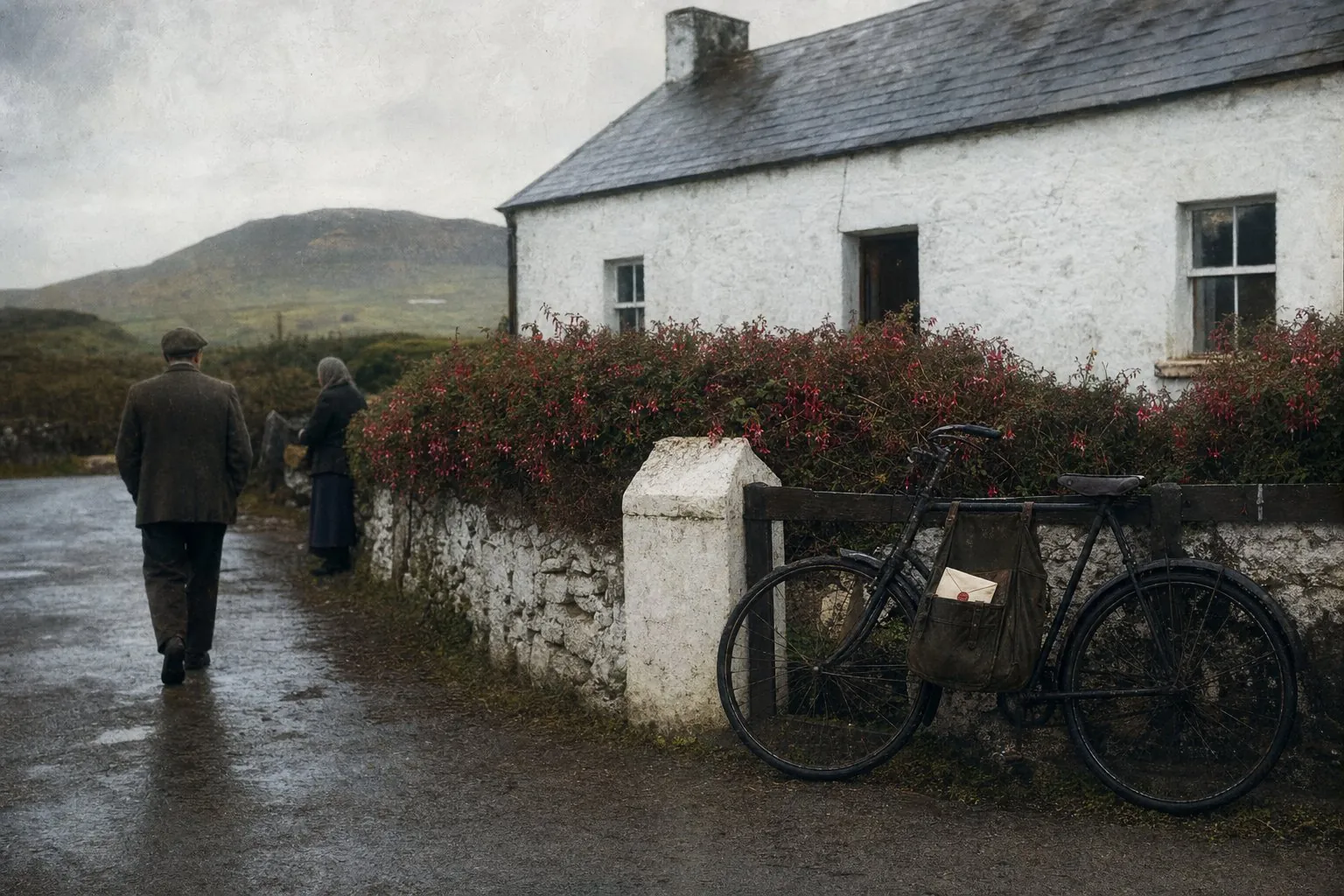
What Is a Letter Subscription? The Story-by-Mail Format
What a letter subscription actually is, the two kinds on the market, and where the story-by-mail format comes from. A plain answer, not a pitch.
Why paper only letter subscription mail matters
Why a paper only letter subscription skips keepsakes: customs law taxes any object in the envelope, and emigrant letters mostly travelled as paper alone.
History By Mail alternatives worth knowing about
History By Mail alternatives compared: Letterjoy, free digitised Irish archives, and where a reproduced document beats a written story.
Flower Letters alternatives: five honest options
Five honest alternatives to The Flower Letters: real document archives, a solvable mystery, a younger reader option, and one continuous 1847 story.
The best historical letter subscriptions, compared
The best historical letter subscriptions split into archive reproductions and researched fiction. Here is how to tell which one you are buying.
The best letter subscriptions for adults
The best letter subscriptions for adults, compared fairly: real documents, solvable mysteries, genre romance, and one continuous story.
How to read 19th century handwriting from Ireland
A guide to reading 19th century Irish handwriting: the scripts, letter forms and abbreviations found in parish registers, censuses and letters home.