Letters and the Craft
Aged Paper and Wax Seals: How the Letters Are Made
Most of what comes through the letterbox is built to be thrown away. Flyers, statements, the pre-approved this and the final-notice that, all of it printed fast and cheap to be glanced at and binned. You know the feel of it before you have read a word: thin paper, a plastic window, your name spelled by a machine. It asks nothing of you and it earns nothing back.
This is how the aged paper letters are made instead: every step chosen to do the opposite of junk mail. The object should make someone stop in the hall, sit down, and give the letter a few minutes it did not expect to give. A letter you keep is a different thing from the first touch, and it is meant to be.
Nothing here is a gimmick. Every choice below has a plain reason behind it, and most of those reasons come straight from the way real letters home were made and read a hundred years ago.
How the aged paper is chosen and made
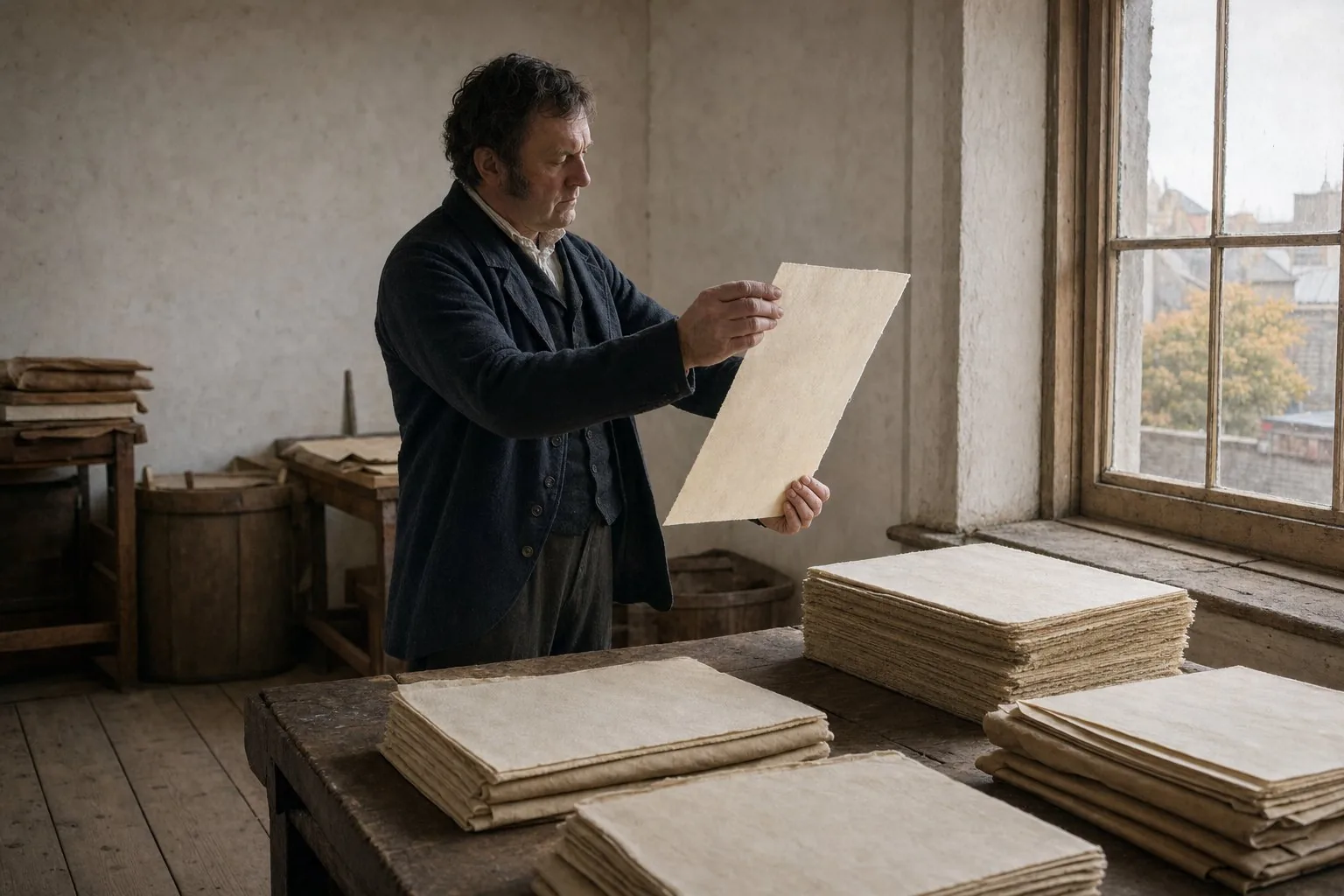
Start with the paper, because it is the first thing the hand reports back. It is aged, a warm off-white rather than the blue-white of a printer tray, with enough weight that it does not flop or tear at the fold. This is not a costume. A letter that has been folded into an envelope, carried, posted and opened should feel as though it has had a small life, because it has.
The script is sized to be read by older eyes. That is a practical decision, not a decorative one. A great many of these letters are read by people in their seventies and eighties, often the emigrant or the emigrant’s child, and a letter that has to be held at arm’s length or squinted at is a letter that gets set aside. So the hand is generous, the lines are spaced, and the ink is dark enough to carry.
Written and addressed by hand
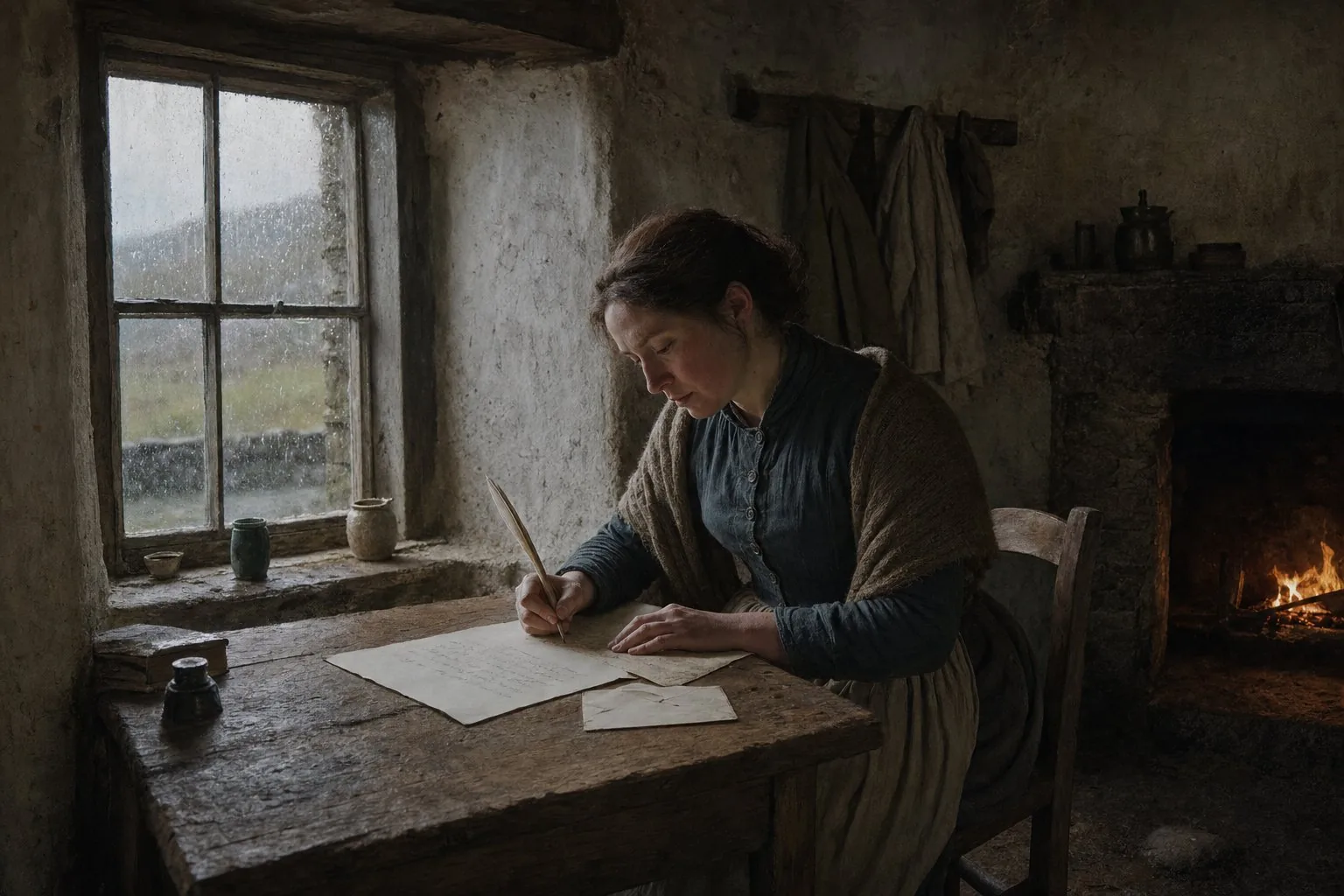
The letter is written by hand, and the envelope is addressed by hand to the person who will open it. This is the slow part, and it is the part no machine can fake, however well it has learned to imitate handwriting, because the point is not the look of the script but the fact of it: a real person formed these words for a real reader.
Folded in with each letter is a short note in plain, present-day language. It sets the scene for the month, says where the family stands in the year, and quietly explains anything a modern reader might not catch: a word, a custom, an event in the news of 1863 or 1916. Nothing in the story is talked down, and nothing is left to trip you up either. The letters are written and sealed by hand here in the west of Ireland, and that note is how we make sure the history lands as clearly as the feeling.
The hand is Maebh Collins, a lover of genealogy and Irish history, who researches the history, writes the letters and seals them herself.
The wax seal, and why it is the last thing done
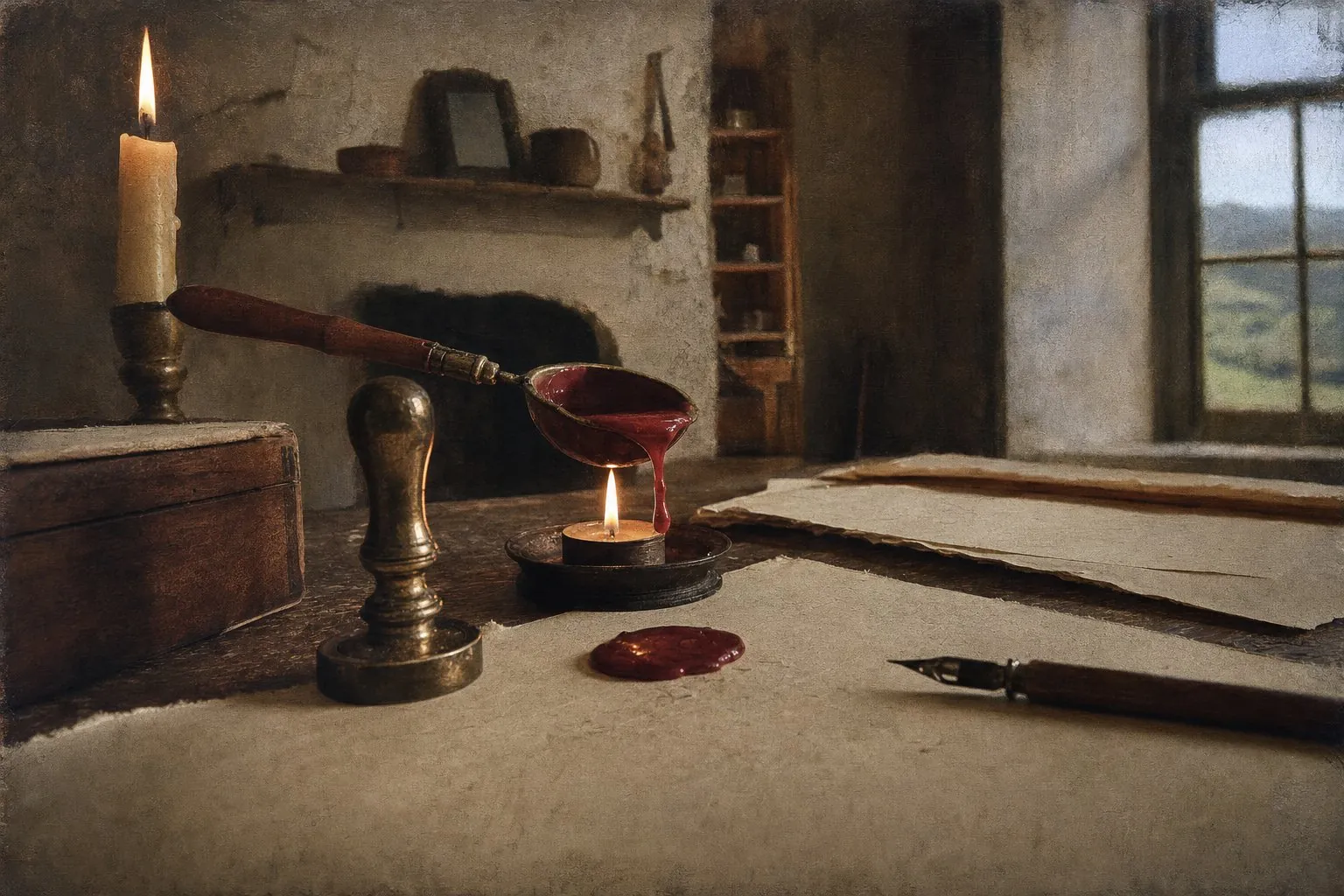
The wax seal is the final act before the envelope goes to the post. There is a reason it comes last and a reason it is real wax rather than a printed circle: a seal is a promise that nobody has been in here before you. Across a hundred years of letters home, the unbroken seal was how a reader knew the words had come the whole way private, from the writer’s hand to theirs.
It is also, frankly, the moment the thing turns from post into an occasion. Breaking a wax seal is a small ceremony. It slows you down. It tells you, before you have read a line, that what follows was meant to be worth the pause.
Made in Ireland, posted from home
All of it is made in one place and posted from one place. The letters are written, addressed and sealed here, then stamped in Ireland and sent across to you with a real Irish postmark on the outside. There is no mailing house in another country, no bulk drop, no print-on-demand.
If you want to see the make of it up close before anything is decided, see the aged paper and wax seal on the first two letters: the full text, the envelope and the postmark, laid out as they arrive. It is the plainest way to judge whether the object is what we say it is.
The craft only earns its keep because of what it carries, which is one Irish family’s correspondence, written across the decade after the Famine. Fine paper around a thin story would be a waste of good wax.
What we leave out, on purpose
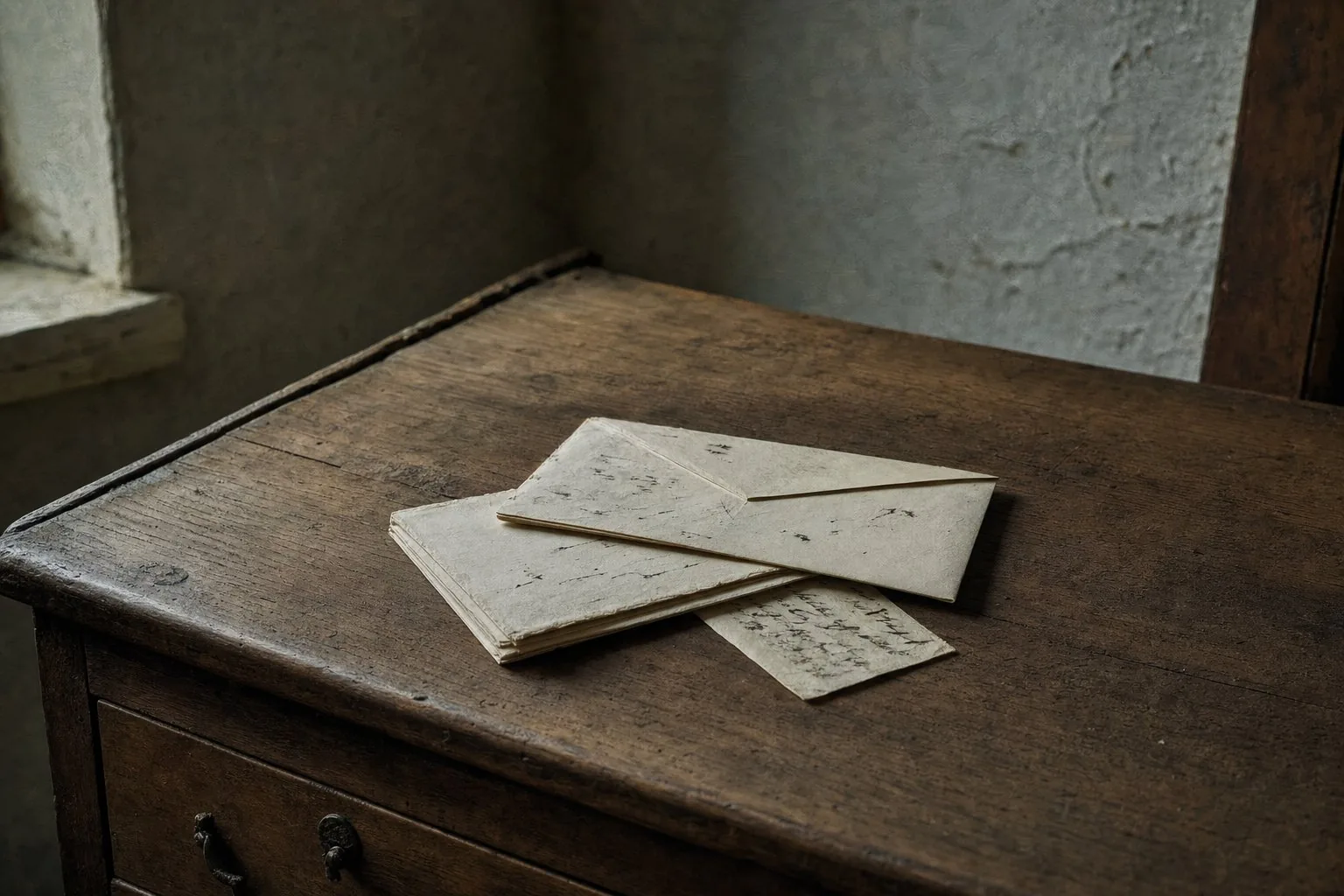
As much thought goes into keeping the envelope pure correspondence. Paper, all the way through, and more of it than you would think: the two letters, the note that sets the scene, and something else besides belonging to the year the story has reached. Keeping to paper is partly taste and partly practical, because a letter travels as a letter and lands ready to open. The letter is the gift, and everything else in there is made to sit beside it.
A word on the stamps, since aged paper invites the question. Ireland had no stamps of its own until 1922, so a Famine-era letter here carries the stamp it actually would have: a British Victorian issue, labelled as such, and kept inside the envelope. The postmark that brings it to you is a genuine present-day Irish one. Accurate turns out to be the prettier of the two.
If you would like a year of these arriving for someone, one a month, that is exactly what the series is: a Gift Edition written and sealed in Ireland, posted from Ireland, and made to be kept rather than binned.