Emigration History
Castle Garden vs Ellis Island: Where Ancestors Landed
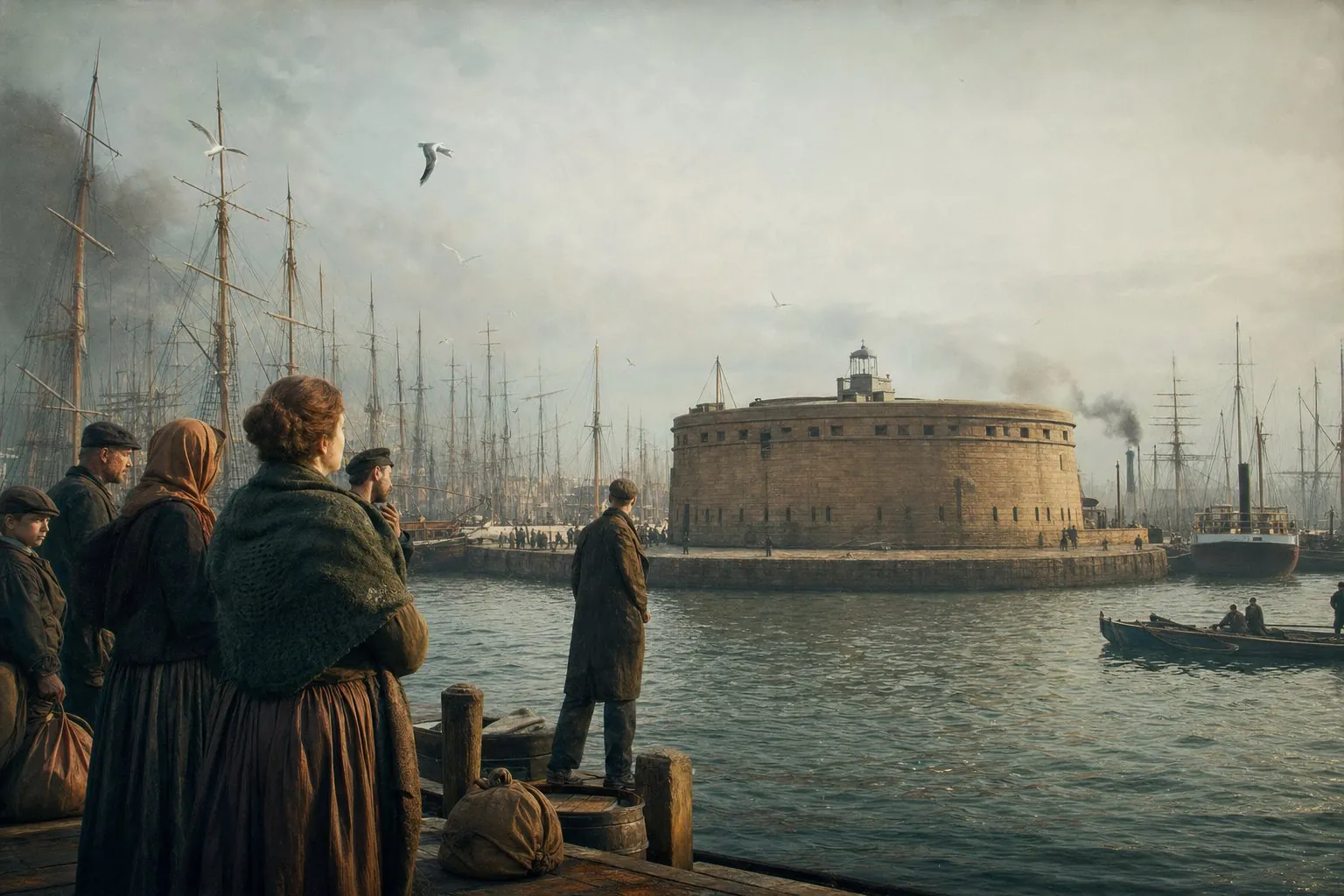
Nearly every Irish-American family owns the same sentence. They came through Ellis Island. It is said with complete confidence at christenings and funerals and across kitchen tables, and for any family whose people left Ireland during the Famine or in the decades just after it, it is almost certainly wrong. Ellis Island opened on 1 January 1892, nearly half a century after Black ‘47. The Castle Garden vs Ellis Island question is really a question about dates, and settling it can move your family’s story off legend and onto the record.
Here is the honest timeline of where the Irish actually landed in New York, and how to work out which door your own people walked through.
Before 1855: no door at all
For the famine ships there was no immigration station of any kind. Vessels docked at the wharves and the passengers simply walked down into the city. What waited for them there had a name at the time: runners. Men who worked the piers, seized baggage, steered exhausted arrivals into crooked boarding houses and sold them worthless onward tickets, stripping them of the little they had carried across the ocean. New York’s emigration commissioners pressed for a single, supervised landing depot precisely because the newly landed were such easy prey. Through the last famine years and into the early 1850s, the busiest Irish years the port had ever seen, tens of thousands came ashore this way every year, unrecorded by any depot because there was no depot to record them.
Castle Garden, 1855 to 1890
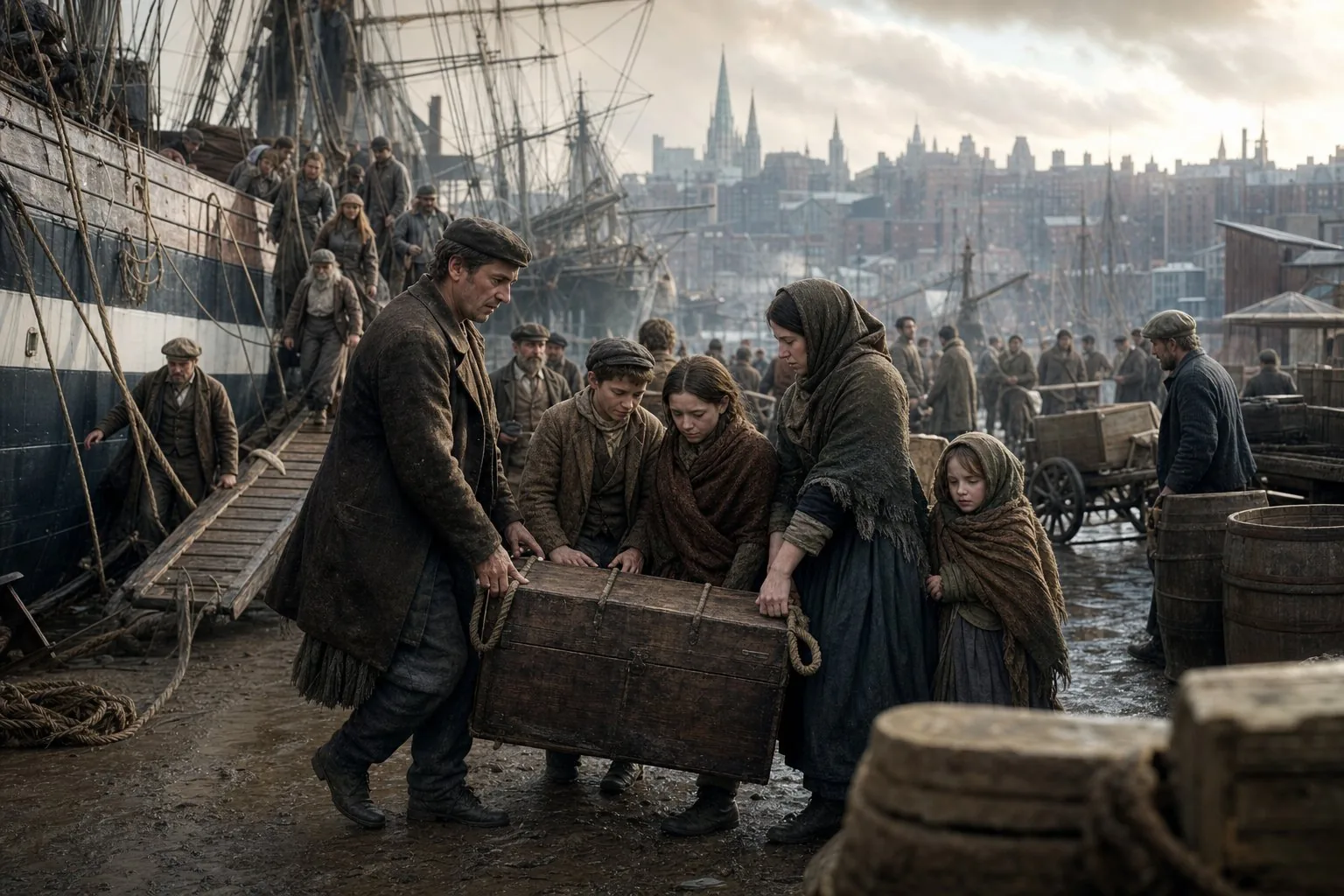
On 3 August 1855 the State of New York opened America’s first immigration depot in Castle Garden, a round stone fort of the early 1800s standing just off the Battery at the tip of Manhattan, joined to it by a bridge. Arrivals were landed, counted and registered under one roof, could change money and buy an onward ticket under supervision instead of on the street, and were at least partly shielded from the trade in fleecing newcomers.
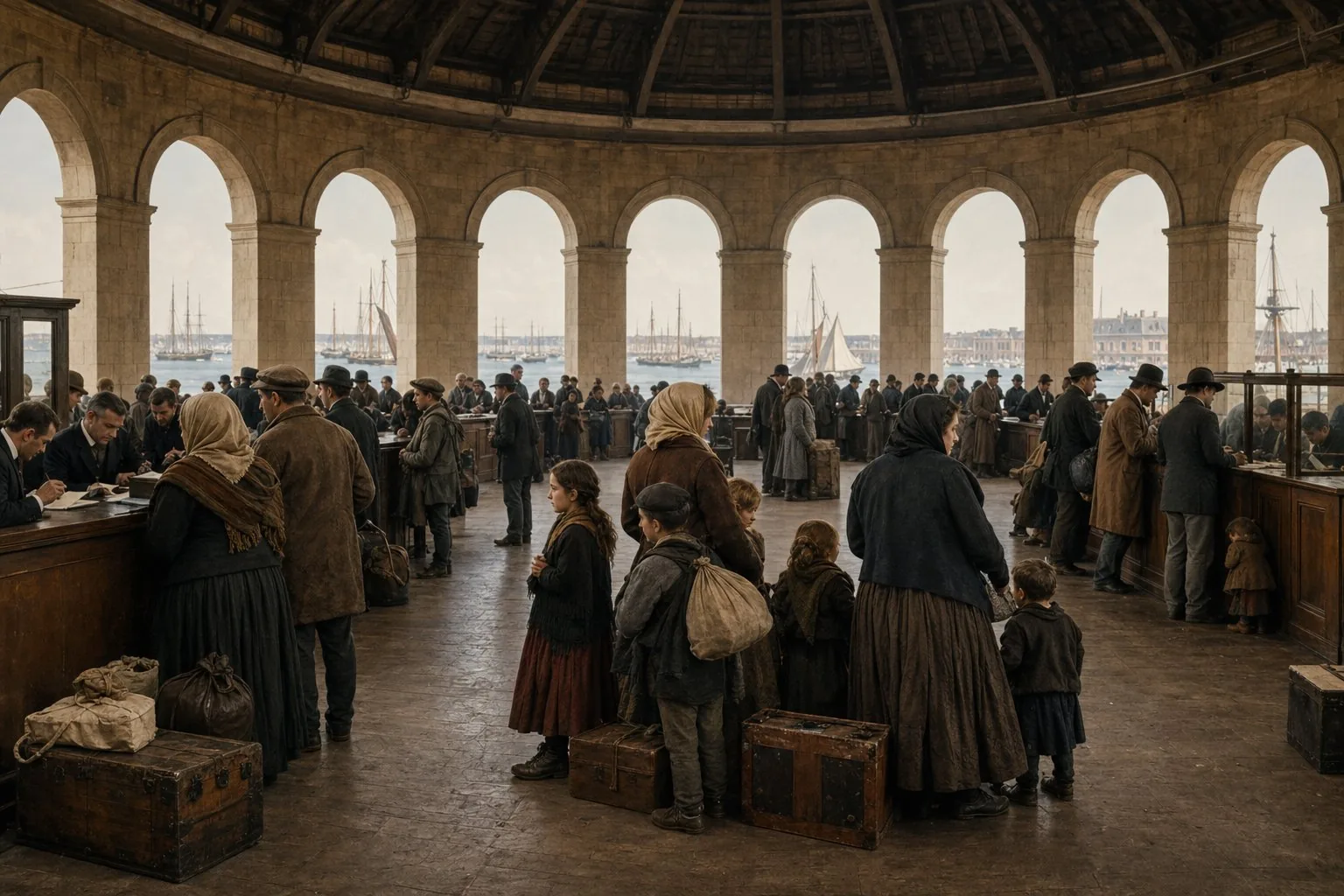
Castle Garden ran for thirty-five years, and its sheer scale is why so many family stories pass through it without the family knowing the name. More than eight million people entered the United States through Castle Garden between 1855 and its closing on 18 April 1890, Irish and Germans above all in its early decades. If your Irish ancestor reached New York between those dates, this, and not Ellis Island, was almost certainly the door.
In April 1890 the federal government took over immigration from the states, with the corruption that had grown up around Castle Garden among its stated reasons, and closed the depot. For roughly the next two years, arrivals passed through the Barge Office nearby while a purpose-built federal station rose on a small island in the harbour.
Ellis Island, 1892 onward
Ellis Island opened on 1 January 1892, and the first person registered there was a seventeen-year-old from Co. Cork named Annie Moore, who had sailed from Queenstown. Some twelve million people followed her through its halls. This is the station of the photographs and the films, the great registry room, the inspections, the island within sight of the Statue of Liberty. For Irish families it belongs to the later waves, the sons and daughters of the 1890s and after, not to the famine generation.
Castle Garden vs Ellis Island: let the year decide
Strip away the legend and the rule is plain. Find the year your ancestor arrived in New York, and the door names itself.
- Before August 1855: no depot, a wharf landing in the city.
- August 1855 to April 1890: Castle Garden.
- 1890 to 1891: the Barge Office.
- From January 1892: Ellis Island.
Most Irish-American families descend from people who came before 1892. That is the quiet statistical reason the Ellis Island of family legend so often dissolves under a single question: what year did they come? It is also why “they came through Castle Garden” is, for the Irish, far more often the true sentence, and worth saying at the next christening.
If no one alive remembers the year, bracket it. A marriage at home, a first child born in America, an age given on a census return, any one of these narrows the arrival to a decade, and the decade nearly always answers the question by itself. The doors changed only three times in seventy years, so close enough is usually exact enough.
The 1897 fire, and the records that survived
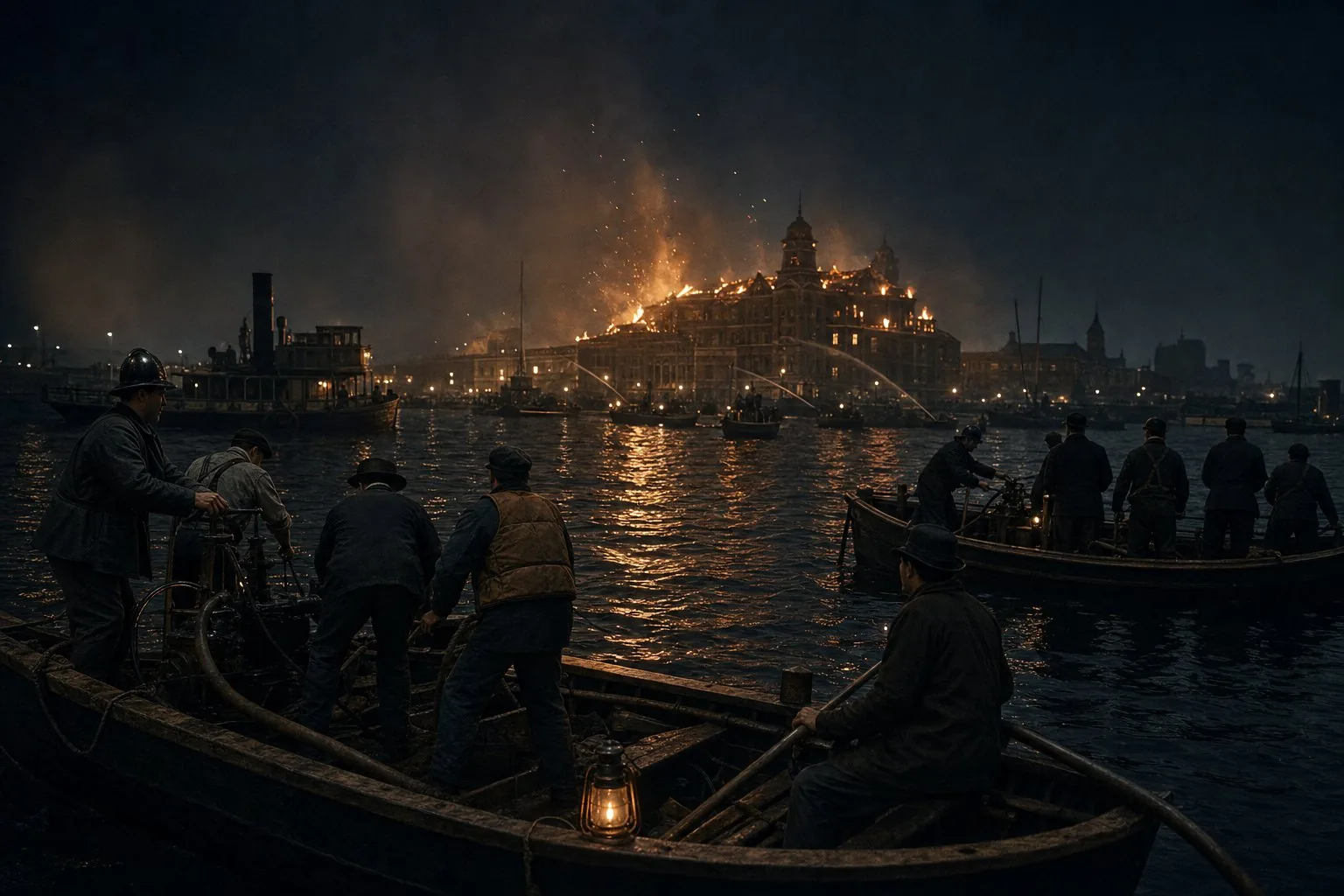
There is one more wrinkle, and it explains a great deal of frustrated searching. On 15 June 1897, Ellis Island’s original wooden buildings burned to the ground. No one died in the fire, but the federal and state immigration records stored there, reaching back to 1855, burned with the buildings. The registers Castle Garden itself had kept were lost that night, on an island Castle Garden’s immigrants never saw.
The passenger lists survived. Ships’ masters filed manifests with the customs service, which kept its own copies quite separately, and those lists, for vessels arriving at New York from 1820 onward, are held today by the US National Archives. The Battery Conservancy has since put millions of those arrivals, from the 1820s through 1892, into a free searchable database. So the fire does not mean your family is unfindable; it means the record that survives is the ship’s record, not the depot’s. What those lists can tell you, where the gaps are, and what arrival records survive beyond them, is a subject worth its own guide.
And one caution belongs beside any search: the landing was the end of something. For the famine generation especially, arrival came after the Black ‘47 crossings, and the records of the wharf and the depot sit downstream of that harder story.