Counties and Ancestry
What Irish Emigration Records Can and Can't Tell You
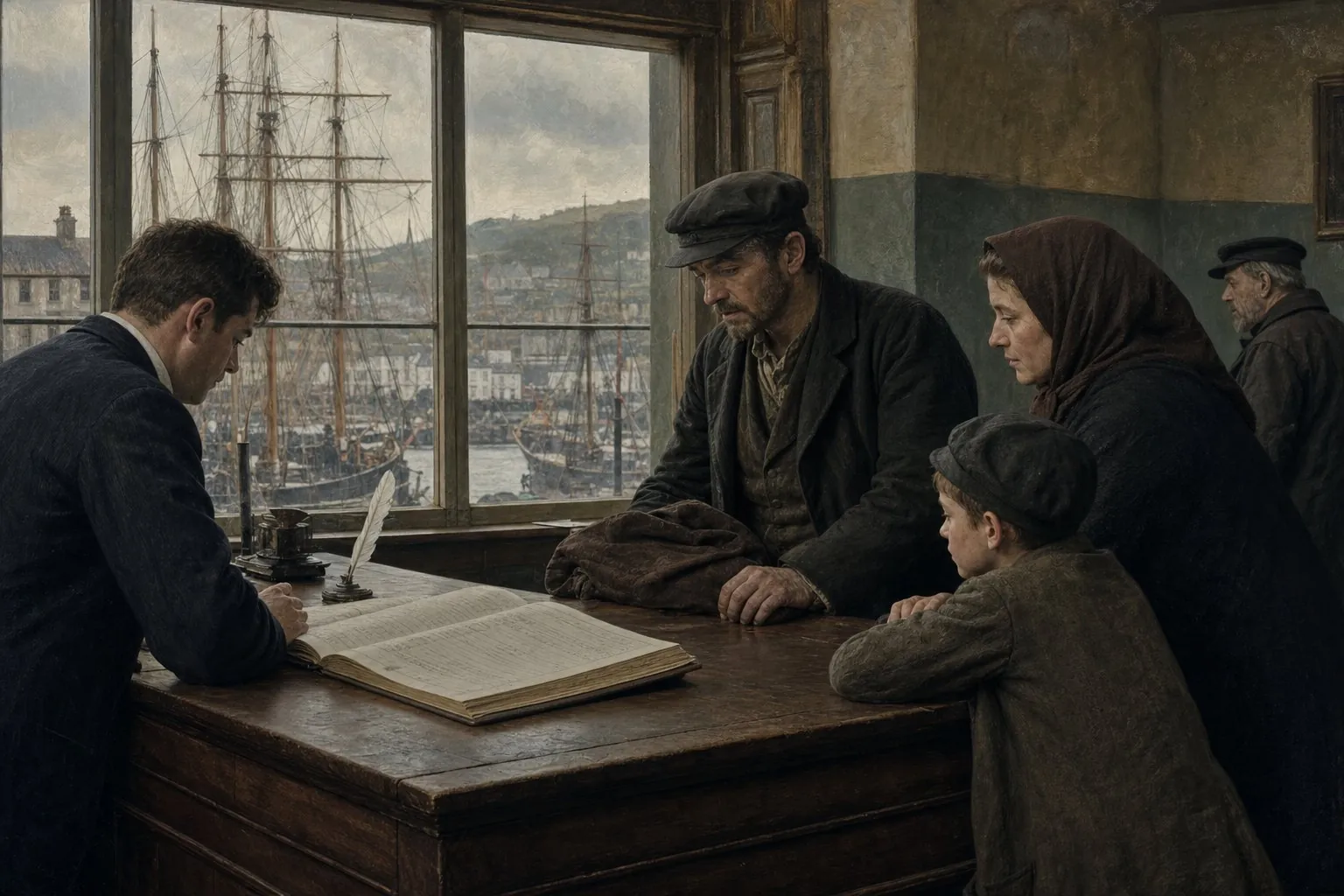
Somewhere in every Irish-American family story there is a boat. A great-great-grandmother who left in the hungry years, a pair of brothers who went out after the land troubles, a name and a decade and not much else. So you go looking for the record of the leaving, and you meet the first hard truth of Irish emigration records: for most of the emigrant century, the leaving itself was barely written down. In genealogy terms, Ireland kept no general register of who went. Knowing that from the start will save you months of searching for a book that was never kept.
What survives instead is real, useful and full of holes in particular places. Here is what the records will give you, what they quietly withhold, and how to work around the gaps.
The record of leaving was kept at the far shore
Because Ireland recorded almost nothing at the quayside, nearly everything we call an emigration record is actually an arrival record, made at the other end.
For America, that means the passenger lists. Ships arriving at US ports had to file passenger manifests from 1820 onward, and those lists survive in their millions; the famine-era arrivals at New York alone run to hundreds of thousands of Irish names. From 1855, New York arrivals also passed through Castle Garden, America’s first official immigration depot, run by the State of New York at the tip of Manhattan. Castle Garden records and the manifests behind them cover the years up to 1890, and Ellis Island takes over from 1892. All of it is searchable, and the passenger lists are free on FamilySearch.
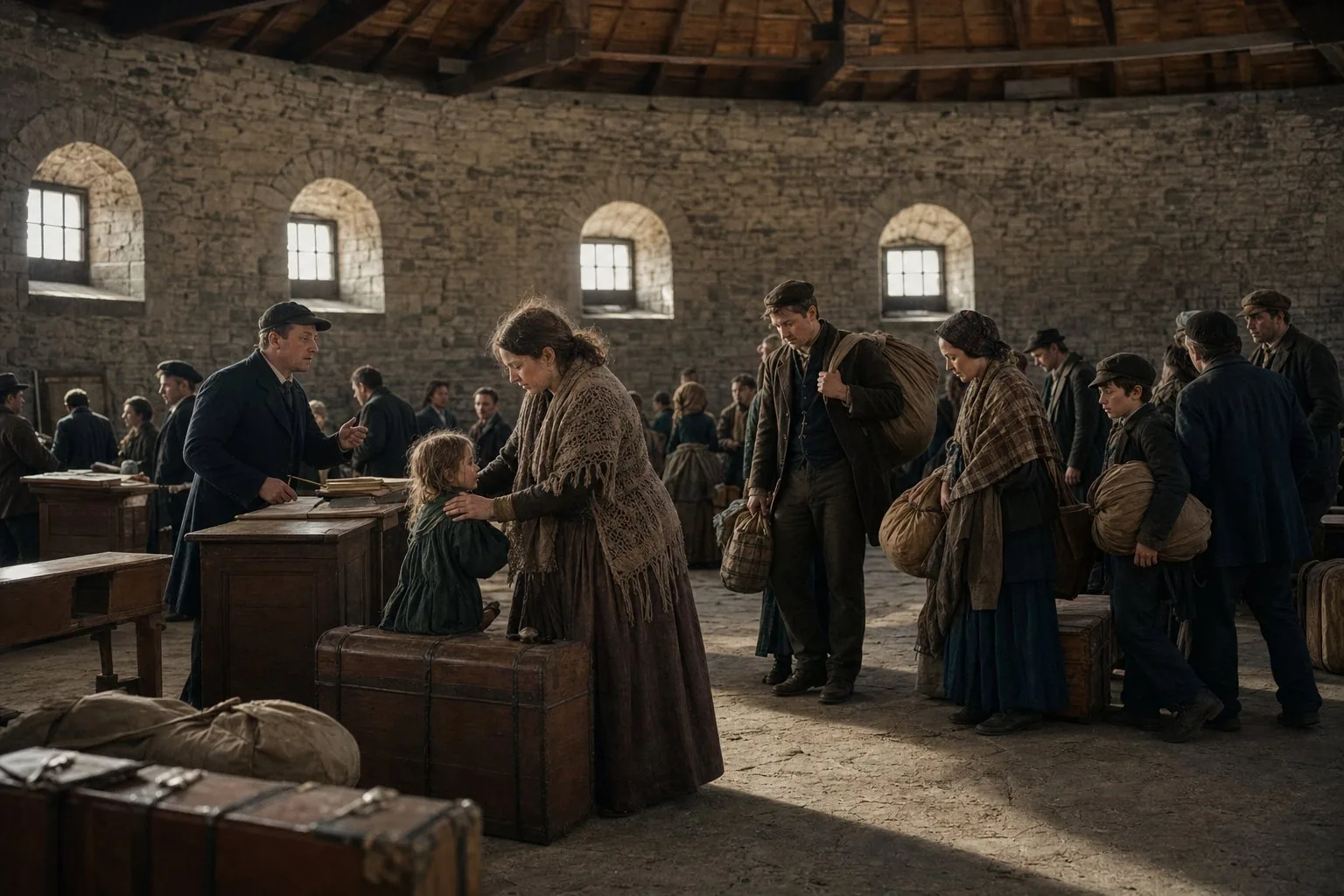
Mind the routes that dodge the paperwork, though. Most Irish emigrants sailed not from Ireland directly but through Liverpool, and Britain’s outward passenger lists only survive from 1890, so the British end of a famine-era crossing is mostly silence. Others took the cheaper passage to Canada, landing at Quebec past the quarantine station at Grosse Ile, and then crossed into the United States by land, leaving no American arrival record at all. If your ancestor is missing from the New York lists, they may simply have come in the side door.
What a ship manifest will actually give you
Found the right manifest? Here is the honest inventory. You will get a name, as the clerk heard it, an age, usually rounded, an occupation, most often “labourer” or “servant”, the ship, the ports and the date. For a famine-era crossing, that is generally the lot. Country of origin: Ireland. No county, no parish, no townland.
The forms fatten as the decades pass. From the early 1890s the standard immigrant manifests add a last place of residence and a destination, and from 1906 and 1907 they record a place of birth and the name and address of the nearest relative left behind. Those late columns are the ones genealogists dream about: a single 1910 crossing can name the exact townland and the mother still living in it. The rule of thumb is simple, the later your emigrant left, the luckier you are.
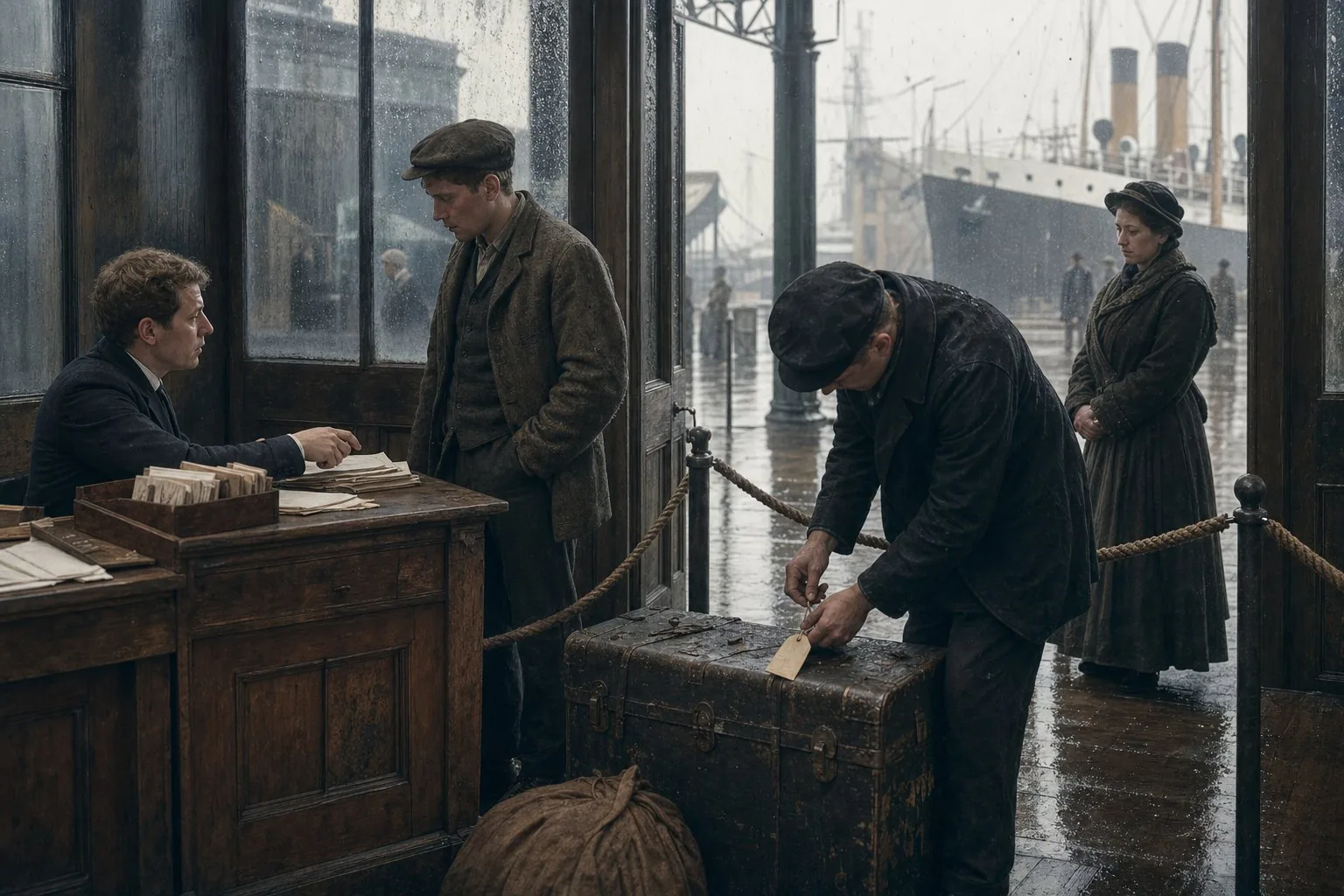
Spelling deserves a warning of its own. Names were taken down by ear, so Ó Dubhthaigh becomes Duffy, Duffey or Dowey depending on the clerk’s mood. Search loosely, by sound rather than letter, and let ages drift a few years either way.
What Irish emigration records quietly leave out
The gaps are not random, and it helps to name them.
The county, for most of the famine century. The one fact every descendant wants is the one the early lists least often hold. Before the 1890s, “Ireland” is usually all the manifest says, which is why the county hunt is its own piece of work; we have set out where each Irish record source actually helps when the manifests stop short.
The why. No manifest records an eviction, a failed harvest, or the fare posted home by a sister in Brooklyn. The paper gives you the fact of leaving, never the reason.
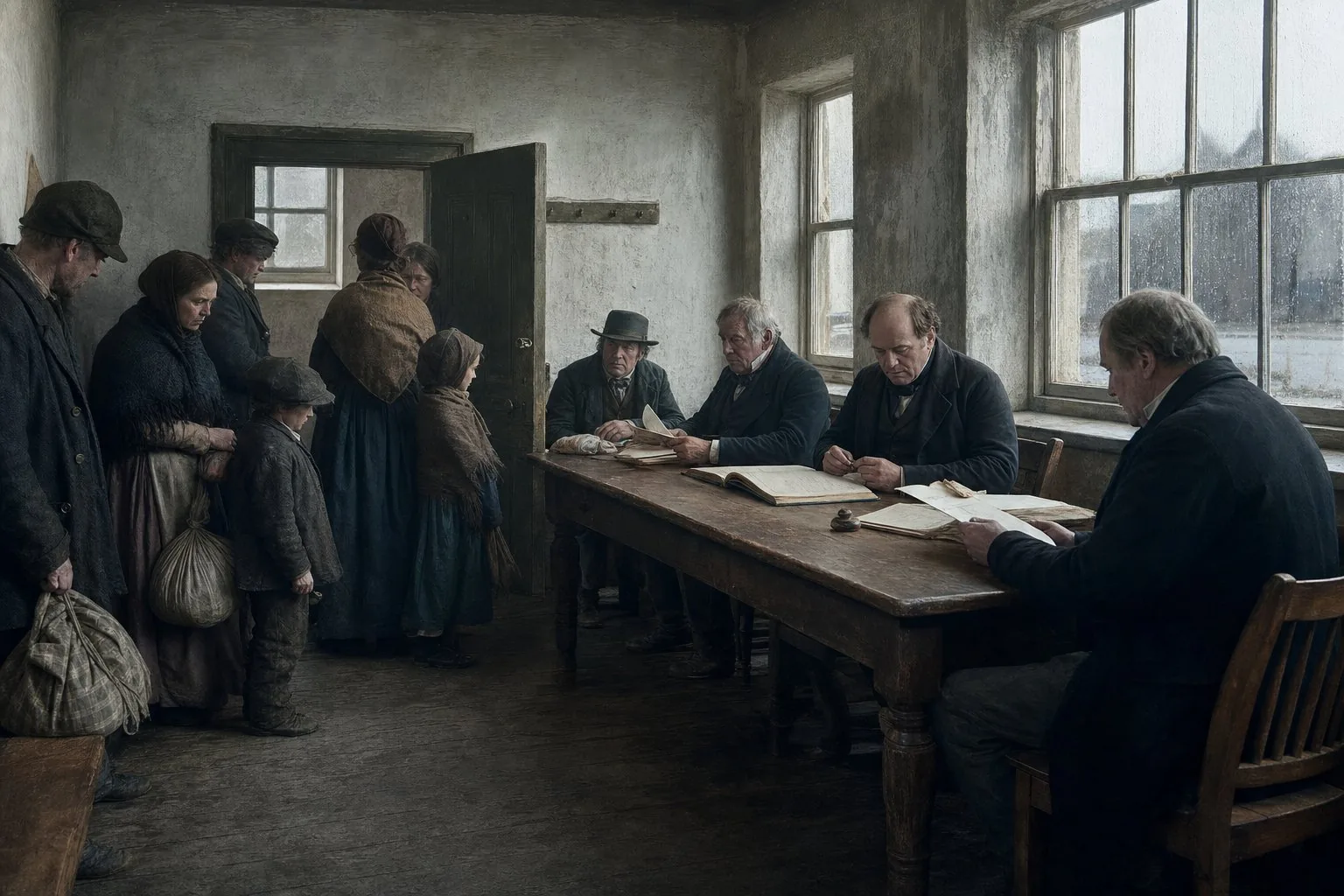
The poorest emigrants, unless you know where to look. Here is the exception that proves useful. During and after the Famine, workhouse Boards of Guardians paid to emigrate paupers from their unions, and landlords cleared estates by funding passages. Those schemes generated paper: minute books and emigration lists sitting in county archives and estate collections, naming exactly the people too poor to leave a trace anywhere else. If your family vanishes from a workhouse union in the 1850s, the minute books are worth an enquiry to the county archive.
The ones who slipped the net entirely. Children carried on a parent’s ticket, names changed on the pier or in the first American year, the Canada-route walkers. Absence from the lists is not proof of anything.
Closing the gaps from both ends
The professionals’ trick is to stop staring at the ocean and work the two shorelines.
From the American end, work backwards. The 1900, 1910 and 1920 US censuses each asked for the year of immigration, which narrows the manifest search to a season or two. Naturalisation papers after 1906 ask for exact birthplace. Death certificates, obituaries and headstones all get their say.
From the Irish end, work forwards. A family present in Griffith’s Valuation in the 1850s and absent from the parish register by the 1870s has told you something, and the surviving 1901 and 1911 censuses show you who stayed, which is its own kind of map of who went. And place matters: from the 1850s onward millions took their last steps in Ireland on the quay at Queenstown, now Cobh, so it is worth reading County Cork’s emigration story and the port that shipped it if your people left by the southern route.
Squeeze both ends and the gap in the middle narrows to a ship, a season, sometimes a single sailing.
What no record can tell you
Do all of it perfectly and something is still missing, and it is worth saying plainly what. The records hold the leaving; they do not hold the feeling of it. The night before the sailing, when a family held an American wake for a living son because everyone understood he was as good as gone. The trunk. The walk to the road. The first envelope home with a dollar folded in paper.