Gift and Giving
An Irish Sympathy Gift With Meaning
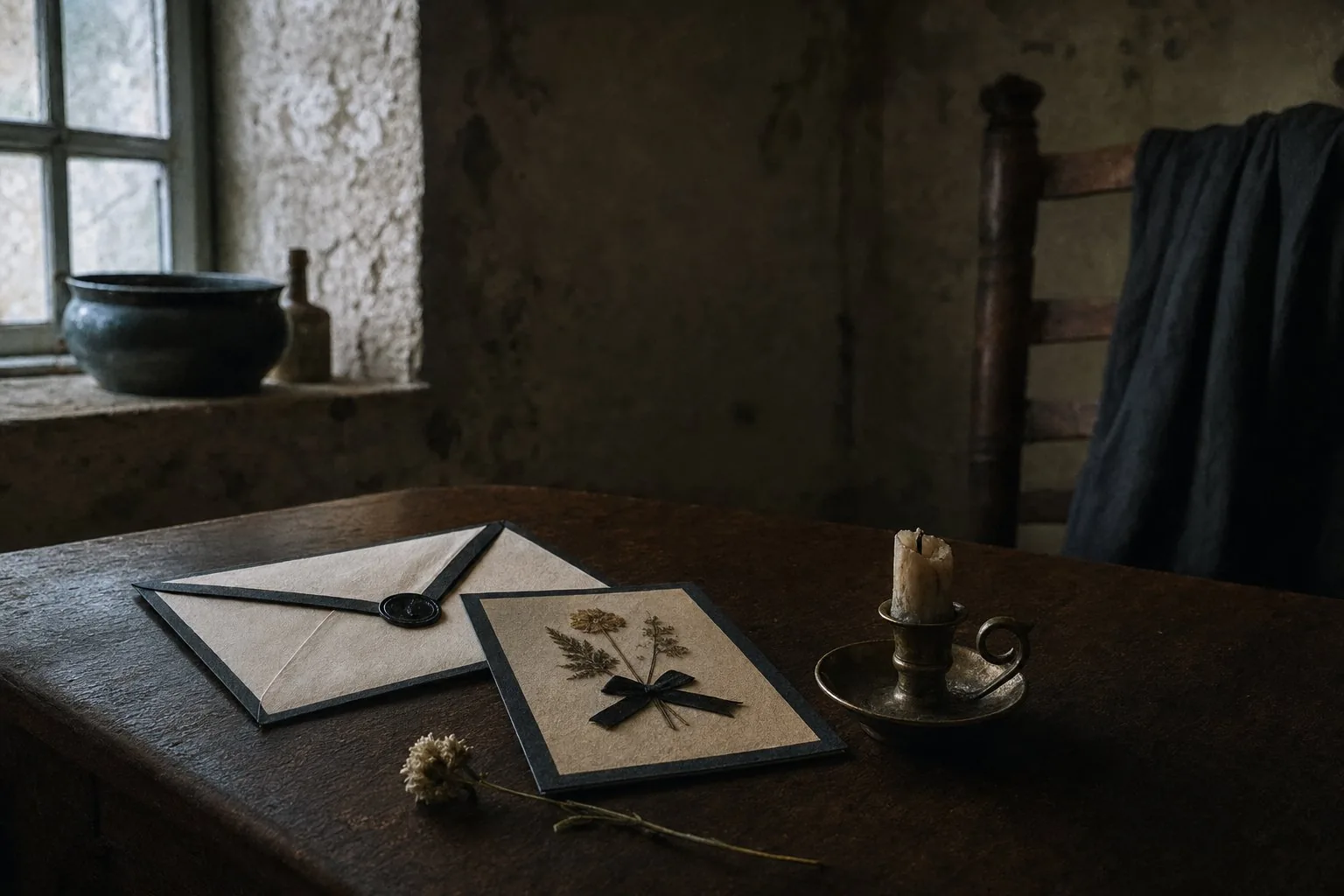
Someone always finds the folder. A few weeks after a parent dies, clearing out a desk or a filing cabinet nobody has opened in years, there it is: a subscription to a genealogy site, paid for and barely used. A notebook with a townland’s name written on the first page and nothing under it. A shoebox of photographs that nobody left in the room can name. The project the parent meant to finish, and now cannot.
If you are searching for irish sympathy gift ideas, you may be shopping for exactly that kind of loss, and not only the death itself. The obvious list gets reached for quickly: flowers, a card, something with a shamrock on it that will end up at the back of a drawer. Little of it touches the particular ache of a search that stopped halfway through.
What an Irish sympathy gift usually looks like
Some of it is familiar in any tradition: flowers, a card, a donation made in the person’s name to a cause they cared about. Irish custom adds a few of its own.
A mass card. Arranged through a parish, it tells the family that a Mass will be offered for the person who died. In a great many Irish families it matters more than flowers, and it costs the giver almost nothing but the trouble of asking.
A card carrying the old blessing. The one about the road rising to meet you is one of the most reached for lines on an Irish sympathy card, not because it is original but because it is short and true, which is exactly what grief can bear to read.
Food, left quietly at the door. Older than either of the above, and still the most practical kindness there is in the days around a funeral.
Something planted. A tree or a rose bush has the one advantage no cut flower can match. It is still there next spring, and the spring after that.
Every one of those is a good and proper gift, and none of them is wrong to give. None of them, either, does anything about the particular ache underneath some of these losses: the parent who meant to trace the family properly and ran out of time to do it.
The grief of a project left unfinished
Some parents talk about it for years without ever doing it. The trip to the parish they meant to make. The certificates they meant to send for. The cousin in Boston or Chicago they meant to ring properly, before it was too late to ask. A name gets written on the back of one photograph, and then no other names do.
For families outside Ireland, this often carries a second layer. The parent who meant to go back and see the parish for themselves, to stand where the house had stood, never quite got the trip booked either. The old country stayed a place on a form, a passport application half filled in, a flight priced and never bought.
Then the parent dies, and the project does not get inherited so much as set down a second time. Left once by them, without ever meaning to leave it. Left again by a family who does not know where they had gotten to, or how to pick it up, or whether picking it up is even the right way to remember someone who never finished it themselves.
This is a real and specific grief, and it rarely gets named. It sits underneath the larger loss, quieter than it, easy to mistake for ordinary regret about not asking more questions while there was time to ask them. It is that. It is also mourning a version of your parent who was still curious, still reaching backward for people they never met, still meaning to go and see the place for themselves.
Why a family tree is not always the answer
The obvious instinct is to finish it yourself. Order the certificates. Book a genealogist. Buy the DNA kit and hope the matches fill in what your parent never got to. For some people that is exactly the right gift, and it deserves to be said plainly rather than talked past on the way to something else.
It is also a great deal to hand someone in grief. Records from a Famine-era parish are patchy at the best of times, and the ones that survive can turn up as much sorrow as connection: a family in a workhouse register, a departure with no return crossing recorded beside it. Finishing someone else’s research, on a deadline set by nobody but your own guilt, is its own kind of weight, and not every grieving person wants to carry it.
There is a smaller thing to give instead, one that does not pretend to be genealogy and says so plainly. Yours, From Ireland tells one story, about one invented family: the O’Donnells of a townland called Ballycastle in Mayo. Patrick, the second son, has no land coming to him, so in October 1847 he sails for Boston. Mary Cafferky, the young woman he leaves behind, stays, because her father wants her married into land, not into a promise from Boston. The youngest brother takes the other road, to England. The story runs from 1847 to 1857, the ten years the Famine and its aftermath emptied the west of Ireland, told as letters passing between the two of them.
It is not a gentle decade to sit inside. The letters cross the worst of the Hunger, the cholera that followed the emigrant ships into Boston harbour, the years Irish labour sat at the bottom of the city’s wage ladder, and the Panic of 1857 that stopped the work in Boston outright. That is the ground your parent would have found waiting for them, had they ever finished the search.
None of it is real, and it says so plainly. It is not your parent’s family, and it was never going to be. What it offers instead is the ground your parent was reaching for whenever they said they would look into it properly: the same decade, the same parish-sized world, the same choice between the one who left and the one who stayed. Reading it will not tell you a single fact about your own people. It will put you, for a while, inside the world your parent wanted to go back into, and never got the chance to.
When and how to give it
Grief has a rhythm most people forget once they are out of it. The first fortnight is loud: the removal, the funeral, a house full of cards and casseroles and people who mean well and stay too long. That is not the moment for a gift like this one. Nobody in the middle of that needs one more thing to open.
The quieter weeks after tend to suit it better. Many Irish families still mark the month’s mind, a Mass said roughly a month after a death, and it is as natural an occasion as any to send something that says you have not stopped thinking of them once the callers stopped coming. A birthday. The first Christmas without their parent. The date itself, a year on, when everyone else assumes the worst has passed and the person grieving knows it has only gone quiet.
It is worth saying, too, that you do not have to be giving this to someone else. Plenty of people looking for a gift like this are the ones grieving, marking their own parent’s unfinished interest, and there is nothing strange about buying that for yourself. Grief does not stop being grief because you are the one holding the card.
Say plainly, in a short note, why you chose it. Not that it will help trace the family, because it will not, and a promise like that only sets someone up to be let down by a gift that was never able to keep it. Something closer to the truth works better: I know your mother always meant to look into her own family properly, and I thought of her when I found this. That sentence does the honest work. It names what you noticed. It does not overreach. And it leaves the grieving person free to take from the gift whatever they need, including nothing at all, including simply the fact that you noticed.
The folder will still be there afterwards, wherever it was found, no more finished than it was the day the family put it back in the drawer. That was never going to change with one gift, or a hundred. What can change is whether the person carrying that particular grief has to carry it entirely alone.