Letters and the Craft
Are the letters real or fiction? The truth behind the letters
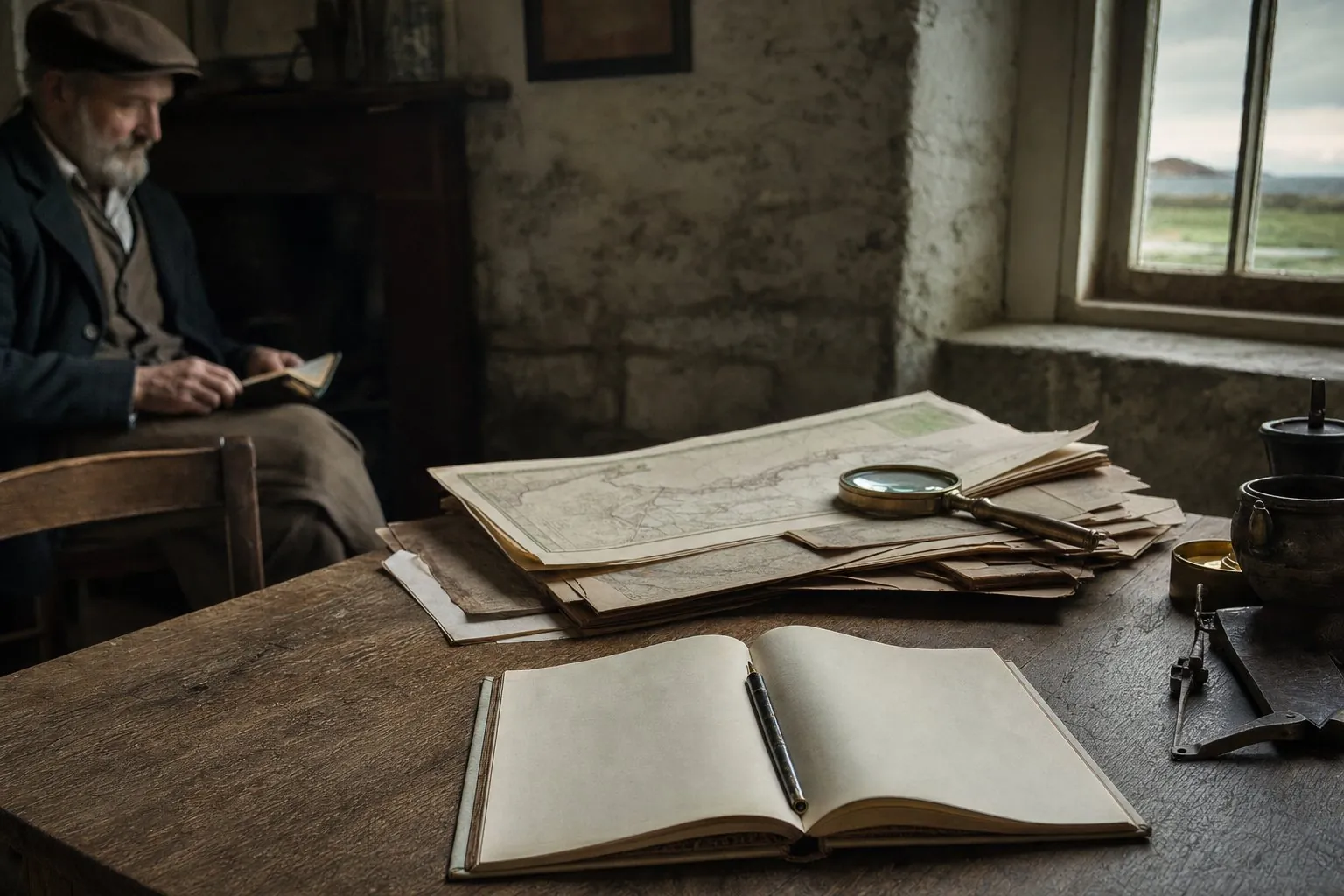
Are the letters real or fiction? The family is invented and the history is not. Patrick O’Donnell and Mary Cafferky never lived, but the famine, the emigration routes, the nativist backlash of the 1850s and the slow pace at which news crossed the Atlantic all did, and every one of those details is checked against a named archival source before it goes into a letter.
That is the short version. The longer one is about method: which records get consulted, what they can actually prove, and where the honest limits of the record sit.
Are the letters real or fiction: the short answer
Patrick O’Donnell, second son of a Ballycastle household in north Mayo, and Mary Cafferky, the woman he means to send for, are characters. Nobody by those names sailed from Mayo in October 1847. What surrounds them is documented: Black ‘47 and the ritual of the American wake held for a departing son, the third failure of the potato crop in 1848, cholera moving through the Boston tenements in 1849, the “No Irish Need Apply” hiring notices of that decade, the 1851 census that first measured the scale of the exodus, and the nativist sweep of Massachusetts politics in 1854 and 1855. The family is invention. The dates and the events around them are not.
How the history is researched
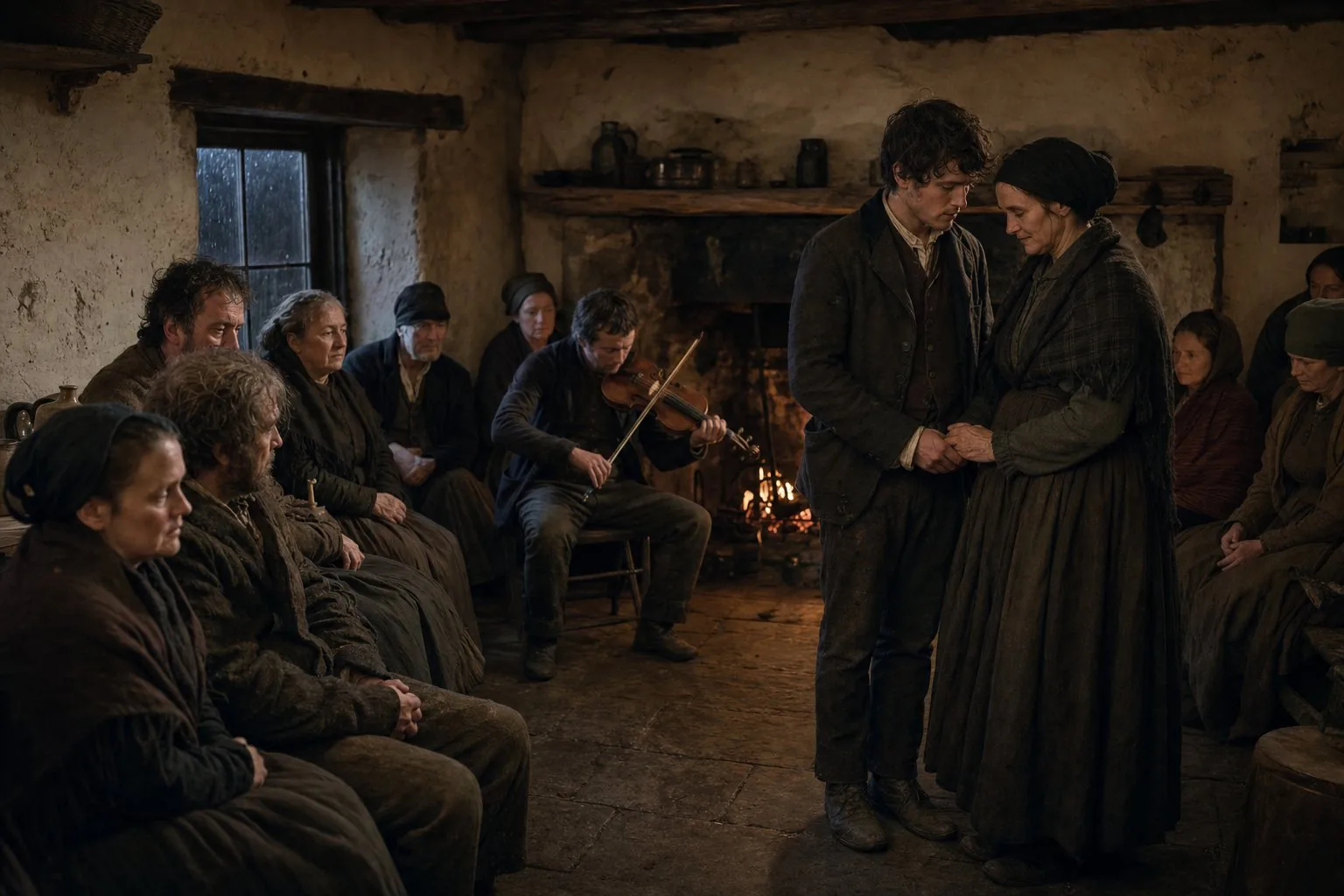
Readers sometimes ask a blunter version of the same question: is the story true? The honest answer is that the setting is researched the way a historian would research it, using the same primary collections a genealogist or archivist would reach for.
Two collections at the National Archives of Ireland anchor the relief side of the story. The Distress Papers, held under reference CSO CR 70, 71, 77 and 78, run from March 1846 to September 1847 and consist of reports on local hardship, correspondence about setting up relief committees, and applications for funds under the famine relief legislation of the day. The Relief Commission records, reference RLFC/2, cover 1845 to 1847 in 788 catalogued entries: letters, constabulary returns and county inspection reports from the body first tasked with coordinating food relief. Between them they show what a local relief committee in a county like Mayo was actually reporting to Dublin in a given month, which is the detail that keeps a letter dated to a specific season honest rather than generically bleak.
The emigration side draws on a different kind of record. The Boston Pilot, a Catholic newspaper founded in Boston in 1829, ran a weekly column called Information Wanted, now searchable as the “Missing Friends” database, in which Irish immigrants placed notices trying to trace relatives who had scattered across North America. The column started with a single advertisement in 1831 and continued for roughly 85 years. Between 1831 and 1845 it carried notices for 1,108 people; between 1846 and 1850, as the famine emptied whole townlands at once, that number rose to 4,547. Those notices, and the detail they typically included, county and parish of birth, year of departure, likely port of arrival, show how a family that lost touch with an emigrant son actually tried to find him again, which is close to the exact situation Patrick and Mary’s letters exist inside.
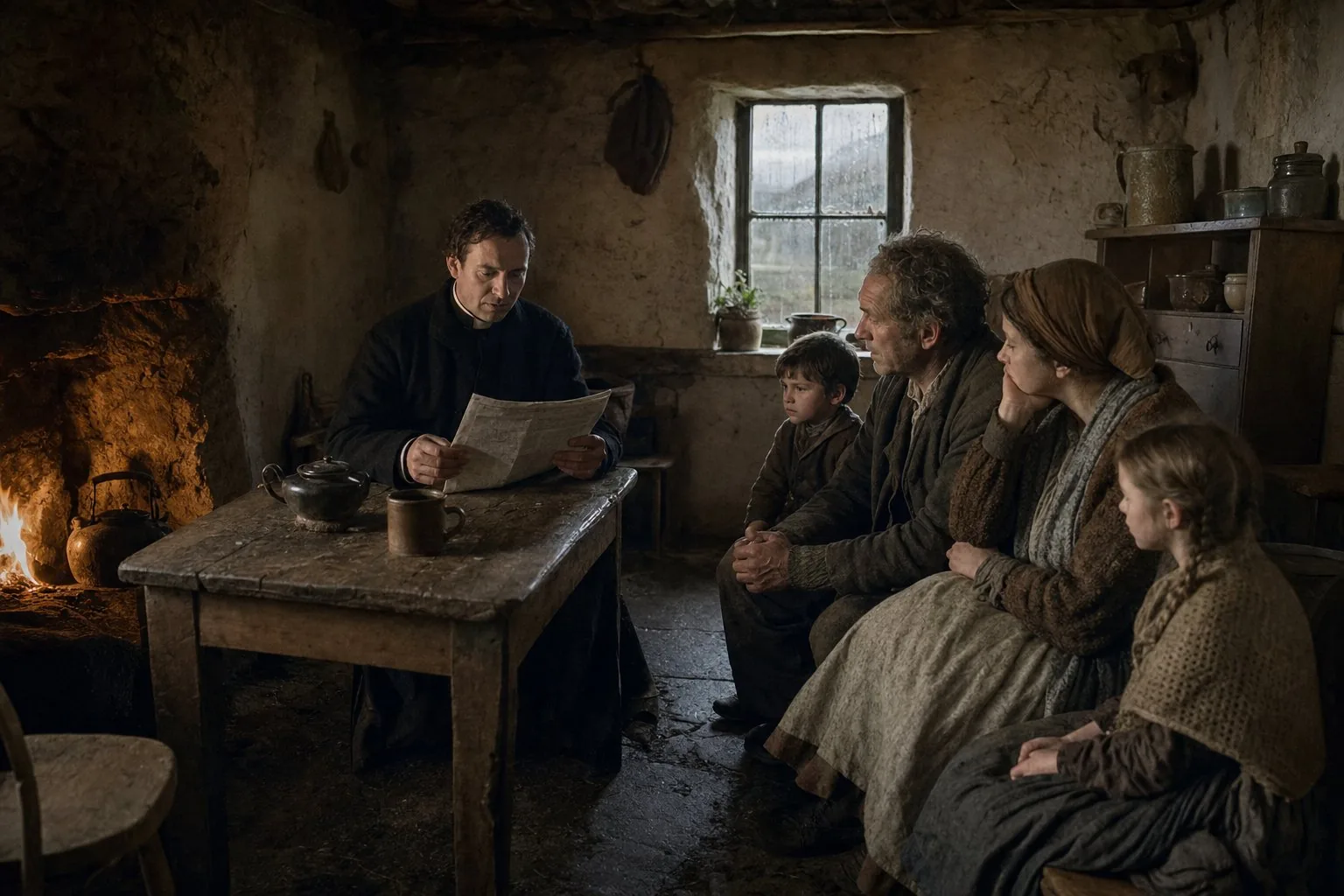
Scale comes from the census. The population of Ireland fell from 8,175,124 in 1841 to 6,552,385 in 1851, a drop the Census Commissioners attributed to death, to migration within Britain, and above all to emigration to North America: 1,240,737 people left between 1841 and 1851, and 215,444 of them in 1847 alone. A letter written from Ballycastle in that year is set inside the single worst 12 months of the whole decade for departures, and the research has to reflect that rather than treat 1847 as an arbitrary starting point.
Politics gets the same treatment. In the Massachusetts state election of 1854 the nativist Know-Nothing party, campaigning on ending Irish Catholic influence in public life, swept almost every office in the state: Henry Gardner took the governorship, and after the vote the governor, all state officers and all but three members of the state legislature were Know-Nothings. A letter written from Boston in 1855 has to place that hostility in the right order and at the right distance, months behind the vote itself, the way news actually reached a Mayo household by post and by word of mouth rather than in real time.
That is the work behind each letter, and it belongs to one person, Maebh Collins, who reads the sources and writes every letter herself.
What historians cannot know
Historical fiction accuracy has a ceiling, and it is worth naming rather than hiding. The written record from this period was made almost entirely by people who could read, write and afford paper: clergy, land agents, county officials, the more prosperous tenant farmers. The Distress Papers are correspondence from committees and officials describing the poor, not letters written by the poor themselves. The Boston Pilot notices only capture emigrants whose relatives could pay to place an advertisement and had someone literate to write it. The National Folklore Collection at University College Dublin, whose Famine material is digitised at Duchas.ie, is richer on ordinary memory, but most of it was gathered by schoolchildren from elderly relatives in 1937 to 1939, 80 or 90 years after the events described, filtered through memory and through a teacher’s transcription.
What that means in practice is that a private, complete exchange of letters between two young people of no particular means, of the kind Patrick and Mary’s correspondence resembles, essentially does not survive intact for ordinary emigrant families. The gap between what happened to millions of people and what was written down by them at the time is real, and no amount of research closes it. Fiction, built carefully inside a documented decade, is one honest way to stand inside that gap without claiming to have found something in an attic that was never there.
Why fiction, and not a real family’s letters
It would have been possible to publish a real emigrant family’s surviving correspondence instead of writing new letters. Two reasons this was not the choice.
The first is respect. A real family’s grief, money worries, quarrels and dead belong to them, not to a subscription product sold to strangers.
The second is completeness. Surviving correspondence from this period almost never runs unbroken across a decade; real bundles are partial, water-stained, missing the very letters a reader most wants. A composite family, built on the record rather than lifted from it, can carry a reader the whole way from 1847 to 1857 without a gap, and without borrowing a real person’s private sorrow to do it.
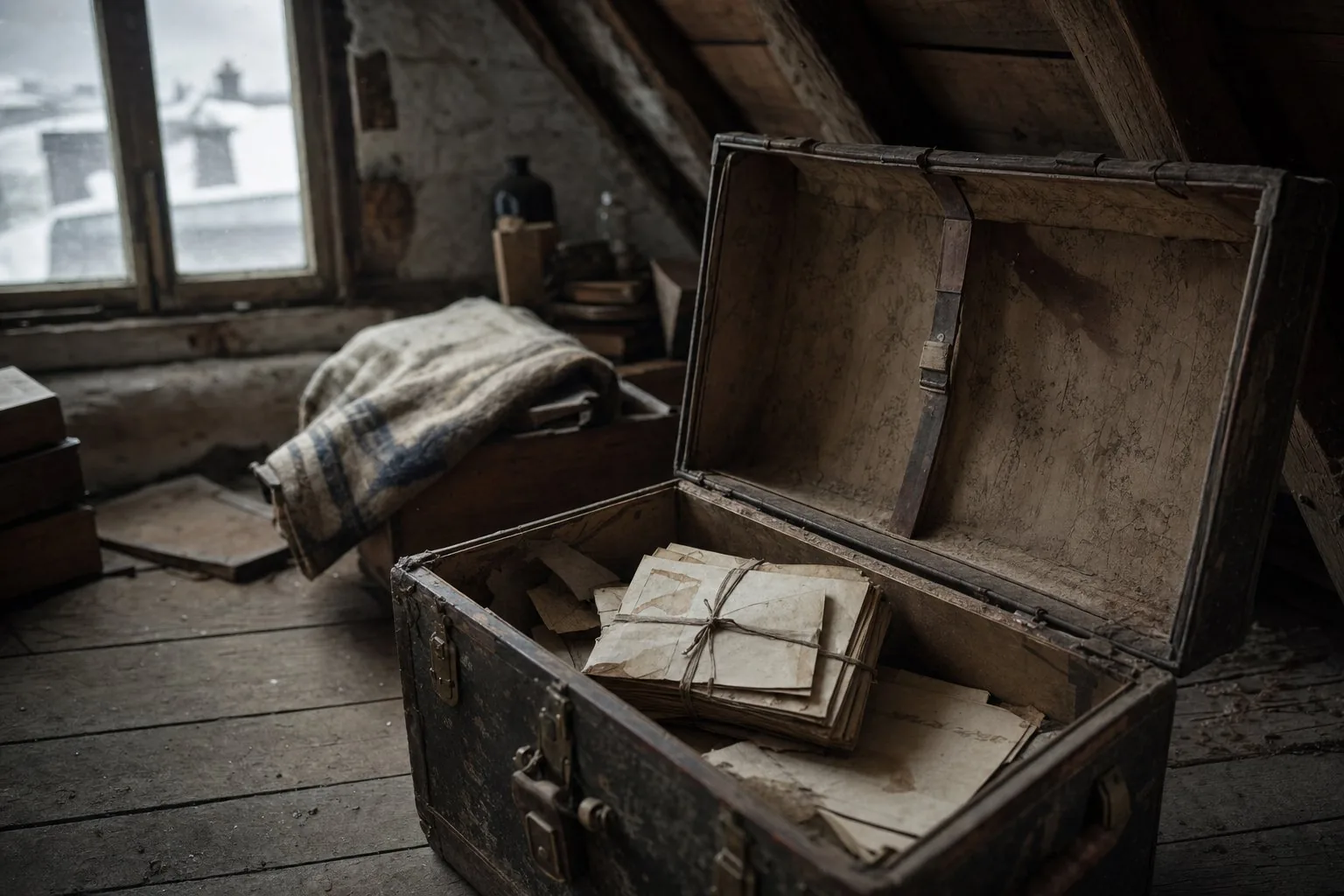
So the O’Donnells are true to the lives thousands of Mayo families led during those years, and the letters stand on their own rather than on any one family’s actual post. You can read more about the Ballycastle family the letters follow and how their situation is set up.
Why provenance is the whole point
For a piece of correspondence sold as a gift, provenance is not decoration, it is the product. A letter home means something because the reader can trust what surrounds it, and that trust is earned by the ordinary, checkable work: the right archive, the right sequence, the right thing a Mayo household could plausibly have known on a given date.
That is why the history sits inside an invented family rather than a real one, why the sources are named rather than gestured at, and why the reasoning behind that choice is set out in full on the about page. If that kind of care is what you want behind a gift, the letters that begin in Famine-era Mayo are built on it from the first page to the last.
Sources and further reading
- National Archives of Ireland, “Famine Records, Distress Papers and the Relief Commission” research guide: Distress Papers, CSO CR 70, 71, 77 and 78, March 1846 to September 1847; Relief Commission records, RLFC/2, 1845 to 1847, 788 entries.
- Boston College, John J. Burns Library, “The Boston Pilot in the 1840s” and the Information Wanted “Missing Friends” database, covering the Boston Pilot newspaper’s advertisements, 1831 to 1921.
- Massachusetts Office of the Secretary of the Commonwealth, Commonwealth Museum online exhibit, “Irish Immigration and the Know-Nothings,” on the 1854 Massachusetts state election.
- Census of Ireland, 1851, Census Commissioners’ Report, population and emigration figures for 1841 to 1851.
- National Folklore Collection, University College Dublin, Duchas.ie digitised Schools’ Collection, Famine-era folklore recorded 1937 to 1939.