Emigration History
The GAA and the Diaspora: Irish Games Cross the Atlantic
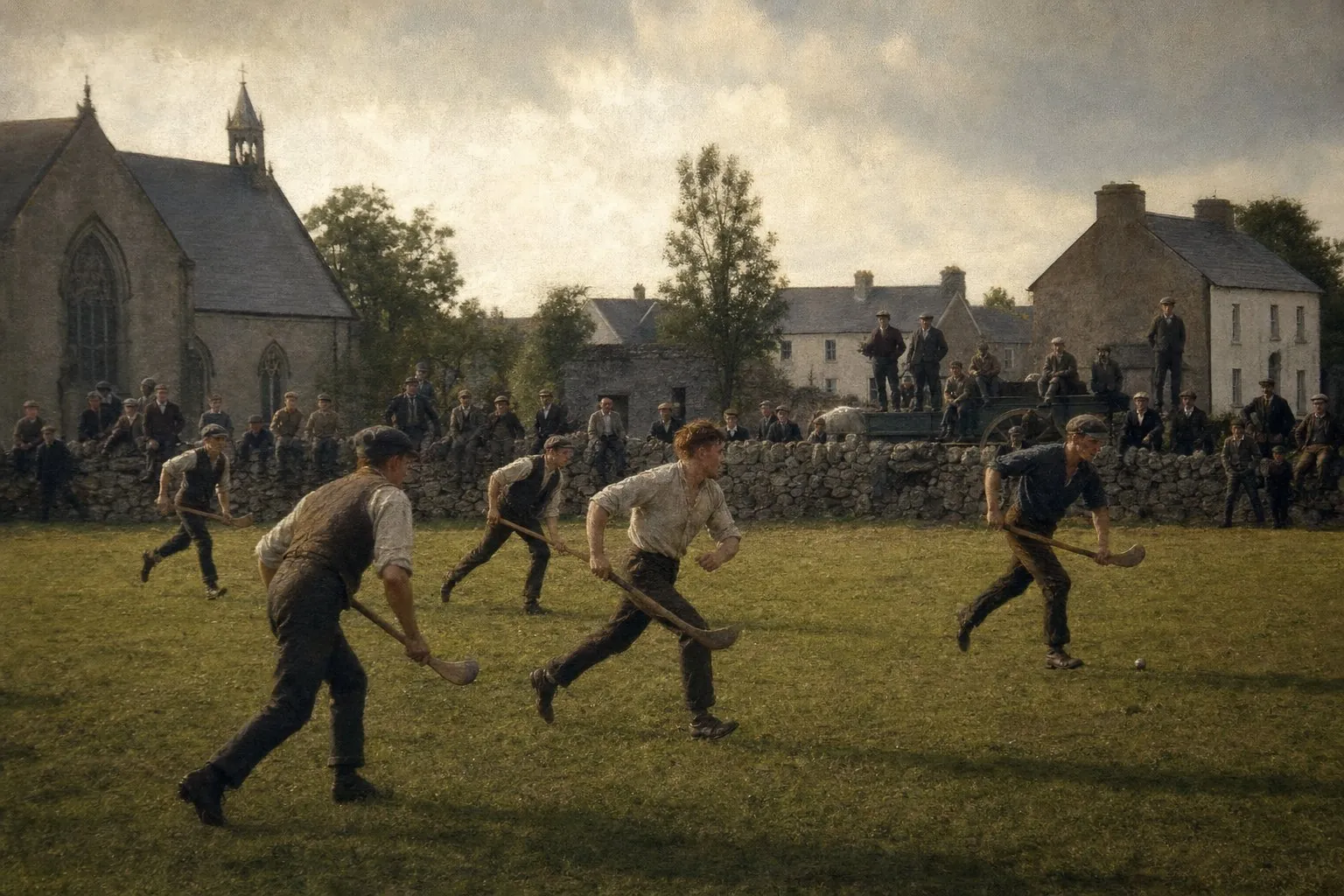
On a Sunday afternoon in a park in the Bronx, or on a rough pitch outside Boston, men who had left Ireland lined out for a game of football or a match of hurling played to rules most of their neighbours had never seen. They were far from home and working six days out of seven. On the seventh, they played the games of the place they had left. That is where the real history of the GAA and the diaspora lives: not only in Thurles in 1884, where the Association was founded, but on every emigrant field where Irish games gave a scattered people a reason to gather.
The Gaelic Athletic Association was only a few years old before it crossed the Atlantic. To see how, it helps to begin in the Ireland of the 1880s that the family in these letters was living through.
Where it began: Thurles, 1884
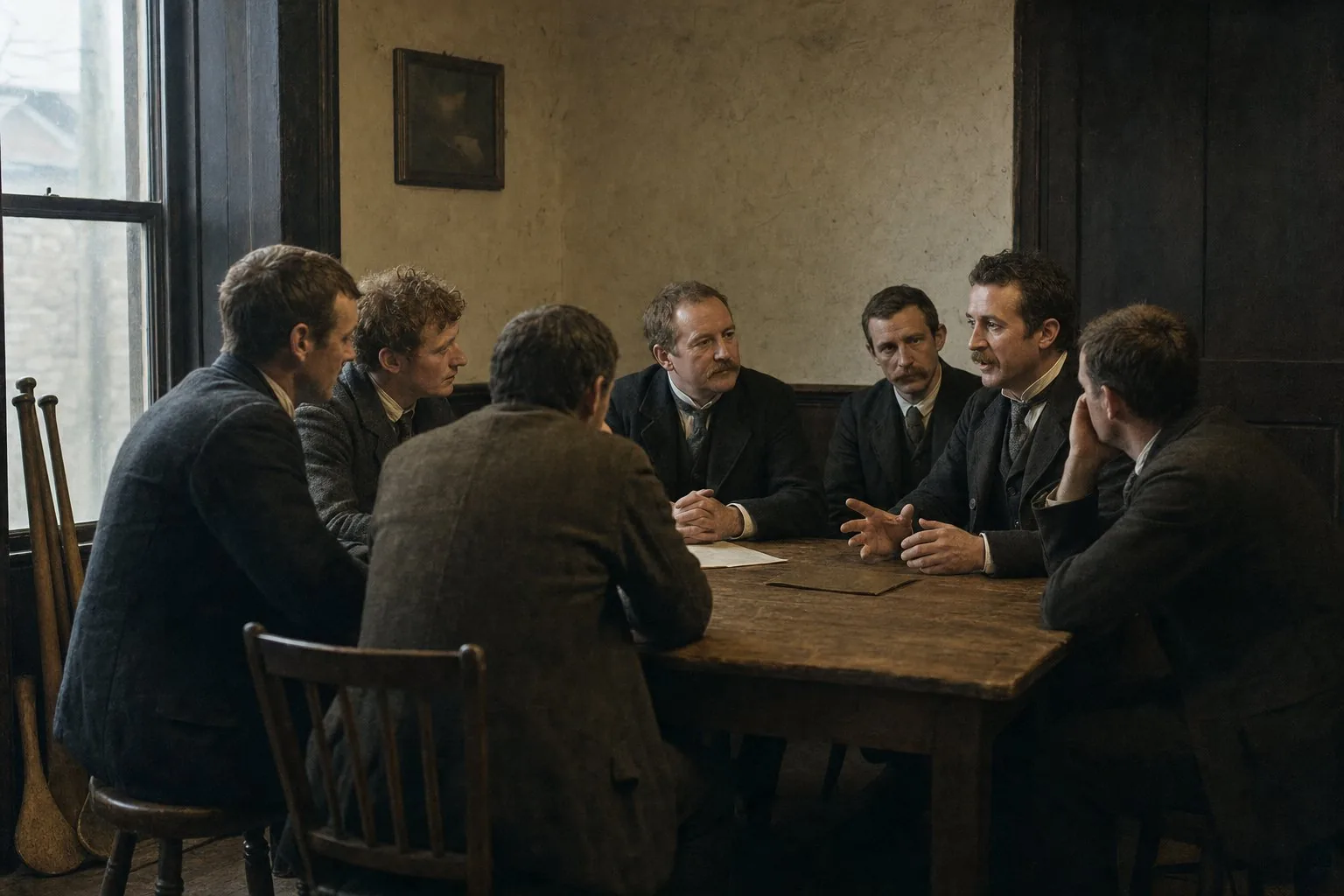
On 1 November 1884, seven men met in Hayes’ Hotel in Thurles, Co. Tipperary, and founded the Gaelic Athletic Association, its declared purpose the preservation and cultivation of Ireland’s national pastimes. The moving force was Michael Cusack, a teacher raised in Carron, Co. Clare, who wanted the old field games preserved and organised before they slipped away entirely. Maurice Davin, the most famous Irish athlete of his day, presided and became the first president, with Cusack among the secretaries. They asked three men to stand as patrons of the new body: Archbishop Thomas Croke, Charles Stewart Parnell and Michael Davitt. All three accepted.
The Association spread fast at home. Parishes formed clubs, counties formed boards, and a game that had been dying was suddenly the thing a young man did on a Sunday. But the parishes were also the places emigrants came from, and the young men were exactly the ones most likely to sail.
The games followed the emigrants
Gaelic games reached America before the GAA did. There are records of Irishmen playing a form of hurling in New York as far back as the eighteenth century. What the Association gave the diaspora was not the games themselves but a structure: agreed rules, clubs, competitions, a name to play under.
The clearest moment came in 1888. That September, the GAA sent a party of around fifty across the Atlantic, twenty-five hurlers, eighteen athletes and their officials, on a tour meant to show off the native games and raise money for a revival of the ancient Tailteann Games. They sailed from Queenstown, the Cork port that had shipped so many emigrants before them, and gave exhibitions in New York, Boston, Philadelphia, Providence, Newark, Trenton and Lowell, the very cities where the Famine generation and their children had settled. It became known as the American Invasion.
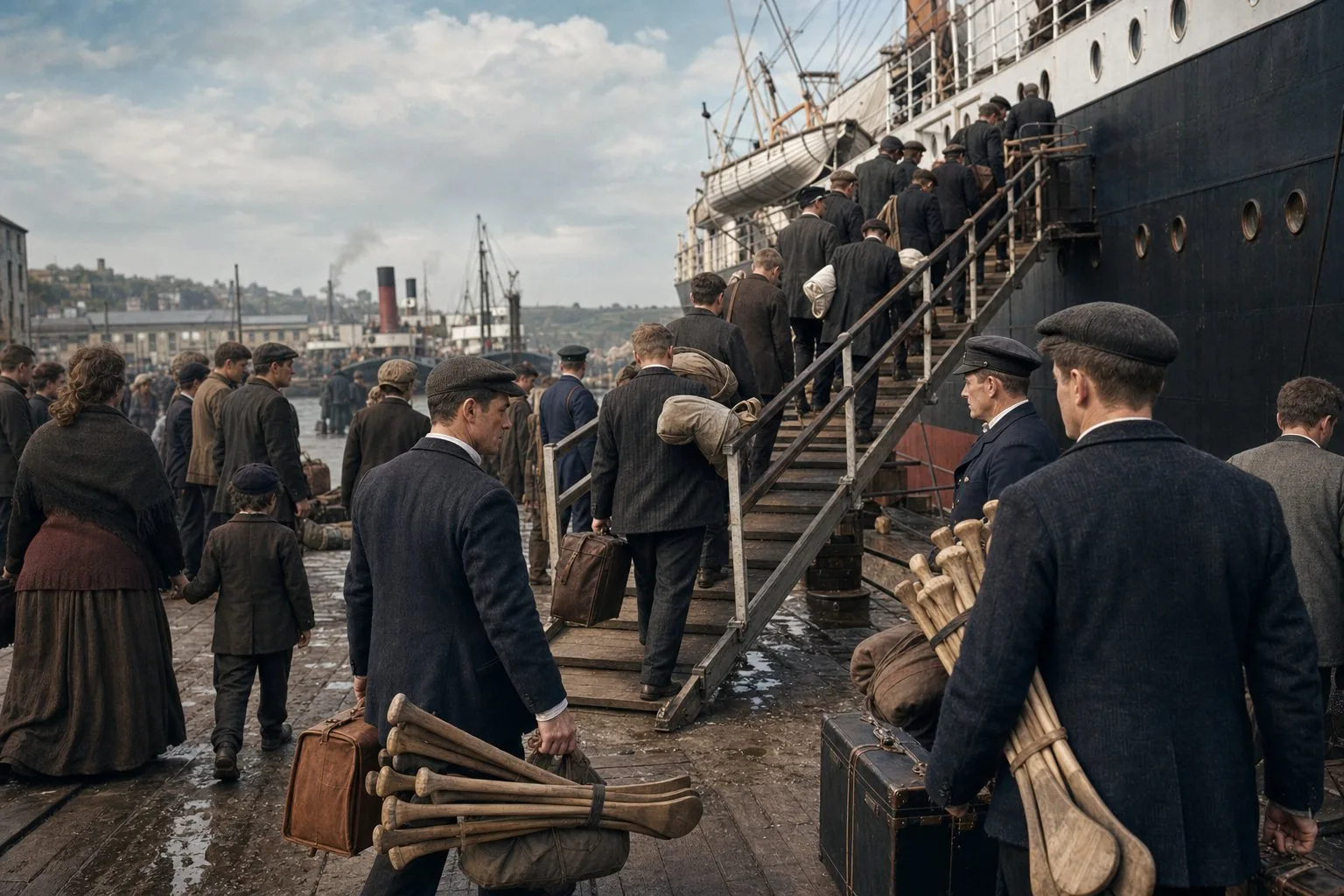
As a business venture it was a failure. The money never came in as hoped, the party ran short mid-tour, and Michael Davitt had to be wired for more than four hundred pounds to bring them home. A number of the athletes stayed in America rather than return to a hard winter in Ireland, which cost the Association some of its finest men. But it did one lasting thing. It planted the idea firmly among Irish-Americans that these were their games too, and in the years that followed, GAA clubs took root in New York, Boston, Chicago and beyond.
More than a game: what the GAA meant to the diaspora
For an emigrant, a Gaelic football club was rarely just a place to play. It was where you heard a Mayo or a Kerry accent on a Saturday, where a new arrival off the boat could find a bed and a start, where money was gathered for a cause at home. The club field became one of the few pieces of Ireland a person could actually stand on three thousand miles away.
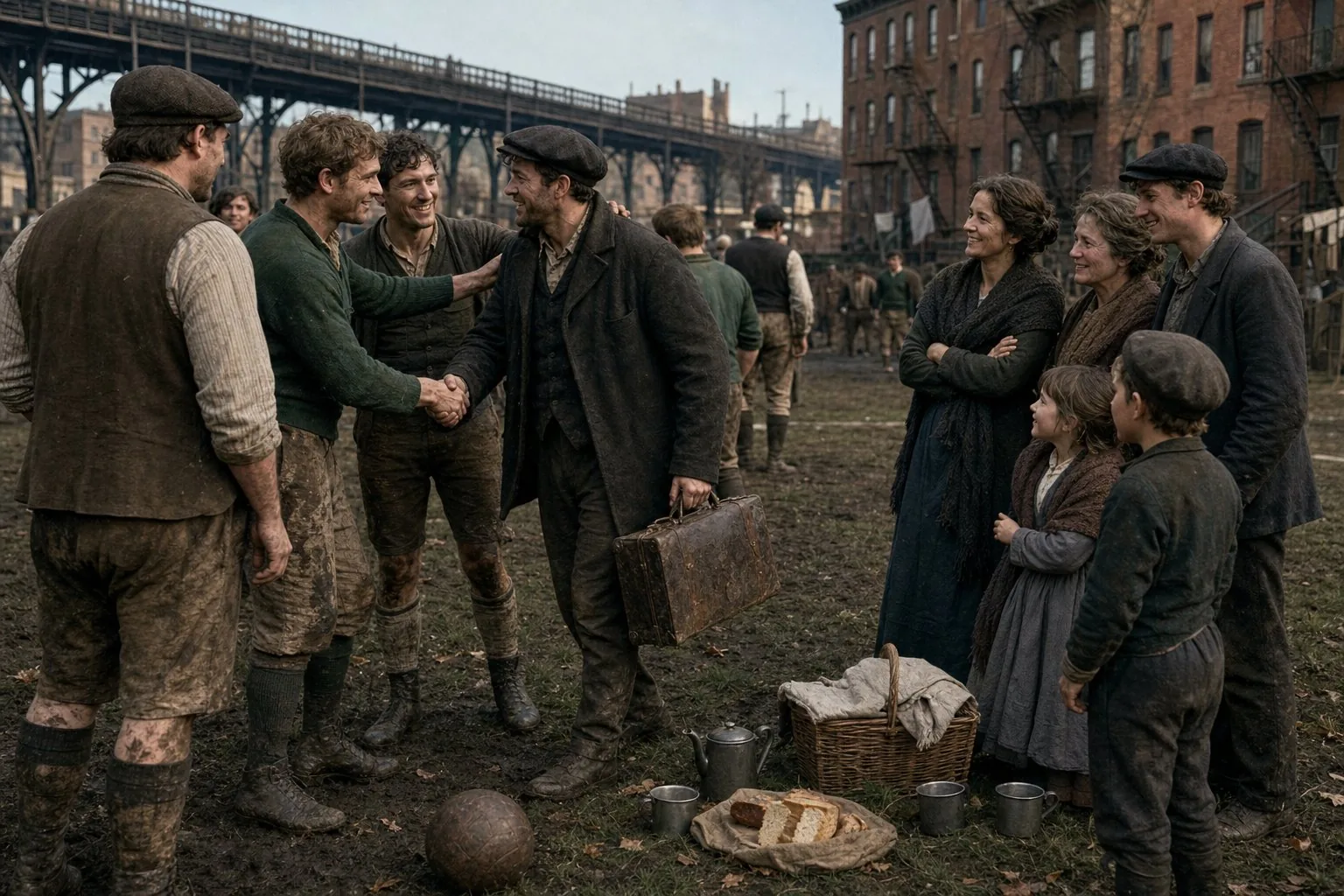
Many of those clubs took the names of home places, counties and parishes, so that a man could leave Mayo for good and still line out for it on a Sunday in another country. The county allegiance that GAA competition built at home travelled intact, and it is part of the reason an Irish-American family three or four generations out can still tell you its county before it can tell you much else. The games kept the map of Ireland alive in people who would never see it.
Because the games carried identity, they carried politics with them. The same diaspora networks that ran the clubs overlapped with the organisations that funded Irish nationalism, and within a generation those same emigrant communities would be following, and paying for, the diaspora that watched 1916 so closely. The GAA at home grew straight out of the land agitation that had steadied the tenant farmer; the GAA abroad grew out of the loneliness of leaving. Both were, at heart, a way of holding on.
That is the thread worth keeping in view. The history of the GAA and the diaspora is not two stories, one Irish and one American. It is one story with an ocean running through the middle of it, and letters, and games, crossing back and forth.
The GAA in the family’s letters
The same letters carry the Ashbourne Act of 1885 and the first talk of tenants borrowing to buy out their holdings, and that is no accident of the calendar. The games and the land question rose together in the same decade, two expressions of the same recovered self-respect, and the letters set them down side by side because that is how they were lived.
That is the quiet echo the letters are built on. A club forms in a Mayo parish; a club forms in a New York parish; and the same family, split across the water, follows both. If your own people came from a particular county, their side could be the one Ballycastle travels to play, carrying your place into the match-day news.