Gift and Giving
The gift that prompts parents to share stories
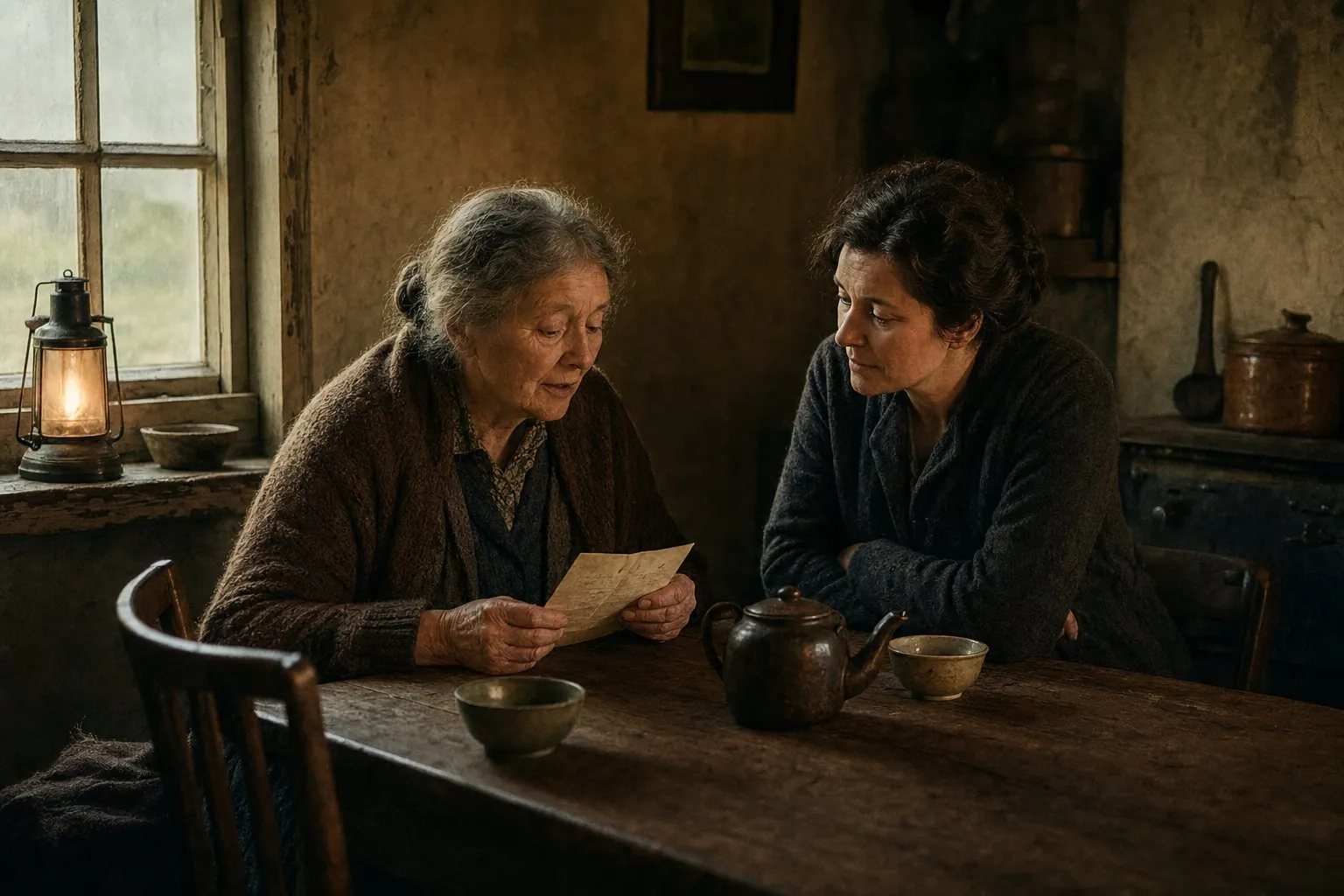
The gift that prompts parents to share stories is not a question, it is a cue: a dated, specific detail from their own lifetime that opens a memory the way a broad “tell me about your life” cannot. Psychologists studying autobiographical memory call this cued recall, and it is the reason a themed keepsake or a piece of real social history outperforms a blank interview, every time.
Why a cue works where a question fails
Ask an eighty-year-old to summarise her life and she has to do two jobs at once: search decades of memory and impose an order on it, with no starting point. Most people freeze. Researchers have a name for the alternative. In the mid-1980s, psychologists Mark Williams and Kevin Broadbent built what is now called the Autobiographical Memory Test, in which a specific word cue, rather than an open question, is used to prompt a specific, dated memory rather than a vague generalisation. Their finding, replicated across the decades since, is that a concrete cue reliably produces a sharper, more specific memory than an open prompt does.
That is the mechanism behind “remember when” working better than “tell me about”. A date, a place name, a wage, a boat, a fair day: each one is a door into a fragment of memory that a general question leaves shut.
The gift that prompts parents to share stories, in practice
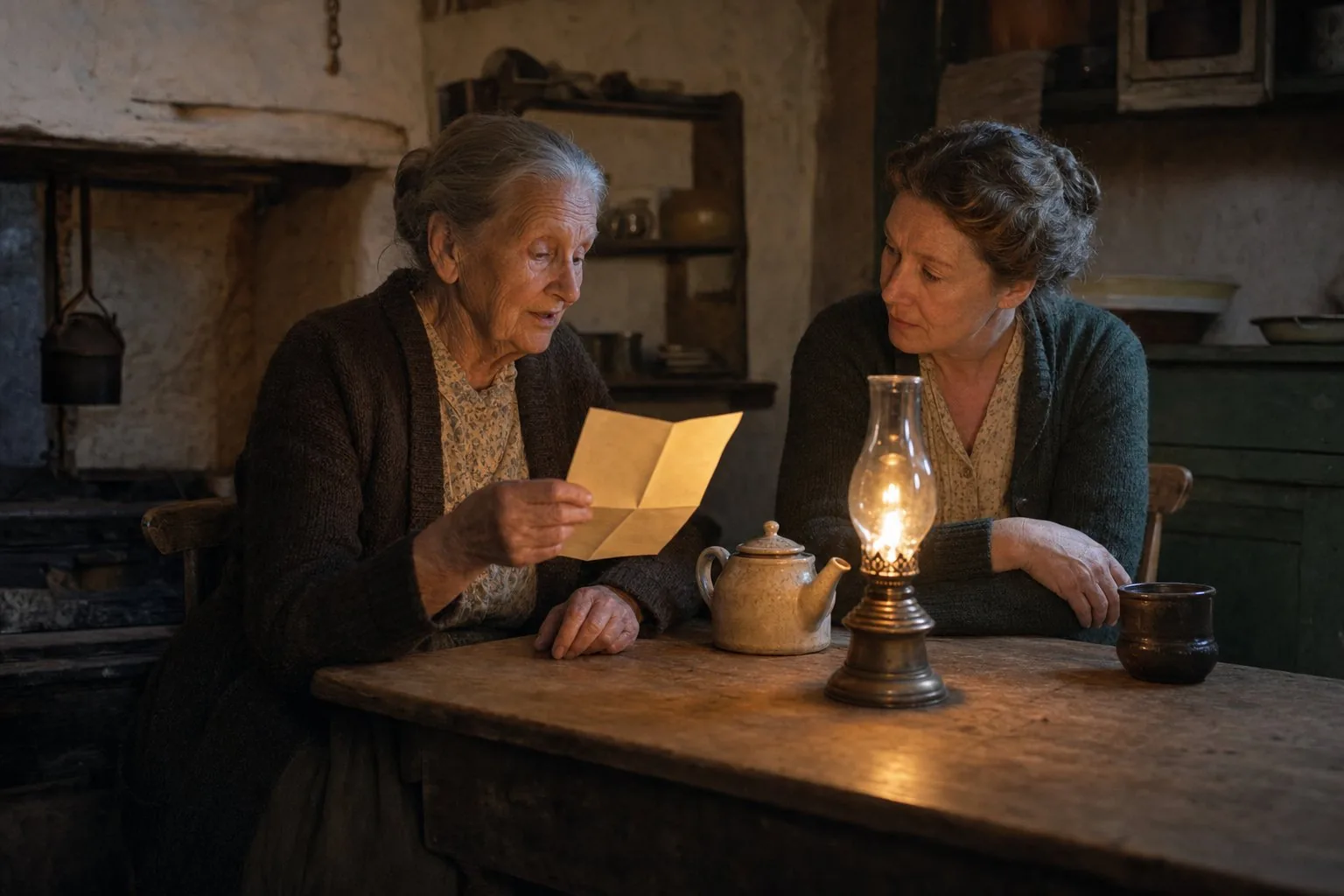
A themed correspondence built from real 19th-century Irish social history works as this kind of cue precisely because it is concrete rather than general. Reading about a fair day, a wage sent home, or a departure does not ask your mother to summarise anything. It hands her one dated scene and lets her own memory attach itself to it, the way the theory predicts it will.
The American wake is a useful example of the kind of detail that does this work. It was the send-off held on the evening before a family member emigrated, and the historian Kerby Miller, drawing on more than 5,000 emigrant letters and pieces of oral tradition for his 1985 study of the Irish exodus to North America, describes it as deliberately modelled on a wake for the dead: keening, prayers, food and drink, and a mixture of grief and forced gaiety, because for a family who might never see the emigrant again, the departure really was a kind of loss. Read a description like that and most people do not respond with a fact. They respond with “that reminds me of”, and the conversation that follows is the actual gift.
Questions to ask parents about family history: a printable list
A themed gift gives you an opening. These questions give you somewhere to take the conversation once she starts talking. Print the list, keep it by the phone, and use two or three at a time rather than all at once.
Departure and journey
- Did anyone in our family emigrate, and do you know why they went?
- Is there a story about someone leaving that was told more than once in the family?
- Do you know what town, townland or county we come from in Ireland?
Home and daily life
- What was the house you grew up in like? Who else lived there?
- What work did your parents and grandparents do?
- What did a hard year look like in your family, and how did people get through it?
Objects and keepsakes
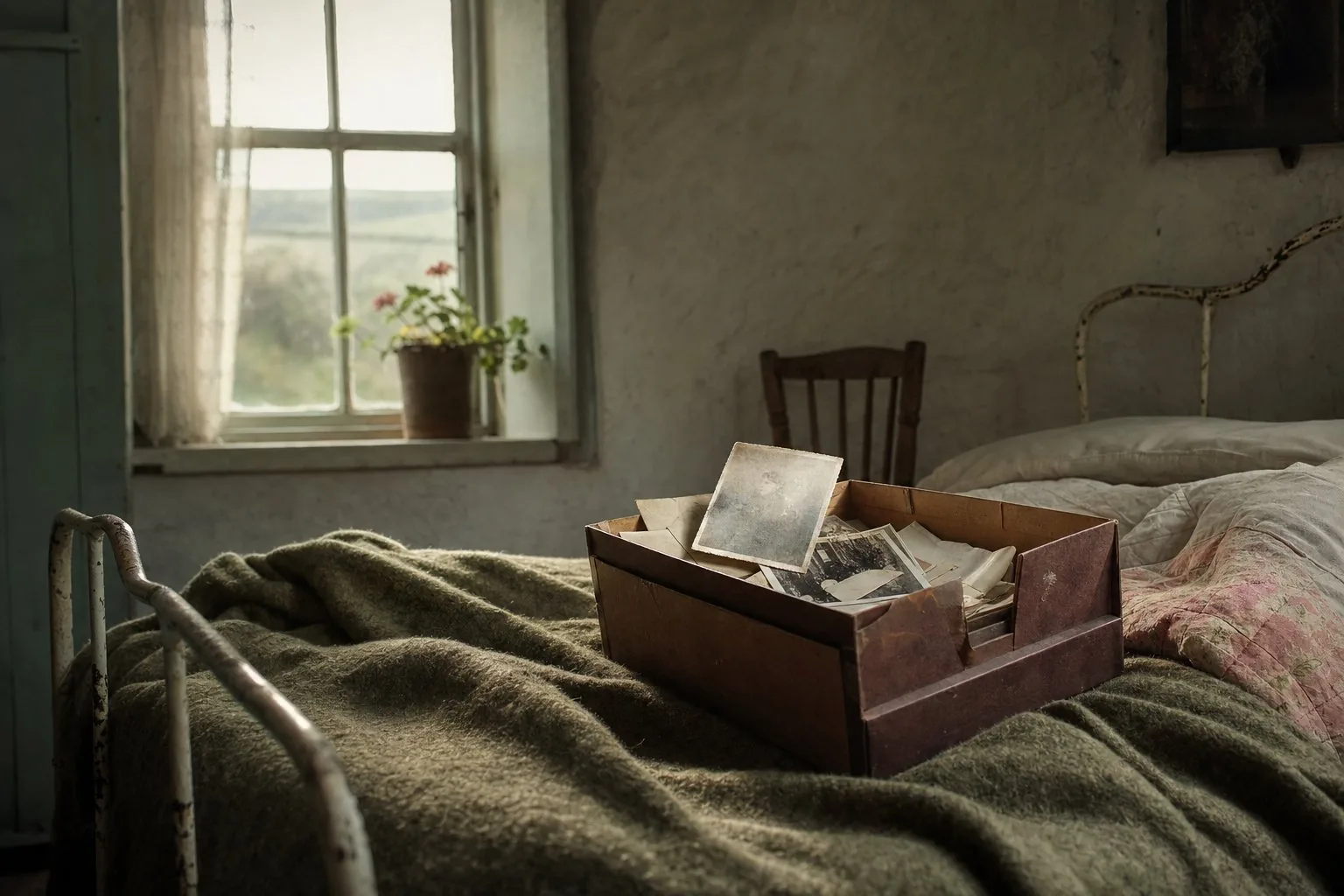
- Is there an object in the house with a story attached to it: a ring, a letter, a photograph?
- Do you know who the people in the old photographs actually are?
- Did any letters or documents survive from earlier generations?
People and relationships
- Who was the storyteller in your family when you were growing up?
- Is there a relative nobody talked about much? What do you know about them?
- What is a story you were told as a child that you have never told anyone else?
Legacy
- What do you want the grandchildren, or their children, to know about where we come from?
- Looking back, what would you want future family to understand about your own life?
How to ask about family history without turning it into an interview
Do not sit down with the full list and a notebook. That recreates the blank-page problem the cue was supposed to solve. Instead, let a specific detail, whether from a themed gift, an old photograph, or a family object, start the conversation naturally, and hold one or two questions in reserve for when it stalls.
Follow-up matters more than the opening question. When she mentions a name or a place in passing, ask her to say more about it before moving on. Record the conversation on your phone if she is comfortable with it, or write down names and dates immediately afterwards while they are fresh, because the detail that seems unforgettable in the moment rarely stays that way by morning.
A conversation starter gift for parents works best when it repeats. One good conversation gets you one afternoon of stories. A gift that keeps producing new, specific cues over time gets you a standing reason to come back to the subject, which is how most family history actually gets recorded: in instalments, not in one sitting.
What historians cannot know
The record here has real limits, and it is worth naming them rather than smoothing them over. Much of what is known about customs like the American wake comes from folklore gathered well after the fact, often decades later, by people recalling what their parents or grandparents had described to them, which means later retellings can round off detail or blend one family’s account with another’s.
The psychology is not settled either. Cued recall reliably produces sharper individual memories than open questions do, that part of the research is consistent. But a 2020 randomised trial by Allen, Doyle and Roche, published in Europe’s Journal of Psychology, found that a structured reminiscence programme did not measurably improve autobiographical memory, cognition or well-being in healthy older adults compared with a control group. The honest reading is that a good cue helps a single conversation go further. It is not, on the evidence available, a proven treatment for memory or mood in people who are already healthy. Treat it as what it is: a way to have a better conversation, not a clinical intervention.
Genealogical letters and personal papers carry a similar gap. The National Archives of Ireland’s own guidance to family historians notes that letters and papers kept within a family can reveal details, such as name spellings, locations and emigration dates, that never made it into any official record. But that is exactly the problem: what survives is whatever a family happened to keep, not a complete account, so a gap in the family memory is not proof that nothing happened, only that nothing was written down or passed on.
None of that is a reason to skip the conversation. It is a reason to write down what you hear soon after you hear it, and to ask a second time if the details differ.
Before the room empties
The stories exist in one place only, in the people who lived close enough to the events to remember them, or to have been told directly by someone who did. A specific cue is simply the most reliable way found so far to get at that memory while it is still there to ask about. A gift for an elderly Irish mother or an Irish grandparent who misses home works best when it does this quietly, one detail at a time, rather than asking for the whole life story in a single sitting.
If you want to see the kind of dated, specific detail this relies on, from the American wake through the decade that follows, start with the letters.
Sources and further reading
- Kerby A. Miller, Emigrants and Exiles: Ireland and the Irish Exodus to North America (Oxford University Press, 1985), drawing on more than 5,000 emigrant letters and pieces of oral tradition.
- Williams, J. M. G. and Broadbent, K., the Autobiographical Memory Test methodology for cued versus general autobiographical recall, first published 1986 and widely replicated since.
- Allen, A. P., Doyle, C., and Roche, R. A. P., “The Impact of Reminiscence on Autobiographical Memory, Cognition and Psychological Well-Being in Healthy Older Adults,” Europe’s Journal of Psychology, 16(2), 2020.
- National Archives of Ireland, “Family History Research” guidance, nationalarchives.ie.
- Library of Congress, Veterans History Project, sample interview question guidance for family and life history interviews.
- StoryCorps, “Great Questions List,” a public question bank for family and heritage interviews.