Gift and Giving
Meaningful gift for elderly Irish mother: what actually reaches her
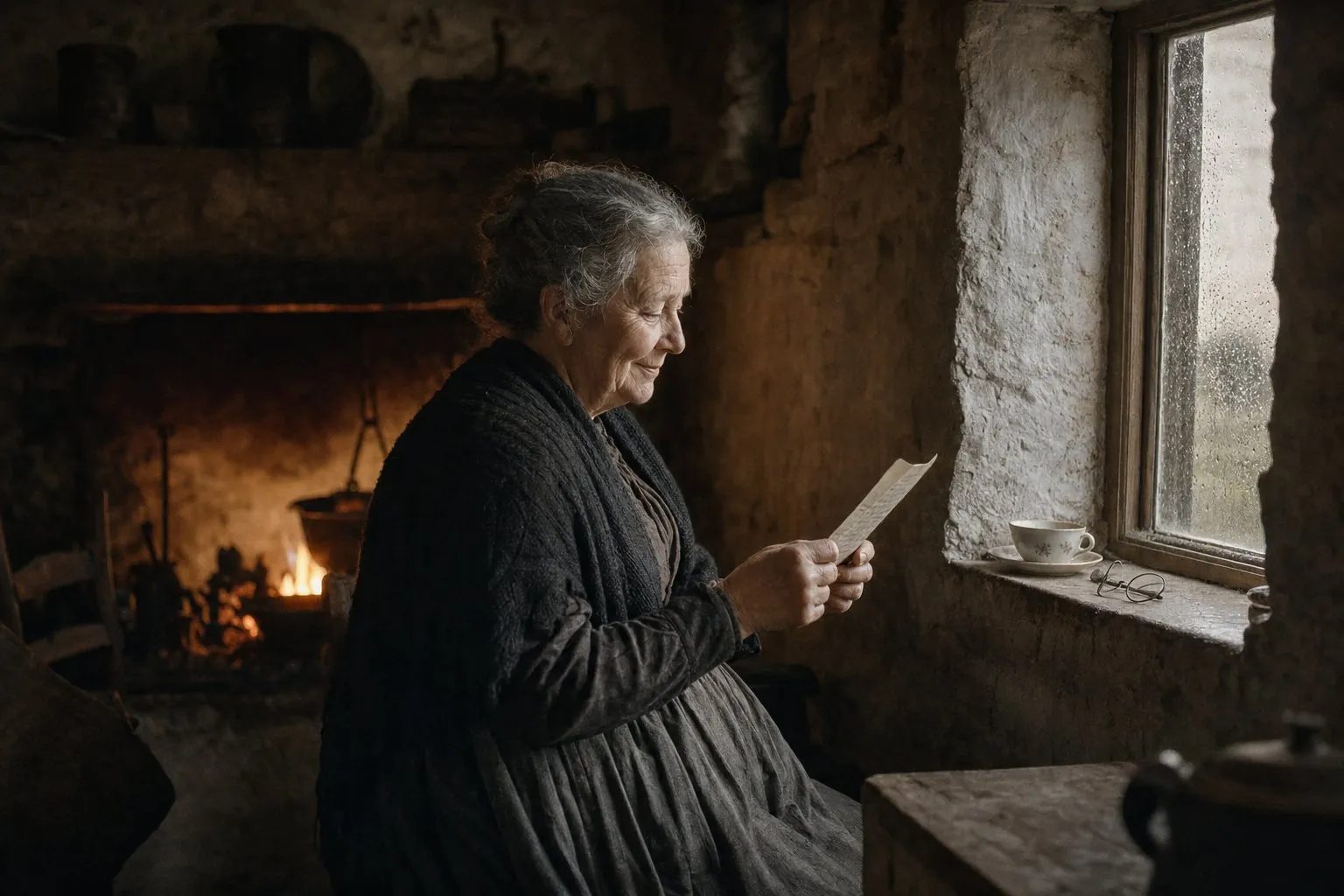
Search for a meaningful gift for elderly Irish mother and the results are always the same: candles, cardigans, framed prints. What actually reaches her is rarely a new object at all. Women in their seventies and eighties who say they want nothing usually mean it: they are giving things away, not gathering them in. What reaches her instead is something that keeps arriving, asks nothing of a screen, and speaks to her own place and her own people, not a gift-shop idea of Ireland.
It is late, the house is quiet, and you are in bed with your phone, looking for something you cannot quite name. Today’s visit was lovely. It was also one visit fewer, and you felt that on the drive home. Now her birthday is coming, or Christmas is, and you already know how the usual version goes. A candle. A cardigan. A framed print. Opened with real warmth, admired, and set on a shelf that is already full.
Why an Irish mother who has everything really means it
She has told you not to be buying her anything, and she means it. This is not modesty. Central Statistics Office figures from Census 2022 put 189,574 people aged 65 and over living alone in Ireland, up from 156,799 in 2016 and 136,295 in 2011. A household that has been shrinking that steadily for a decade does not need more to store. It needs less to manage and more reason to pick up the phone.
The loneliness underneath the tidy phrase “I want nothing” is well documented, too. A 2023 EU-wide survey cited by the older persons’ charity ALONE found that more than one in five people in Ireland report feeling lonely most or all of the time, against roughly one in eight across the EU as a whole, the highest rate recorded among the member states surveyed. The Irish Longitudinal Study on Ageing at Trinity College Dublin, which has followed more than 8,000 adults aged 50 and over for over a decade, has separately reported that around 12% of older adults experience persistent loneliness, and that it tracks with poorer physical and mental health over time. A gift for an Irish mother who has everything is not competing with her possessions. It is competing with her quiet afternoons.
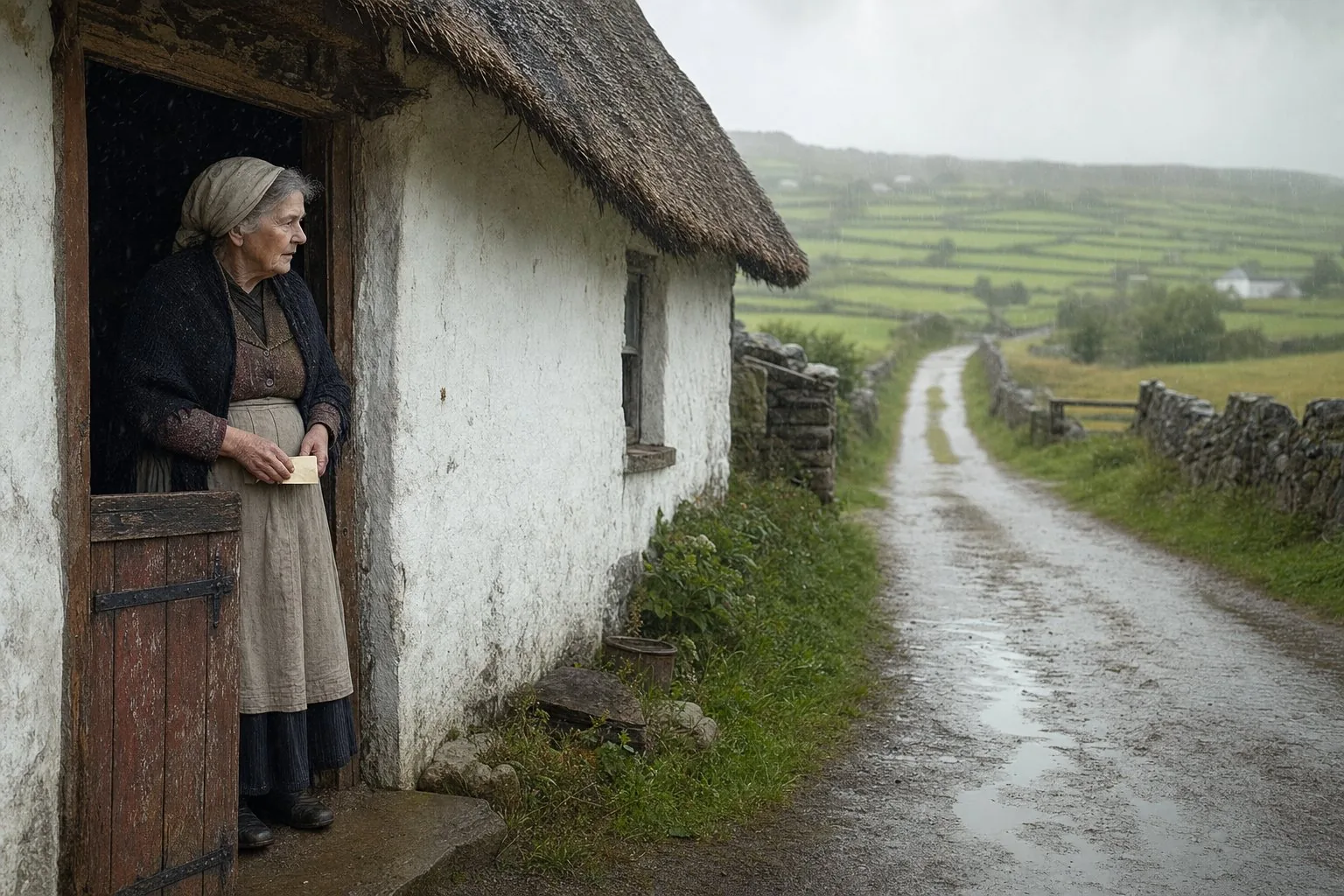
Why the usual gifts stop working
The problem is not your taste. It is the shape of the gift. One object, opened once, on one day. The warmth is real, and it is over by teatime. The scarf joins the other scarves. The ornament waits for the charity-shop bag.
Meanwhile, listen to what she actually talks about at the kitchen table. Not things. She talks about the 1950s. About her own mother. About the boat, and the ones who went, and the letters that used to come. She is reaching backward, for people and places, and we keep handing her objects.
What makes a meaningful gift for elderly Irish mother, in practice
Three things, and most gifts fail all three.
It should arrive more than once. A single parcel gives her one good day. Something that keeps coming gives her the waiting in between, and for a woman whose weeks have grown quiet, the anticipation is not a bonus. It is the gift. This is the whole logic behind a no-clutter gift for elderly parents: fewer objects to dust, more occasions to look forward to.
It should be her Ireland, not a souvenir Ireland. She can tell the difference between Ireland the place and Ireland the gift-shop shelf in about two seconds, because she is from one of them. Anything that speaks to the county, the parish, the particular, lands harder than anything with a shamrock printed on it.
It should need no screen and no small print. No app, no password, no charger, no grandchild summoned to make it work, and nothing set in type too small for eyes that have earned the right to read comfortably.
What the historical record shows about letters and family memory
The instinct that a letter matters more to her than an object is not sentimental guesswork. It is backed by how seriously historians take the emigrant letter as a source in its own right. The historian Kerby A. Miller built his study “Emigrants and Exiles: Ireland and the Irish Exodus to North America” (Oxford University Press, 1985) on around 5,000 emigrant letters and memoirs, arguing that these ordinary family letters, not official records, carry the clearest evidence of how Irish emigrants actually understood their own leaving.
Miller’s own collection, some 7,000 letters gathered over five decades of research and donated to the University of Galway Library, went live to the public in March 2024 as the Imirce digital archive, spanning correspondence from the late 1600s to the mid-twentieth century. A separate resource, the Irish Emigration Database at the Centre for Migration Studies, part of the Ulster American Folk Park near Omagh, holds more than 33,000 records, including emigrant letters, shipping papers and family correspondence gathered from the Public Record Office of Northern Ireland and private donors since the archive’s founding in the late 1980s. None of this exists because the objects emigrants sent home mattered. It exists because the letters did.
The real test: does it get her talking
Here is the measure that matters more than price or presentation. Does the gift start a conversation, or end one?
You already know some of her stories. You suspect there are more, the ones she has never been asked the right question about, the ones that only surface when something specific stirs them: a townland name, a ship, a date. Part of why departure sat so heavily in Irish family memory is the send-off that grew up around it. Emigration in the Famine decades was so often treated as permanent that communities marked it with the American wake, a night-before gathering held with the same grief, food, prayer and music as an actual wake, because for most families it effectively was one. A gift that echoes that world, rather than a modern one, tends to open the kind of remembering that only surfaces once. We have written more about the stories a correspondence like this draws out and about what an American wake actually involved, if that history interests you as much as the gift itself.
What historians cannot know
The letters that survive in archives like Imirce and the Irish Emigration Database are not a full record of what ordinary families said to one another. They are the letters that were kept: written by those who could write or dictate, sent to relatives who happened to preserve them, and passed down through households that did not throw the box out in a later move. What was said aloud at the American wake itself, the exact words in the kitchen the night before a son or daughter left, is gone. Historians work from what remains, and are honest that it is a biased sample, weighted toward the literate and the fortunate. That gap is worth naming rather than papering over.
Gifts that pass the test
More than one thing does.
A photo book you make yourself, from the shoebox she keeps meaning to sort. Inexpensive, personal, and it will make her cry in the good way. Its limit is the one all objects share: one arrival.
A story-recording project, where she answers a question and the answers become a printed book. These suit mothers who like being asked. They do ask something of her, though, and some women go quiet the moment a recorder, real or implied, is running.
A subscription of letters posted from Ireland. This is the one we make, so weigh our word accordingly, but the shape is what matters: correspondence that keeps arriving, carrying a family’s story across a real decade of Irish history, asking nothing of her except the thing she loves doing anyway: reading, remembering, and ringing you to talk about it.
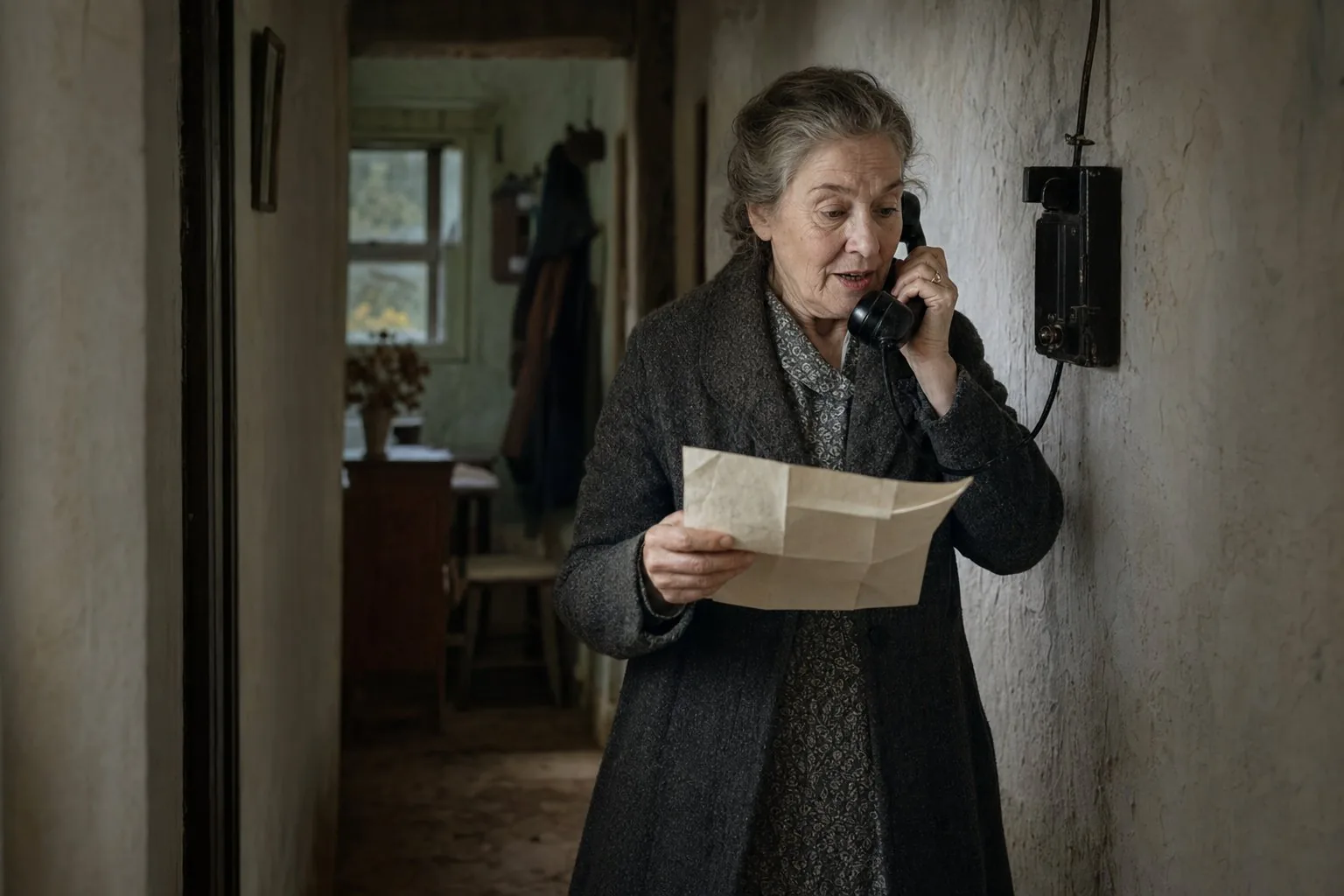
Whatever you choose, choose the shape first. Arrivals over objects. Her Ireland over the gift-shop one. Paper over screens. Stories over stuff.
A last word on ours, quietly. Yours, From Ireland follows one fictional but carefully researched Irish family across the years 1847 to 1857, posted from Ireland. If the shape of it sounds like her, you can read more and give her a gift built around letters.
Sources and further reading
- Central Statistics Office, “Census of Population 2022 Profile 3: Households, Families and Childcare”, key findings on older persons living alone, 2023.
- ALONE, press release on EU-wide loneliness survey findings for Ireland, June 2023.
- The Irish Longitudinal Study on Ageing (TILDA), Trinity College Dublin, report on loneliness and social isolation among adults aged 50 and over.
- Kerby A. Miller, “Emigrants and Exiles: Ireland and the Irish Exodus to North America”, Oxford University Press, 1985.
- University of Galway Library, Imirce digital archive of the Kerby A. Miller Collection of Irish emigrant letters and memoirs, launched March 2024.
- Centre for Migration Studies, Ulster American Folk Park, Omagh, Irish Emigration Database.