Counties and Ancestry
County Tipperary and a Century of Leaving
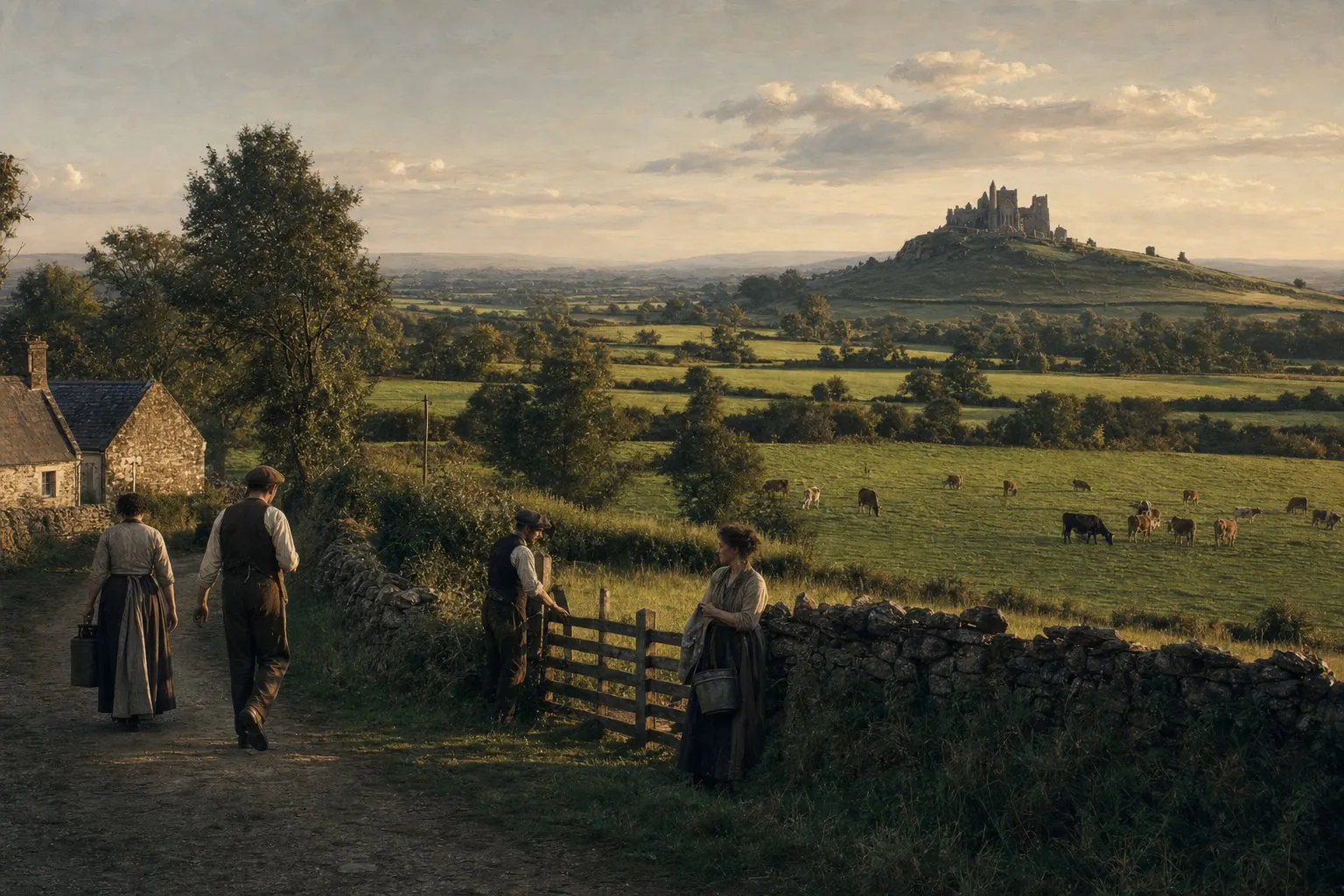
Tipperary ought to have been the county that kept its people. Through the heart of it runs the Golden Vale, some of the richest grazing and dairy land in Ireland, country that fattened cattle and filled churns while thinner ground to the west went hungry. And yet County Tipperary emigration history runs as long and as deep as any Atlantic county’s. For well over a hundred years, the sons and daughters of the best farmland in Ireland walked away from it, to Newfoundland, to America, to Britain and to Australia, in one of the steadiest and least remembered departures of them all.
The explanation is a plain one: good land is small comfort when it is not your own. Tipperary’s wealth sat in strong farms and large grazing holdings, and beneath them lived a mass of labourers, cottiers and smallholders with no secure claim on any of it. When the bad years came, and even when they did not, the younger sons and daughters of that system had nowhere on the land to go. So they went off it. That is the story the county’s records tell over and over: not a single catastrophe but a long habit of departure, renewed by each generation in turn, from the fisher boys of the 1780s to the ones who took the boat train in living memory.
Before the Famine: the Newfoundland road
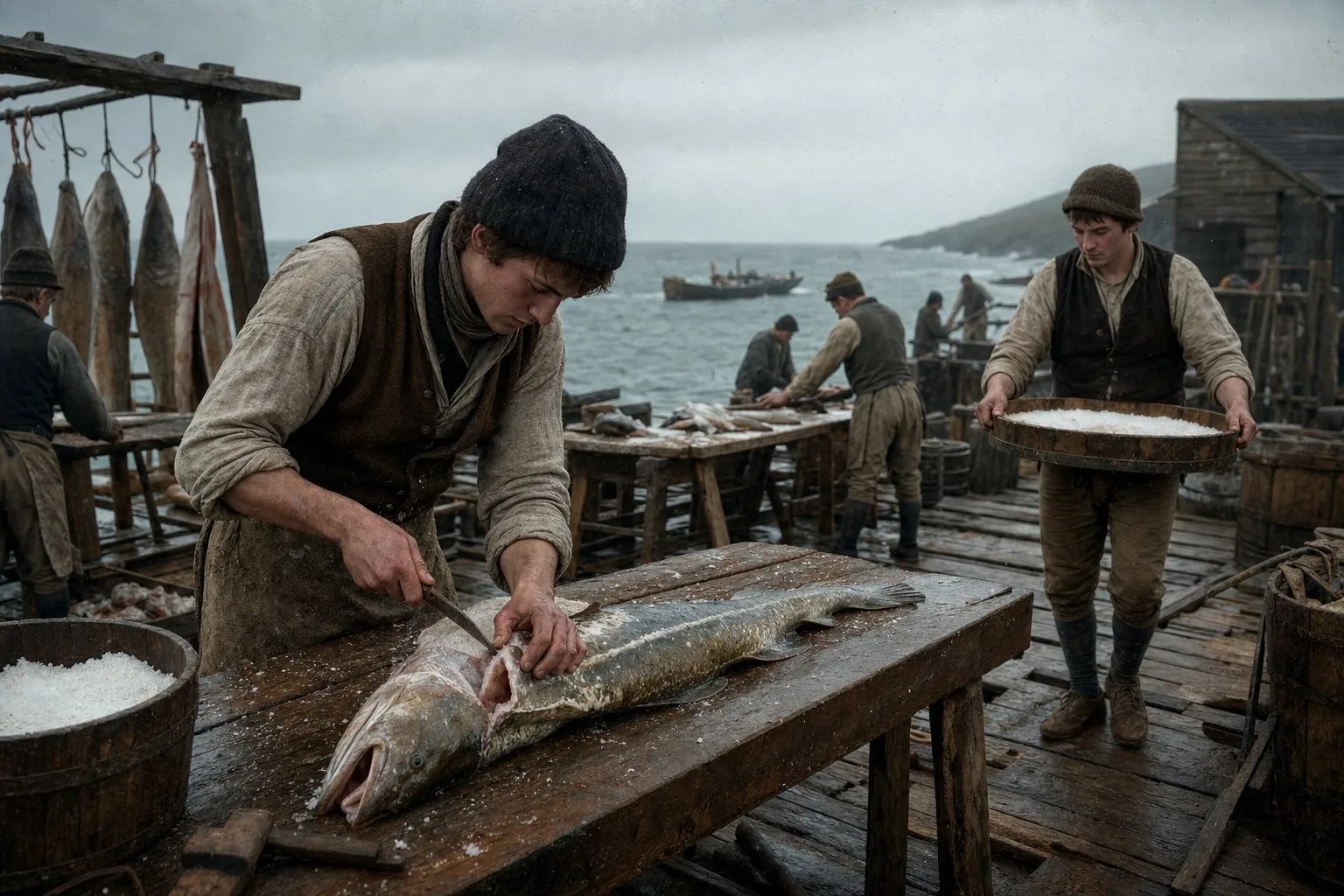
Tipperary’s leaving began earlier than most counties’. From the later decades of the 1700s, young men from the south of the county made their way down to Waterford city and took ship for the cod fisheries of Newfoundland, the island the Irish called Talamh an Éisc, the land of the fish. Some went for a season or two and came home with their wages. Many stayed. So heavy was the traffic from this one small cluster of counties, Tipperary, Waterford, Wexford, Kerry and Cork, that the Irish once spoken in Newfoundland traced straight back to them, and the English heard in its outports still carries their echo. It is one of emigration’s strange immortalities: a Tipperary way of talking, preserved on a cold island in the north Atlantic long after the boats stopped running.
The Famine in the Golden Vale
Even the good land did not hold in the hungry years. Between the census of 1841 and the census of 1851, Tipperary’s population fell from roughly 435,000 to about 331,000, a loss of over a hundred thousand people to death and flight inside a single decade. Rich soil was no protection for the people at the bottom of it: the labourers and cottiers who lived on the potato starved beside some of the best pasture in Europe, which kept exporting its beef and butter while they queued at the relief works.
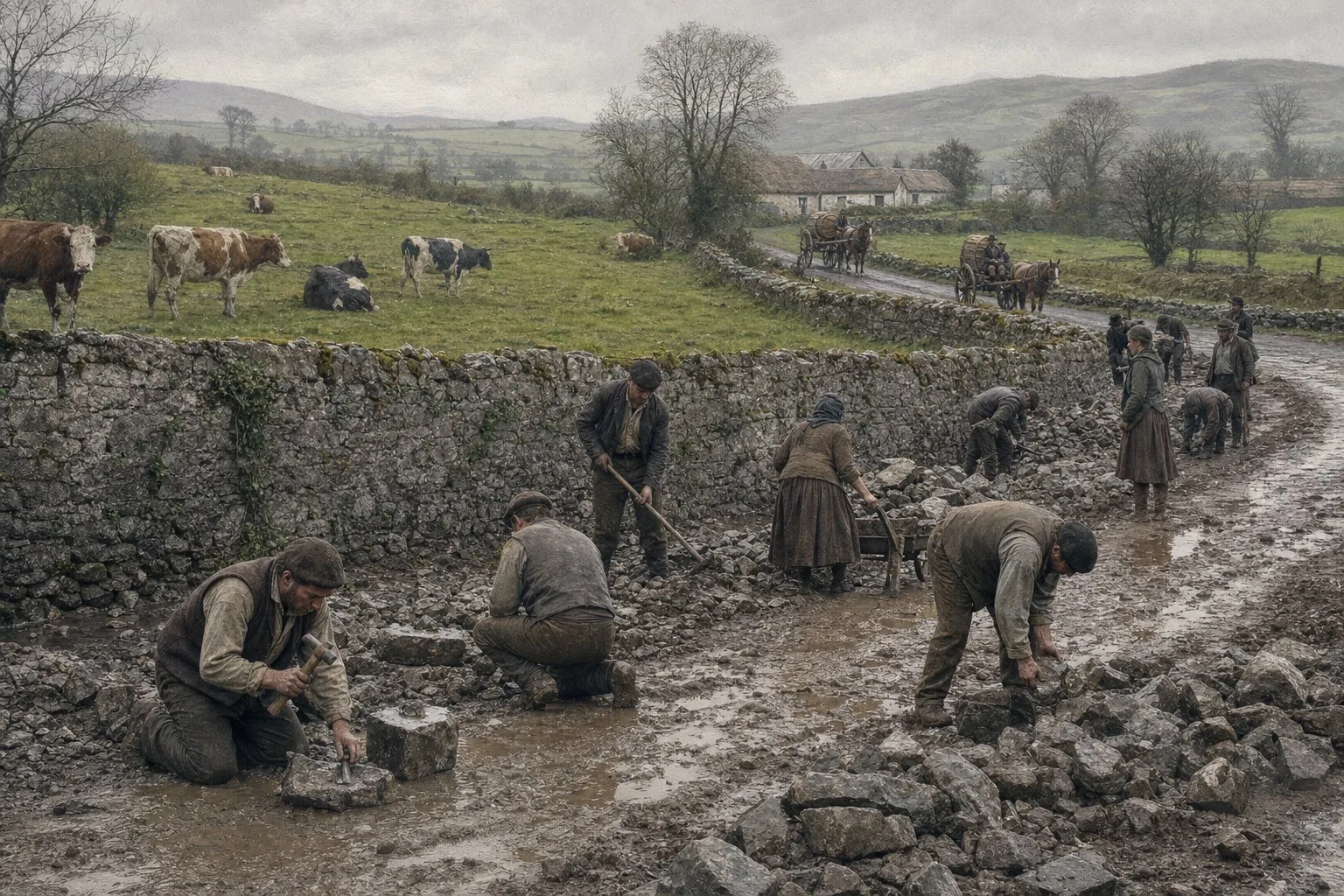
The county was administered through eight Poor Law unions, Borrisokane, Cashel, Clogheen, Clonmel, Nenagh, Roscrea, Thurles and Tipperary town, and their workhouses were overwhelmed, Clonmel’s and Thurles’s among the worst pressed. Emigration surged in those years, to America for those who could raise the full fare, and to Scotland and England for those whose money would only stretch to the short crossing.
The workhouses fed the emigrant ships directly. Under the Earl Grey scheme, which sent young women orphaned by the Famine from Irish workhouses to the Australian colonies between 1848 and 1850, some 477 girls left Tipperary, more than one in ten of all the girls the scheme carried from the whole of Ireland. Forty of them left the Nenagh workhouse together in the spring of 1849. One of those, Mary Connors, sailed for Port Phillip on the Pemberton that May, a teenager bound for domestic service on the far side of the world, her fare paid by the state that had failed to feed her.

County Tipperary emigration history after the Famine
The Famine broke something in the county that never mended, and afterwards leaving became simply what young Tipperary did. The land agitation that ran fierce through the county in the 1870s and 1880s was, at bottom, a fight over the same insecurity that had been driving its people out for a generation, and it came too late to stop the flow. By the closing decades of the nineteenth century, Tipperary stood among the seven Irish counties that between them were supplying nearly half of all the country’s emigrants.
The routes were well worn by then. For America, it was the train south and the tender out to the liner at Queenstown, the same last sight of Ireland told in the story of Cork’s great emigrant port. For Britain, it was the boat to Liverpool or Glasgow and work in the mills, the docks and the building trades, sometimes for a season, often for good. And for a striking number it was the long passage south: Tipperary was among the most significant Irish counties for emigration to Australia across the nineteenth century, its people scattered from the goldfields to the sheep stations.
Tracing a Tipperary family
For anyone whose people came out of Tipperary, the county is unusually well served with records of exactly the years that scattered them. The county’s archive service has been digitising the famine-era minute books of its Poor Law unions, along with rate books for the Cashel, Nenagh and Thurles unions and workhouse admission registers for Cashel, Roscrea and Thurles. The Clonmel board of guardians’ minute books are rarer still: they record the names of the famine orphan girls that union sent to Australia. For a county where so much of the leaving passed through a workhouse door, those ledgers are as close as anything gets to a register of the departed.
Start with the surname and the parish, work outward through the civil records and the parish registers, and let the union books fill in the hardest decade. If the trail runs cold at a port, passenger lists at New York, Boston and the Australian ports will often pick it up on the far side. And hold onto the small details as you go, the townland names, the fair days, the neighbouring surnames, because they are what turn a chart of dates back into a place your family actually stood in.