Letters and the Craft
Letter Subscription Boxes Compared
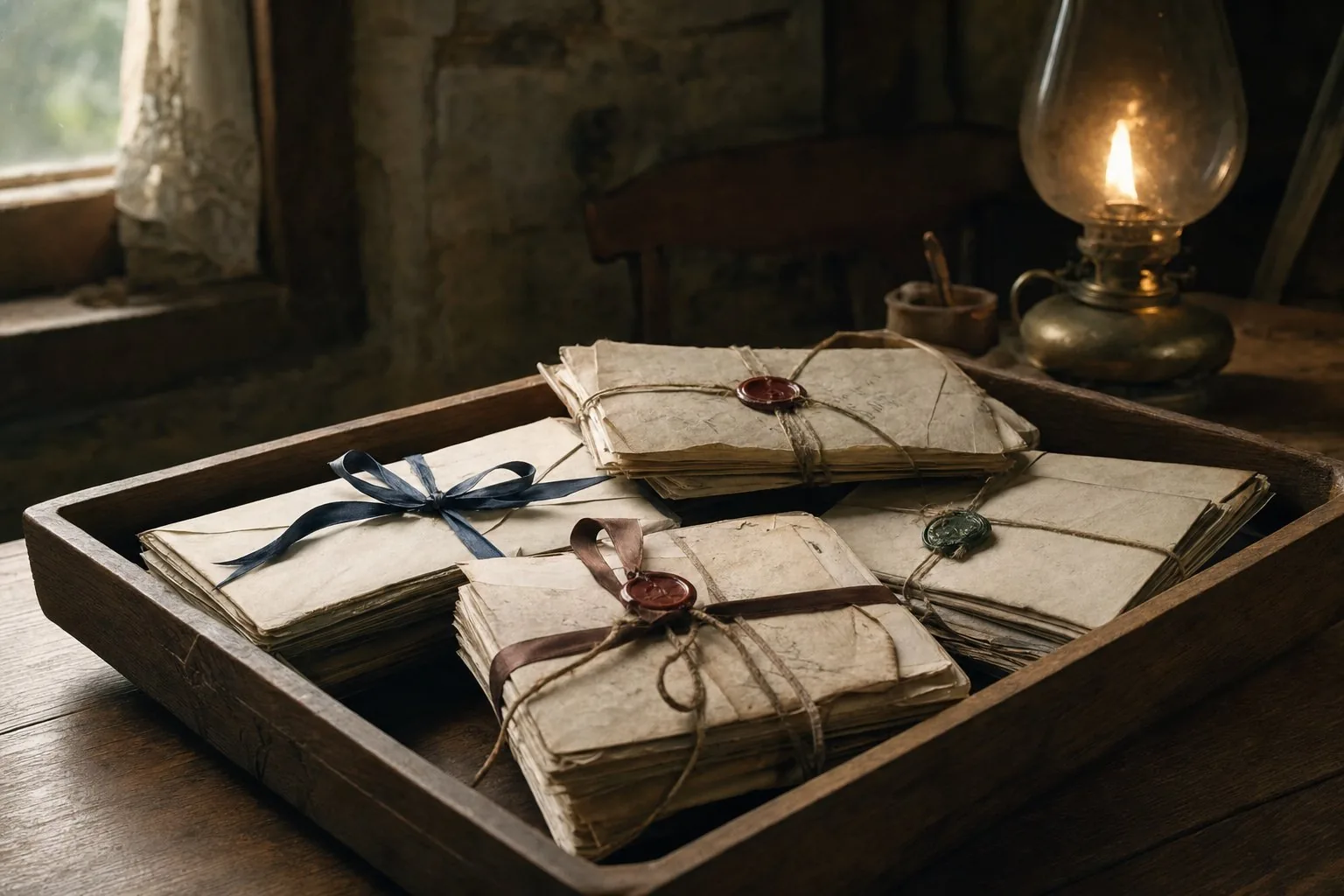
Four names turn up again and again once you start comparing letter subscription boxes: History By Mail, Letterjoy, The Flower Letters, and this one. Say that plainly before anything else. A comparison written by one of the four is not neutral by nature, only by intention, so weigh the paragraphs about us accordingly.
Split the four in half and a real pattern appears. Two of them mail you real history. Two mail you an invented story. That split matters more than price or packaging, because it decides what kind of pleasure a letter subscription box is actually selling you, before you ever open an envelope.
Two kinds of letter subscription box
Nearly every letter subscription box on the market is doing one of two things.
The first kind is an archive. It mails a reproduction of something a real person actually wrote, a soldier, a president, an inventor, alongside a sheet explaining who they were and why the letter mattered. You are holding a copy of the historical record, made physical and sent to your door.
The second kind is fiction. Characters, invented but placed in a real period, write letters that carry a plot forward one mailing at a time. You are reading a novel that arrives slowly, in instalments, rather than all at once off a shelf.
Both are honest products, and neither is pretending to be the other. The question worth settling before you spend any money is which pleasure you actually want, the document or the story.
History By Mail: real documents on a rotation
History By Mail sends one replica historical document a month, made to resemble the original’s ink, paper and wear, with a context sheet explaining its significance. At $8.99 a month it is the cheapest entry into the archive format by a wide margin.
The range is genuinely wide, too. Themes rotate roughly every four months, so a single year might carry a subscriber through a war, a run of inventions and a stretch of presidential correspondence, without anyone choosing the order in advance. That rotation is also the trade-off. You are handed a theme rather than picking one, and each document stands alone rather than building toward anything the next month.
If what you want is a steady, cheap, well-made piece of real history landing once a month, with nothing to keep track of between mailings, this is the simplest way into the format.
Letterjoy: the same idea, weekly and wider
Letterjoy runs the same archive idea at a faster pace and a higher price. Letters go out weekly rather than monthly, each one a reproduction paired with what the company calls the Postscript, a short article on the letter’s context, with postage free inside the United States. A two-month run of eight or more letters costs $49, a six-month run of twenty-six or more is $129, and a full year of fifty-two or more comes to $249.
The six-month and annual plans let a subscriber choose a track, American history, military history, famous authors, presidential history, science and innovation, even Stoicism, rather than being handed a rotating theme. That is a genuinely different commitment than a slower monthly drip. It suits a reader who wants to go deep on one strand of history all year, and who is willing to pay more and wait less between letters to get it.
The Flower Letters: fiction, and a story you choose
The Flower Letters is the clearest fiction option of the three competitors here, and the only one where a subscriber chooses the story before it even begins. A WWII romance and a Wild West adventure are two of the options on offer. The letters then carry that chosen plot forward across a year, arriving in pairs, with extras built for the story rather than the historical record folded into the envelope: postcards, telegrams, stickers, the odd invented newspaper clipping.
It runs $12.95 a month or $155.40 paid upfront for the full year, and orders shipped outside the United States receive every mailing together in one package rather than spread across the months, worth knowing if you are buying it as a gift across a border.
What it does well is straightforward narrative pleasure: characters, a plot, a genre picked in advance. What it does not do is history in the strict sense. The events sitting behind the story are real. The people writing the letters are not.
What all four get right
Whatever the format, the mail itself is doing real work. Every one of these services is betting that a physical letter, opened by hand and read at a table rather than glanced at on a phone, lands differently than a screen does. That bet holds up. A month of scrolling disappears from memory. A drawer of letters does not.
The two archive services also do something fiction cannot. They hand a subscriber a fact that can be checked. The document existed, the person who wrote it lived, and the context sheet says where to read further. Anyone who wants to feel closer to real history, not a version of it, is honestly better served by History By Mail or Letterjoy than by any story, however carefully that story is researched. That is worth saying plainly, and it holds regardless of which of the four you eventually choose.
What changes when the letters go both ways
All three of the above are one-directional. A letter arrives, written by someone else, and a subscriber reads it. Nobody inside the product writes back.
Yours, From Ireland is built differently. It follows two invented people writing to each other rather than one voice writing at a reader: Patrick O’Donnell, the second son of a farming family in Ballycastle, north Mayo, sails for Boston in October 1847, the worst year of the Famine, because the land was always going to go to his elder brother. Mary Cafferky, the girl he leaves behind, stays in Ireland and writes back. A third road runs alongside theirs. The youngest brother in the family takes the cheaper crossing, to England, and not to America. The family is fiction. The decade around them is not.
A two-way correspondence produces a different kind of suspense than either an archive or a single-voice story can. An archive hands over a finished document with nothing left to happen. A one-voice story moves a plot forward, but only one person is ever speaking. Two people writing past each other, each answering a letter sent weeks or months before, neither one knowing yet what has happened at the other end, is a shape none of the other three services here attempt. It is also, honestly, the harder thing to pull off well. Two convincing voices cost more than one.
Which letter subscription box actually fits you
Start with what you actually want to hold. If it is a real document, something an actual soldier or president once put to paper, History By Mail and Letterjoy are the only two of the four that can honestly give you that, and the choice between them is mostly pace and price, a cheaper monthly drip with a theme chosen for you, or a pricier weekly stream on a subject you pick yourself.
If what you want is a ready-made story in a genre you already know you enjoy, romance or adventure, and you would rather choose the plot than the period, The Flower Letters does that well and lets you pick before you pay a cent.
If what draws you in is two people, both invented but both grounded in a real decade, writing past each other without knowing yet what the other has just lived through, that is a narrower and stranger pleasure than either an archive or a single-voice story, and only a two-way correspondence can produce it.
None of this makes one format better than another. It means they are not the same purchase, whatever the envelopes look like from the outside, and it is worth knowing which one you are actually buying before the first letter lands.