Gift and Giving
Gifts for an Irish Dad Who Has Everything
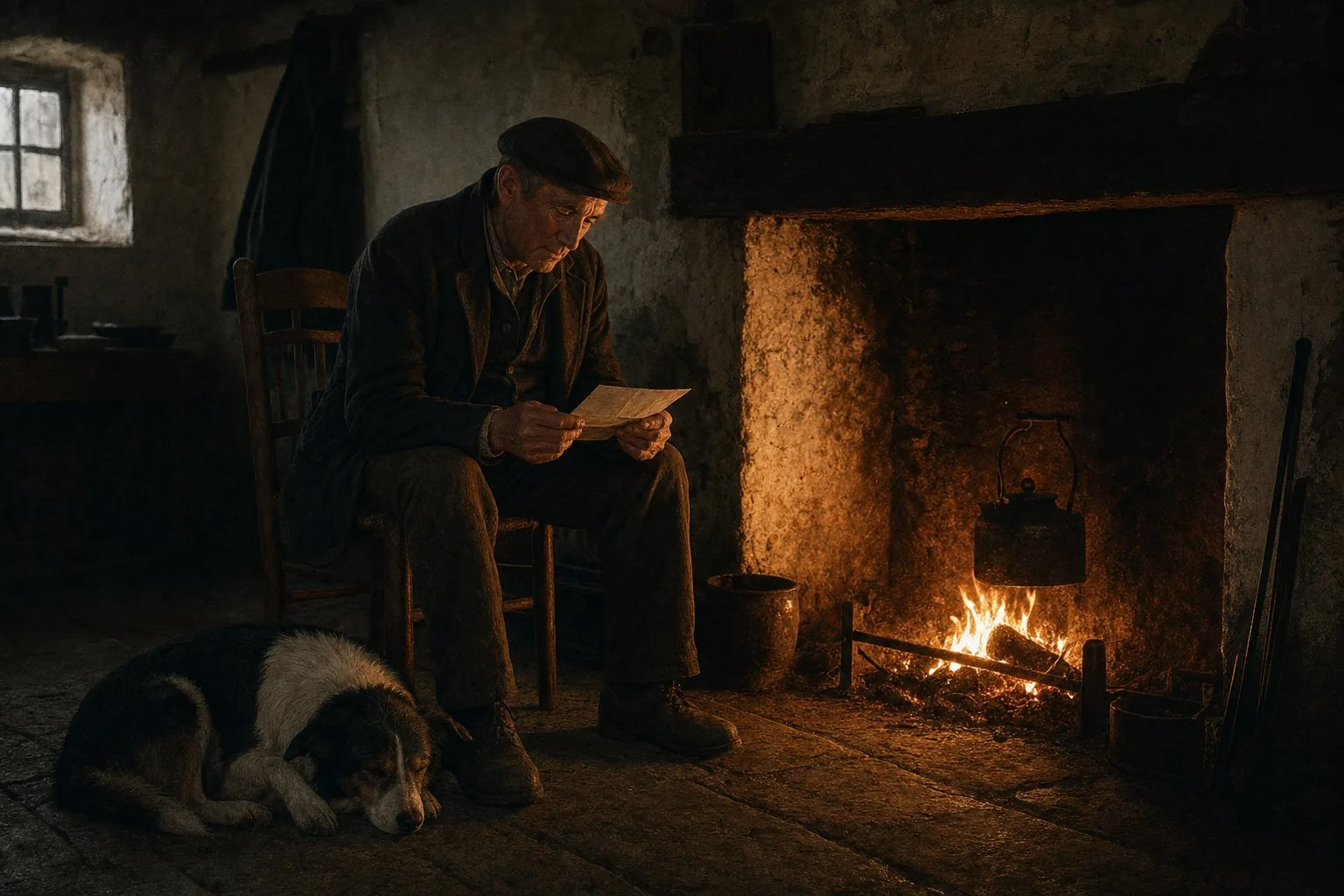
Your father’s shelf already holds the signet ring with the family crest stamped into it, the whiskey glasses etched with a Claddagh, the flat cap he wears twice a year, and a framed print of a coat of arms some website matched to the surname. He was delighted with all of it once. None of it gets picked up twice.
That is the real problem behind gifts for an Irish dad who has everything. It was never that he owns too much. It is that everything you have given him says Irish without giving him anything to actually do with it. A crest is a decoration, admired for a week and then absorbed into the furniture. What he is missing is not another object. It is something with enough weight to hold his attention past the morning it was opened.
Why the usual Irish dad gifts stop working
Go down the list and the pattern repeats itself. Cufflinks. A tie bar. A hip flask engraved with a townland he half remembers. A jersey for a county team he never once watched growing up. Every one of these borrows a symbol of Ireland and hands it over as though the symbol were the whole point. It rarely is.
Some households have already tried the gift that looks like the modern answer, the DNA testing kit. He spits into a tube, waits several weeks, and gets back a pie chart confirming what everyone already suspected: mostly Irish, with a sliver of somewhere else. It is genuinely interesting for an afternoon. It is also data, not experience, and a percentage on a screen has never once made a man ring his daughter to talk about his own grandfather.
Ask him what he actually knows about his own family’s crossing and most men go quiet fast. A surname. Maybe a county, half remembered from a grandmother. A boat, a rough date, a photograph nobody left in the family can place anymore. That is the shape of it for a great many Irish-American and Irish-diaspora families: a strong sense that something happened, and almost none of the texture of what it was actually like to live through it.
A signet ring cannot fill that gap, because it was never built to. It sits on a finger and says something happened here, without ever once telling him what.
What he actually wants at this stage
Men who have reached the has-everything stage of life are not short of things. They are short of occasions. A gift unwrapped once, admired once, and set on a shelf gives him one good five minutes. A gift that keeps happening gives him something closer to what he is actually missing: a reason to sit down on an ordinary evening, a reason to think about something other than work and the boiler and the car, a reason to ring you and tell you what he just read.
That is the real reframe behind gifts for an Irish dad who has everything. The gift is not the object in his hand on the day. It is the attention that object earns from him afterward, and how long that attention holds. A story can do that in a way a decanter never will, because a story asks something of the reader an object never does. It asks him to keep paying attention, and to keep coming back for more of it.
The century behind the coat of arms
Here is the part the gift shop version leaves out. Between the mid-1840s and the early 1850s, Ireland lost a staggering share of its population to the Great Famine, roughly a million dead and something close to a million more gone across the water within a handful of years. A transatlantic passage was not a plane ticket. It was a sum a labouring family could raise once in a generation, if that, and everyone standing at the fire on the last night before a departure understood as much.
That last night had a name and a shape of its own. Families held what was called an American wake for the one leaving, an evening of music and dancing that slid into keening before morning, a farewell for someone who was, to every practical purpose, gone from their lives for good. In the morning the parish walked them as far as the crossroads and stopped there, because that was as far as love could carry them.
What came after the wake was years, sometimes decades, of a single fragile thread: the letter. No phone call. No photograph most years. Nothing but paper crossing an ocean in each direction, carrying news that was already weeks old by the time it landed. The money that came home in some of those envelopes kept farms standing and paid the fare for the next brother or sister to follow. The ones who made it were often met at the other end by a hiring notice reading No Irish Need Apply, and built a life on the far side of it anyway.
The historian Kerby Miller, in Emigrants and Exiles, argued that many nineteenth-century Irish emigrants understood themselves less as people who had chosen to leave and more as exiles pushed out by forces beyond their control. That framing still explains something real about why Irish heritage can sit heavier in a family than a shamrock keyring suggests, and why a coat of arms bought off a website can feel so thin standing next to it.
One family’s decade, not a coat of arms
Yours, From Ireland was built around exactly that gap. Not a crest, not a county souvenir, but one family’s passage through that history, written as it might genuinely have been lived, across a single decade, 1847-1857. The O’Donnells of Ballycastle, Co. Mayo are not real, and we say so plainly. Patrick O’Donnell is the second son, so the family holding will never come to him, and in the autumn of 1847 he sails for Boston with nothing settled and a promise made to Mary Cafferky, the young woman he leaves behind. Her father has other plans for her. Patrick’s younger brother takes the cheaper crossing, to England rather than America, because not every branch of an Irish family went the same direction.
It is one invented family, and we are plain about that from the start. What is not invented is the ground under them: the workhouse, the blight, the cholera moving through the port cities, the years of No Irish Need Apply, the bank failures of 1857 that stopped work across Boston. Your father will not be reading about his own surname. He will be reading, letter by letter, what that whole century actually cost and asked of the people who lived through it. It will not name his ancestors. It will let him sit inside their decade for a while, in a way a crest was never built to do.
Why this actually suits the man who has everything
This is the reason the shape suits him in particular, more than it suits almost anyone else on your list. A man who has everything does not need another object competing for space with the whiskey glasses. He needs something with enough scale that it cannot be taken in on one Christmas morning, something that keeps giving him a reason to sit down again, in his own chair, at his own pace, on evenings you are not there to see.
It also gives you something the crest never will, and something the pie chart never could either: a reason to talk. A letter about a specific year, a specific hardship, a specific decision made at a specific kitchen table tends to pull a real memory loose in return. Ask a man about a signet ring and he will thank you and move on inside a minute. Ask him what he made of Patrick’s letter this time and you may hear a story about his own grandfather that nobody ever thought to tell you.
That is the actual gift underneath gifts for an Irish dad who has everything. Not one more thing for him to own. Something for him to be inside of, for a while, that gives the two of you something worth saying to each other that a decoration never could.