Gift and Giving
Is an Irish Letter Subscription Worth It?
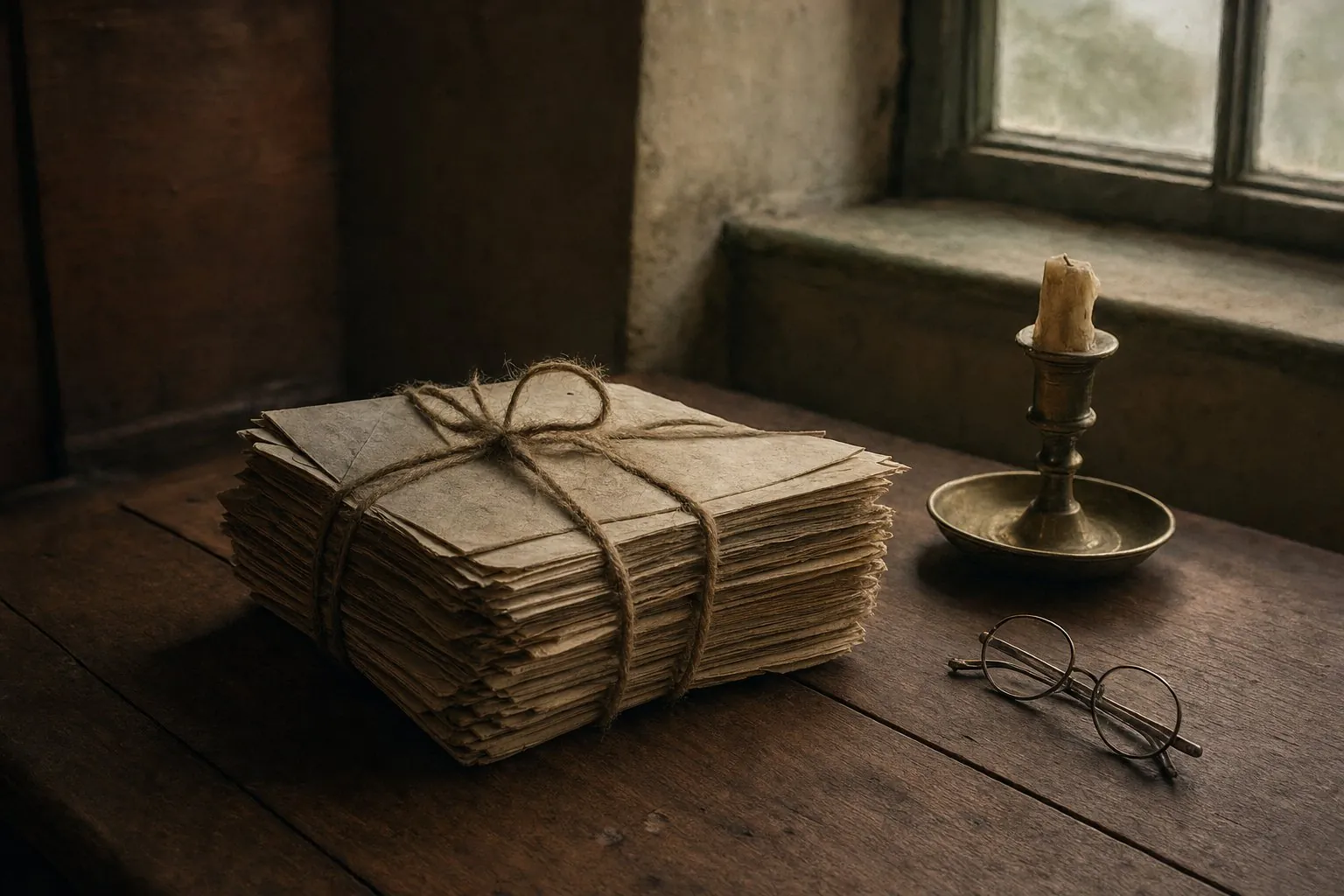
Yes, for the right reader, and no for someone who would rather open a box of things. Is an Irish letter subscription worth it? Measured against the average parent gift and against other letter-by-post services, it holds up on price, and the honest answer depends less on money than on whether your recipient actually reads for pleasure.
Here is the letter subscription review with the actual figures behind that, not the marketing version.
Is an Irish letter subscription worth it, in short
Strip the romance off for a minute and look at what is being sold. This is correspondence between two invented people in a real decade, hand-finished and posted from Ireland with a genuine Irish postmark, arriving in instalments rather than all at once. That is a specific kind of object. It is not a keepsake box, and it is not a paperback. Whether it is worth the money depends on whether that specific kind of object is the right gift for the person receiving it, which is the question this review answers plainly rather than selling past.
What the subscription actually delivers
Each envelope is hand-addressed, sealed with real wax, printed on aged paper, and posted in Ireland rather than printed and shipped from a warehouse. An international letter carried from Ireland to an overseas address costs several times what a domestic stamp costs, before a word has been researched or written, and hand-finishing takes real time that a print run skips. You are paying for something to be made slowly in Ireland and carried across an ocean, not for the paper by weight.
Full current pricing sits on the gift page, because pricing changes and this article should not go stale the day it does.
How it compares with other letter subscriptions
Are letter subscriptions worth it in general, compared with each other? It depends what you are buying. Letterjoy, a US-based history-letter subscription, currently prices weekly mailings at $49 for a two-month starter run of eight or more letters (about $6.13 a letter), $129 for six months of 26 or more letters (about $4.96 a letter), and just under $250 for a full year of 52 or more letters (about $4.79 a letter), with domestic US postage included. History By Mail, which sends replica historical documents rather than an original correspondence, charges $8.99 a month or $87.99 across a full year.
Both are well-made American products, posted within America, and both are priced lower per item than this one. The difference is not an accident. Their letters reproduce documents from many different hands and eras; this one is both halves of a single private correspondence written for one purpose, hand-finished, and posted from Ireland, which is slower, dearer, and, for a gift built around an Irish family and an Irish postmark, the actual point. We have set out how letter-subscription pricing works across the wider category if the fuller comparison is useful.
How it compares with the average gift
The other useful yardstick is not a competitor at all but the average amount people already spend on a gift for a parent. The National Retail Federation’s 2026 Mother’s Day survey put average per-person gift spending at $284.25, with jewellery, flowers, and outings among the largest categories. A subscription like this sits inside that range rather than far above it, which reframes the comparison: the question is not “letters versus a cheap present” but “letters versus what people are already paying for a nice present that gets opened once.”
Why letters carried real cost in the 1847-1857 period
Part of what a subscription like this is trading on is a decade when a letter really cost something to send. Before postal reform, the historian Susan Donovan notes that a transatlantic letter to New York cost as much as two shillings and twopence in 1812. The Anglo-American Postal Convention of 1848 cut that to one shilling for a letter under half an ounce, a rate that held from 1849 until the end of 1867, while Cunard’s steamships shortened the Liverpool-to-Boston crossing from around fourteen days in 1840 to roughly twelve days by the mid-1850s. Inland, Britain’s 1840 Penny Post had already dropped domestic postage to a flat penny, and letter volume across the network rose from 75.9 million pieces in 1839 to 410.8 million by 1853.
None of that made a letter cheap for a family with no spare shilling, but it made regular correspondence between Ireland and America possible in a way it had not been a generation earlier. The University of Galway’s Imirce database, launched in March 2024 from historian Kerby A. Miller’s collection of roughly 7,000 emigrant letters gathered over five decades, exists because so many families kept writing once that was true. As the project’s director, Breandán Mac Suibhne, has put it, letter-writing was “long the primary means of communication between Irish emigrants to North America and family and friends at home.”
What historians cannot know
The record has real gaps, and it is worth naming them rather than smoothing them over. Kerby Miller’s own scholarship on the American wake, the farewell gathering held the night before an emigrant left, draws mainly on accounts and folklore collected in the late 1800s and early 1900s, not on contemporaneous letters from the Famine years themselves. And the Imirce archive, rich as it is, is weighted toward the period after 1850: letters from the very worst famine years of 1847 to 1849, when postage, paper, and the composure to write at all were hardest to come by, survive in smaller numbers than later correspondence. What historians describe about that earliest wave of departures is reconstructed as much from later testimony as from letters posted at the time.
Who a subscription like this suits
It suits a reader, not a browser. Someone who reads for pleasure and on paper, who treats Ireland as an actual family place rather than an aesthetic, and who is at a stage in life where another object is a burden but something to look forward to is not. Part of what is being bought is the conversation after each letter arrives, which is a return no single object pays on its own.
It suits someone else less well if they rarely open post with any excitement, prefer practical gifts, or would rather unwrap something all at once. There is no shame in that. A subscription like this is a story delivered slowly, and it needs a patient reader on the other end.
So, is an Irish letter subscription worth it
The clearest way to decide is to stop weighing the idea of it and look at the actual thing. Read the opening letters in full, free, and judge the paper, the hand, and the history against your own recipient rather than against a review. Whether a story subscription is worth the money, in the end, is answered by whether that first letter makes you want the next one.
Sources and further reading
- Susan Donovan, “How the Post Office and Postal Products Shaped Mid-Nineteenth-Century Letter-Writing,” BRANCH: Britain, Representation and Nineteenth-Century History
- Kerby A. Miller, “American Wakes,” Encyclopedia of Irish History and Culture, via Encyclopedia.com
- University of Galway, “University of Galway Launches Imirce Database of Irish-American Emigrant Letters,” press release, 8 March 2024
- National Retail Federation, “Mother’s Day Spending Expected to Hit Record $38 Billion,” 2026 survey press release
- Letterjoy pricing page, letterjoy.co, consulted August 2026
- History By Mail subscription page, historybymail.com, consulted August 2026