Emigration History
The Irish Bridget: The Women Who Built Irish America
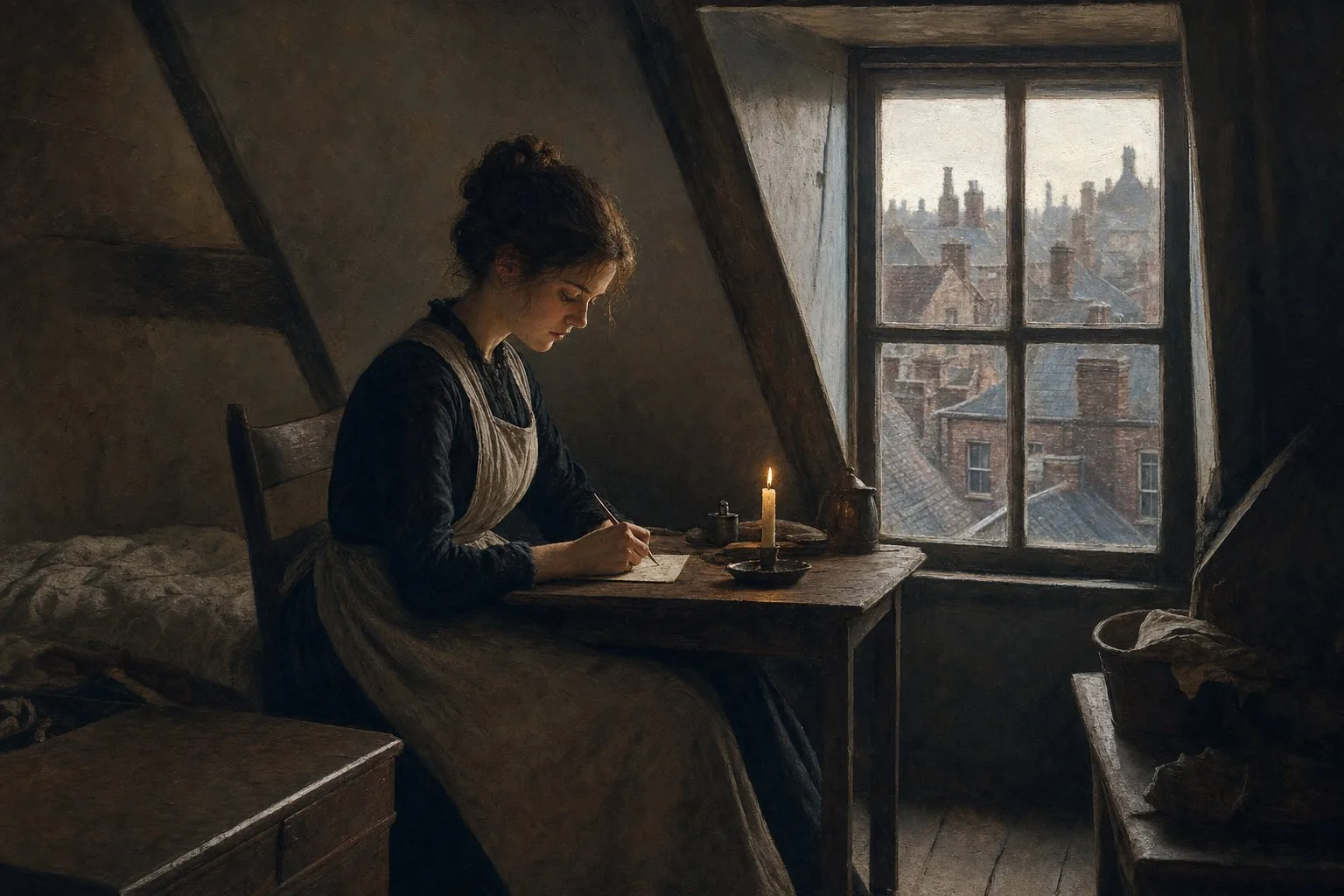
In an American household in the 1860s, the new arrival off the boat did not need to give her name at the door. She was handed an apron and answered to Bridget anyway, whether she had been born Mary, Ellen, Catherine, or Bridget herself. The name was not a compliment. It was closer to a job title, and the family hiring her had usually settled on what to call the position before they had even met the woman filling it.
That habit is the whole subject here. Between the Famine and the First World War, more Irish women worked as domestic servants in American cities than in any other job open to them. The historian Margaret Lynch-Brennan gave the pattern its lasting name in her book The Irish Bridget, which traces the joke, the generic servant everyone thought they knew, and underneath it the actual women who ran a great many American households and quietly financed a great many Irish ones.
Why was every Irish maid called Bridget?
“Bridget” did the same work “Paddy” did for Irish men: a real, common Irish name turned into shorthand for an entire category of person. Household manuals and etiquette columns of the period addressed “your Bridget” the way they addressed the coal scuttle or the icebox, a fixture of the kitchen rather than a woman with a history of her own. Cartoons in the humour press ran the same joke for decades, the servant who broke the china, misunderstood a plain instruction, or answered back with more opinion than her station allowed.
The name erased the individual standing in the kitchen. It also recorded something true without meaning to. So many Irish women had come to define the job that a single Irish first name could stand in, in print, for an entire American workforce. No other immigrant group left that particular mark on the language.
Why did Irish women cross the Atlantic alone?
Here Irish emigration breaks from almost every other European pattern of the century. Italian, Greek, and Slavic emigration to America in this period was overwhelmingly male, young men who worked, saved, and either went home again or sent for a bride once they were established. Irish emigration was not shaped that way. Roughly as many women left Ireland as men, and Irish women characteristically travelled single, unmarried, and unaccompanied by a father, brother, or husband, which almost no other national group did at the same scale.
Part of the answer is Irish inheritance. A farm passed to one child, usually the eldest son, and every other child needed a plan for a life that did not include that farm. A daughter with no dowry coming and no match likely at home had exactly as much reason to leave as a younger son. Part of the answer is that a job was often already waiting. A sister or an aunt already in service in Boston or New York could write home naming an actual household that needed a girl, which turned emigration from a leap into a known next step.
What was domestic service actually like?
Domestic service meant living inside someone else’s house. Up before the family to lay fires and haul water and coal, meals cooked on a range that had to be blacked and cleaned as well as fired, laundry done by hand on its own fixed day each week, children minded on top of all the rest. A servant’s room was usually the smallest and coldest in the house, off the kitchen or up in the attic, and her free time was whatever the household’s rhythm left over: an afternoon, an evening, rarely a full day.
She was also, very often, the only Irish person and the only Catholic under that roof, watched for her manners, her religion, and her honesty in a way no other member of the household was watched. The isolation was real. So was the fact that she was fed, housed, and paid on a fixed schedule, which was not nothing in a labour market that offered immigrant women very few better alternatives.
The unglamorous arithmetic that made it a smart choice
Domestic service ranked near the bottom of respectable work in the popular imagination and near the top of it in practical terms, and the difference was arithmetic. A servant’s board and lodging came with the position, so a wage that looked modest on paper was, in practice, close to pure saving. A factory hand or a needle worker earned her pay in cash and then spent a large share of it on rent and food before she ever got to keep what was left.
Irish women banked the difference, often literally. The Emigrant Savings Bank, founded in New York in 1850 by the Irish Emigrant Society specifically to serve the new arrivals pouring off the Famine ships, took in deposits from thousands of Irish domestic servants over the following decades. Its ledgers survive, and they record exactly the kind of woman this history is about: a name, a wage, and the small, steady sum set aside from it, month after month.
How a servant’s wages built Irish America
Those savings moved in two directions at once. Some of it went home, into a parish that depended on it: a debt cleared, a rent paid, a sibling’s passage bought outright and posted back to Ireland as a ticket rather than a promise. Some of it stayed in America and moved forward, into the next member of the family to arrive, who very often had her own fare paid by a sister already working and saving. This is the chain that pulled a family across the Atlantic one prepaid ticket at a time, and a domestic servant’s wage was very often the engine that ran it.
It did not stop at the ticket. A servant’s savings, spent across a decade or across a generation, could put a younger sister through the schooling that let her become a teacher rather than another maid, or help capitalise a brother’s small shop. The generation of Irish American women who moved into classrooms, hospital wards, and offices by the early twentieth century were standing, in a great many cases, on wages their mothers and aunts had earned scrubbing someone else’s floor.
The joke in public, the trust in private
The contradiction at the centre of this history is worth stating plainly. In print, “Bridget” was mocked: clumsy, superstitious, argumentative, a stock figure good for a cheap laugh in a magazine cartoon. The same want ad columns that carried the notice “No Irish Need Apply” were very often advertising for domestic help, the exact job the notice was refusing to give an Irish woman.
And yet the household that printed or read that joke handed its Irish servant the keys to its front door, the daily care of its children, and the full running of its kitchen. That is not a small trust. It is close to total trust, extended by people who would not have said, if asked outright, that they trusted the Irish at all. The distance between the stereotype and the daily reality is the real story here, and it is a story about women managing that contradiction competently for decades, not women defeated by it.
What the record actually shows
Most of what survives of these women’s lives comes from the traces the work itself left behind: wage books, parish registers, emigrant aid society files, savings bank deposit slips, and letters that carried money home as often as news. None of it was written for an audience, and none of it was written to be read as history.
It adds up anyway to a plain fact the “Bridget” joke never had room for. An enormous share of the money that built Irish America, the tickets, the remittances, the next generation’s schooling, passed first through the hands of a woman that nobody in the house she worked in thought was worth naming correctly.