
THE JOURNAL · EMIGRANT LETTERS
Irish Emigrant Letters: The Post That Held Families Together
For most Irish families in the 1840s and 1850s, a letter was the only thread left once someone sailed. There was no telegraph across the Atlantic until 1858, and no photograph most people could afford. What came back from America came in an envelope, and the whole household waited for it.
Those letters were not private in the way a letter is now. Many emigrants could not write, so a priest, a schoolmaster or a neighbour with a good hand wrote for them, and many families at home could not read, so the letter was read aloud by the fire to everyone who called in. Historians call them "American letters", and they carried more than news: prepaid passage tickets, a few dollars folded inside, instructions for the next one to come out.
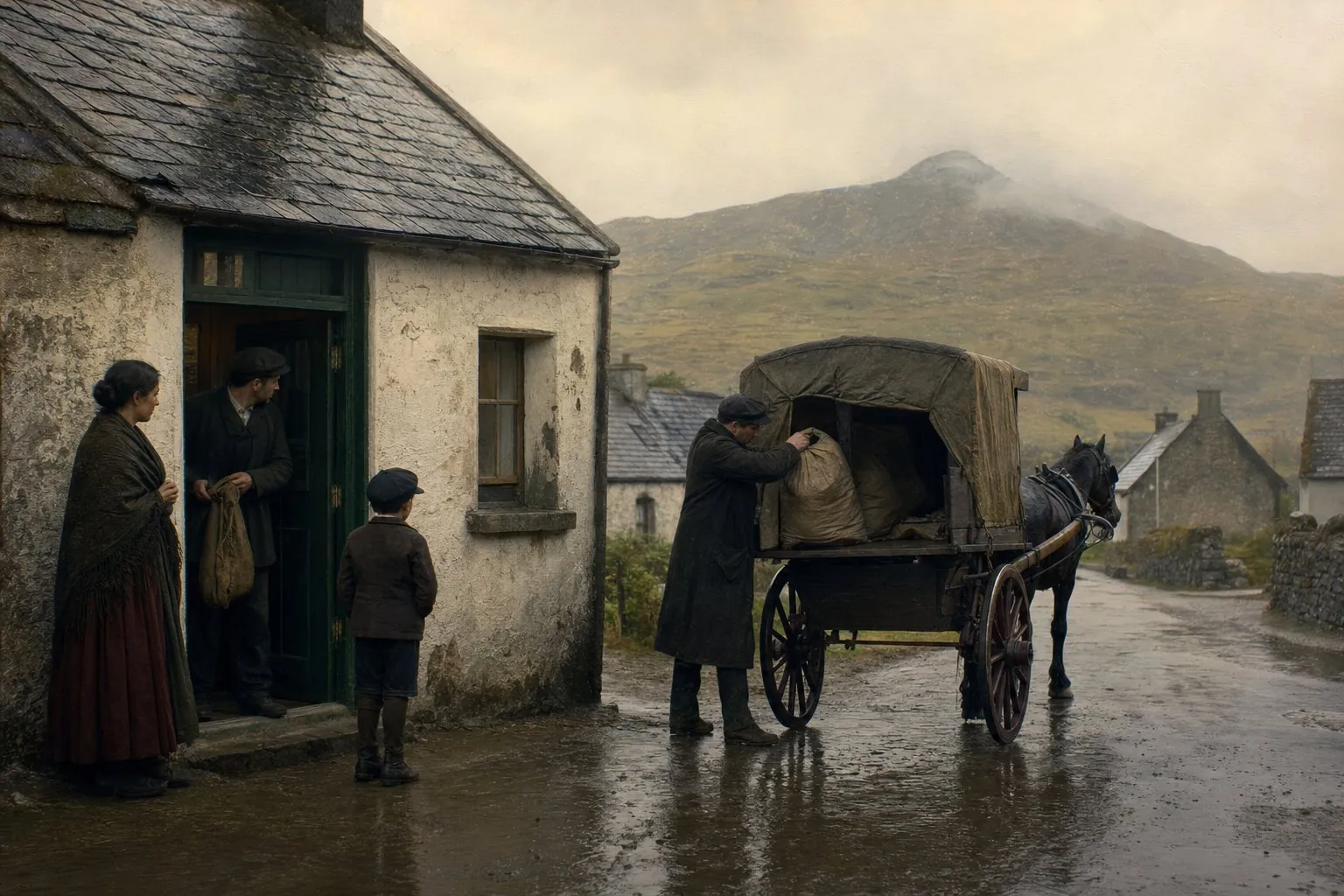
Getting a letter from north Mayo to Boston meant the road to the nearest post town, the mail coach, the crossing to Britain and a transatlantic packet. Postage was dear and often paid by the person receiving it. Some letters never arrived, and some families stopped hearing altogether, which is its own history.
The entries below cover how the letters were made and carried, who wrote them, what they cost, how historians read them as evidence, and where the real ones can be read today in Irish and American archives.
In this subject
Dictated letters: who wrote letters for illiterate Irish emigrants
Who wrote letters for illiterate Irish emigrants: family scribes, priests, and schoolmasters, and what Ireland's 1841 census reveals about literacy.
How historians use emigrant letters as evidence
How historians use emigrant letters as evidence, from Kerby Miller's archive to the survivorship bias built into what got kept.
How transatlantic postage rates worked in the 1850s
Transatlantic postage rates in the 1850s: the 1848 treaty that fixed the price, prepaid versus unpaid mail, and the packet contracts that carried it.
Photography and Irish emigrants in the 1850s
How photography reached Irish emigrants in the 1850s: daguerreotype and ambrotype costs, durable tintypes, and what a likeness cost in Boston and Dublin.
How to read 19th century handwriting from Ireland
A guide to reading 19th century Irish handwriting: the scripts, letter forms and abbreviations found in parish registers, censuses and letters home.
Irish emigrant letters read aloud: why families gathered
Irish emigrant letters read aloud filled Irish kitchens with news from America. Here is why nineteenth-century families never read a letter alone.
Why Irish emigrants stopped writing home
Why Irish emigrants stopped writing home: cost, lost addresses, shame, and letters that vanished before they ever arrived, 1847 to 1857.
Women's Irish emigrant letters in the archival record
Women's Irish emigrant letters were often dictated, sent home with wages, and later collected in archives such as Fitzpatrick's Oceans of Consolation.
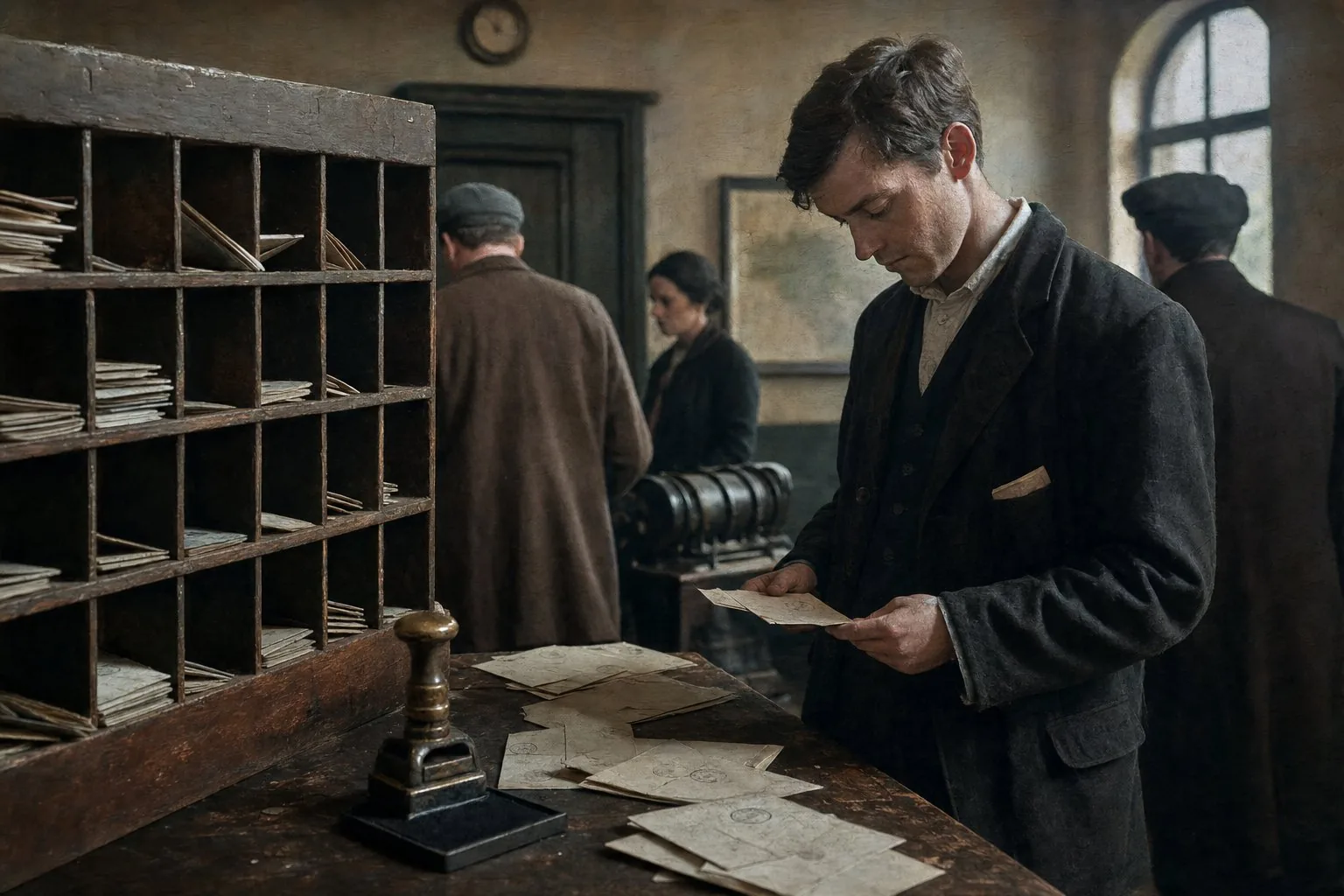
Irish Postmarks and Stamps, 1847-1946
Ireland used British stamps until 1922. The honest history of Irish postmarks, mail coaches, the Penny Post, and a genuine period letter.
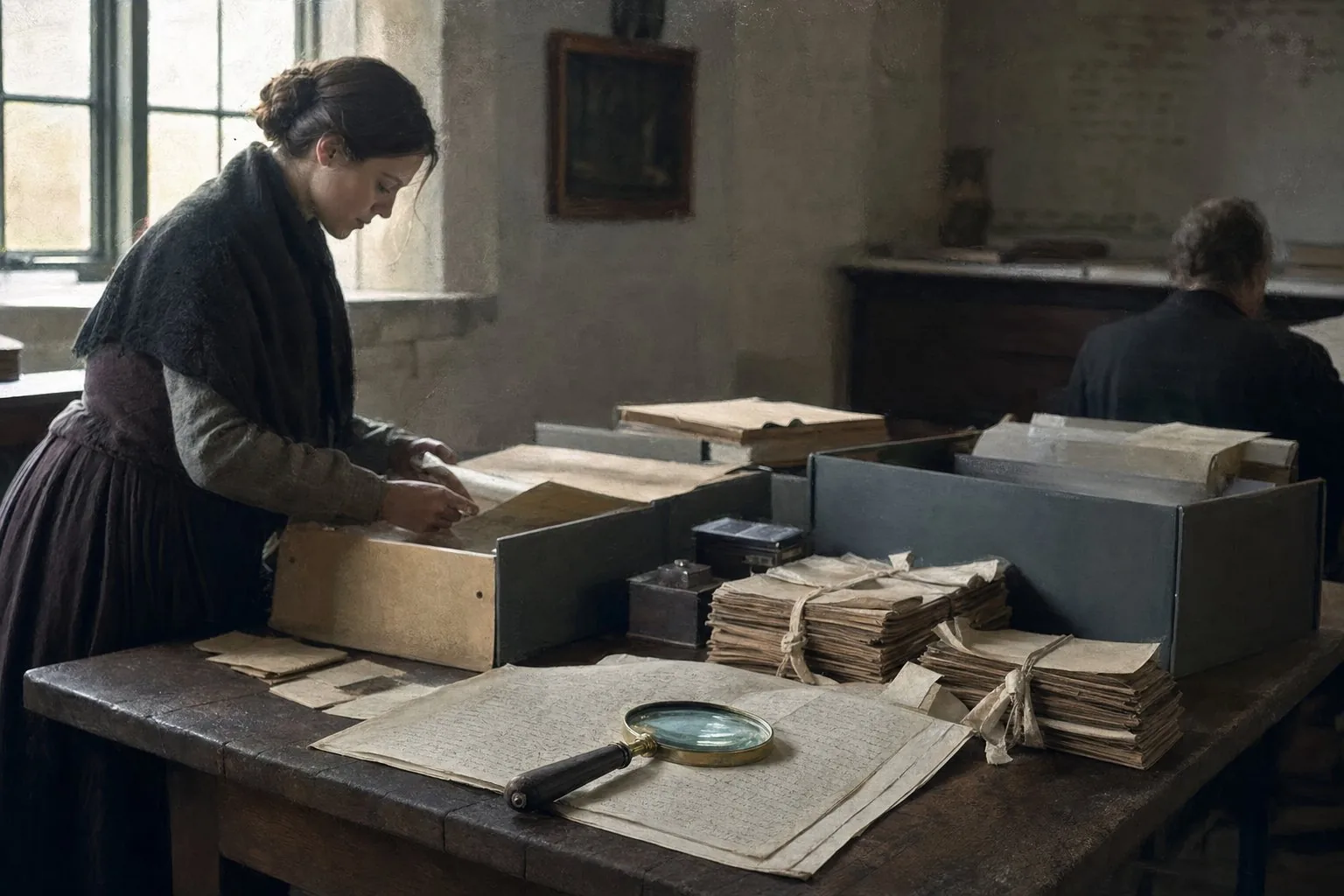
The Real Emigrant Letters That Survive Today
The real Irish emigrant letters archive: where letters survive, the historians who study them, and how our O'Donnell family was researched from it.
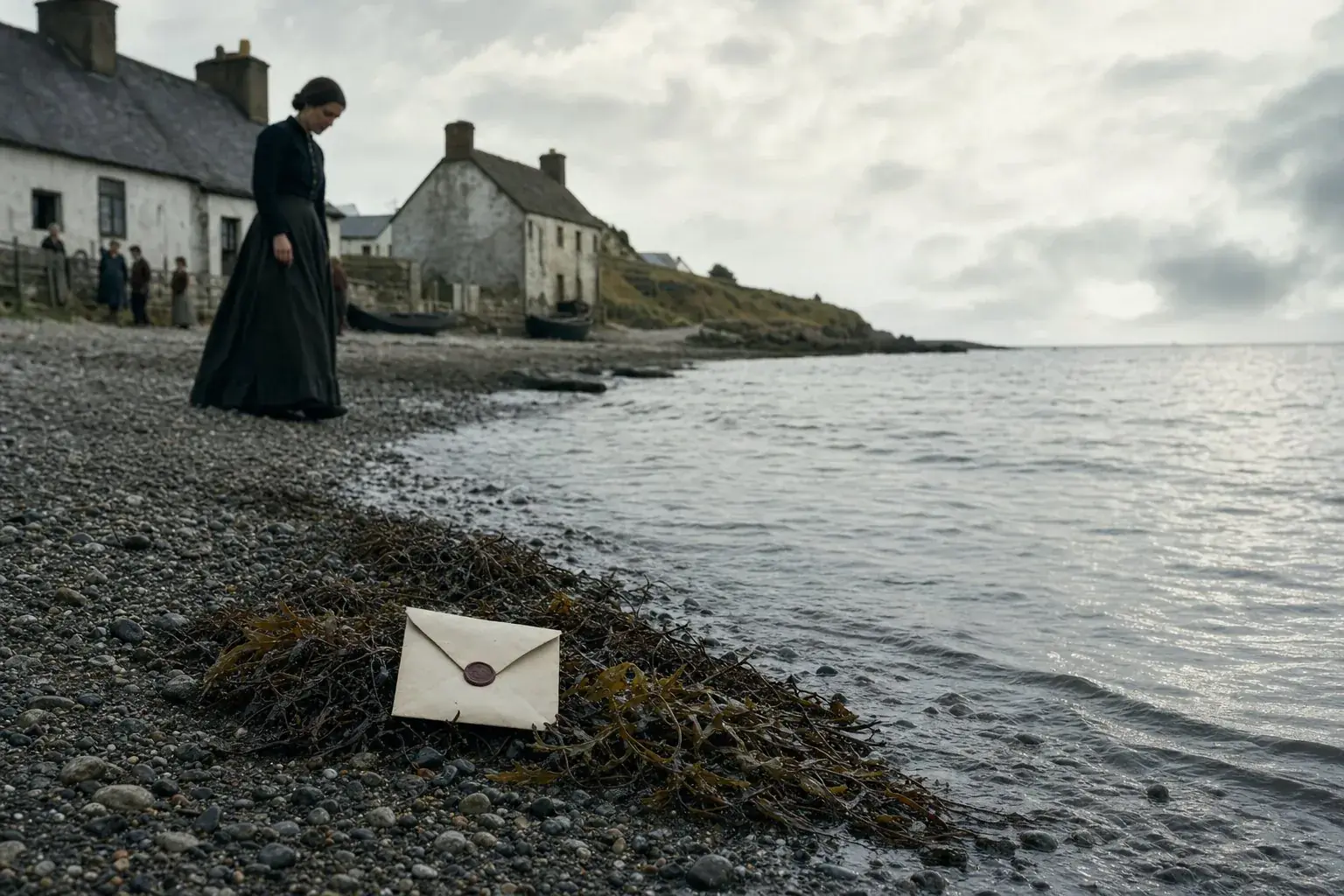
Letters That Never Arrived
Shipwrecks, wartime censorship and plain bad luck: the real history of why so many nineteenth-century letters between Ireland and Boston never arrived.
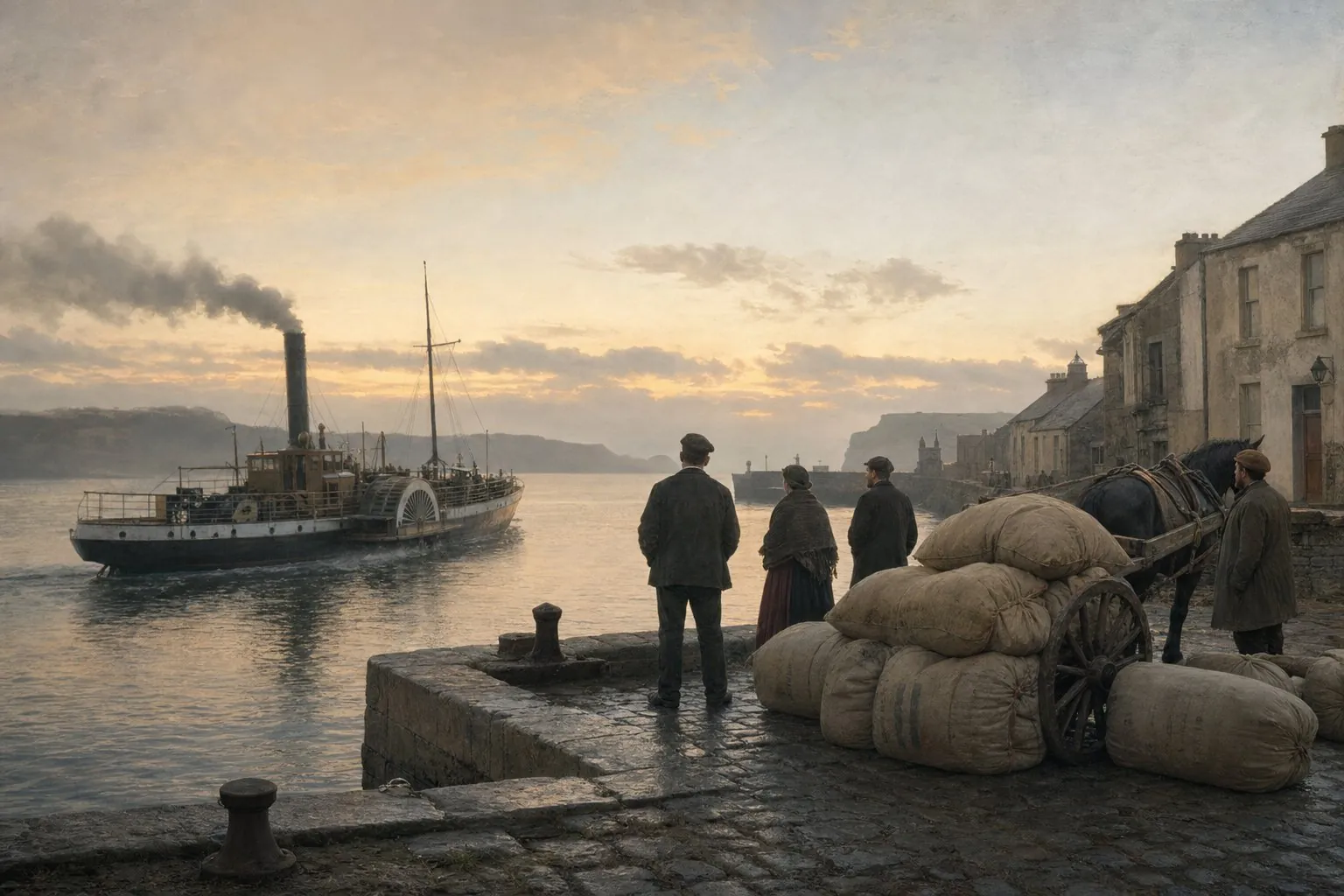
American letters Irish emigrants: the envelope that held families together
How Irish emigrants and their families used American letters to send money, news and passage tickets across the Atlantic between 1847 and 1857.

Emigrant remittances Ireland history and prepaid passage tickets
How Irish emigrants in America funded prepaid passage tickets and sent money home, and what the surviving bank and government record actually shows.
The Real Irish Postmark: Why Where a Letter Is Posted Matters
Every letter is posted from Ireland with a genuine Irish postmark. Why that stamp of place is the heart of a letter from home.
Begin the story
$24.95 a month, or $249 once and keep $50. Your first envelope is posted from Ireland within five working days of your order.
Choose your plan Give it as a gift
One complete story, beginning to end. 30 day money back guarantee.