
THE JOURNAL · THE GREAT FAMINE
The Great Famine and the Emigration It Forced, 1845-1855
Potato blight reached Ireland in the autumn of 1845. By 1847, the year Irish people still call Black '47, the failure of the crop, the collapse of relief and a hard winter had turned hunger into mass death across the west. Roughly a million people died in the Famine years and well over a million left, and the census of 1851 counted more than a million and a half fewer people than the one taken a decade earlier.
Mayo was among the counties hit hardest. Its people depended on the potato more than almost anywhere, its landholdings were small, and its workhouses in Ballina, Castlebar and Westport were overwhelmed. The relief schemes of the time, from the public works and famine roads to the soup kitchens of 1847 and the later workhouse system, each have their own history, and each shaped who could stay and who had to go.
Emigration in these years was rarely one decision. A family raised passage money for one son or daughter, who was expected to send for the next. Some landlords paid tenants to leave; some workhouses sent inmates abroad. Many went first to Liverpool or Glasgow, and many never went further. Before any of them left, there was often an American wake, the night of farewell held as if for the dead.
We treat this history as a bereavement, not a backdrop. The entries below are written from the record: the census, the relief papers, the workhouse minutes and the letters themselves.
In this subject
Assisted emigration: workhouse and landlord passage
Assisted emigration landlord schemes and Poor Law unions moved Irish tenants and paupers off the land after 1847, with real numbers from Mayo's workhouses.
Ballina workhouse famine: Black '47 in Mayo
What the Ballina workhouse recorded in Black '47: overcrowding, debt and 1,138 deaths, and what it shows about north Mayo's worst famine year.
What the 1851 census Irish emigration record measured
The 1851 census of Ireland recorded a population fall of 1.6 million in a decade. Here is what the count actually measured, county by county.
Famine relief soup kitchens Ireland: the 1847 Soup Kitchen Act
How the Temporary Relief Act of 1847 fed millions through Ireland's soup kitchens, from a Dublin model kitchen to Quaker relief in Mayo.
How a famine family raised the passage money
How Irish families raised passage money during the famine: selling stock, gale day rent, tenant right, and landlord or workhouse schemes.
Irish migration to Britain famine years: the other emigration
Irish migration to Britain during the famine sent hundreds of thousands to Liverpool, Glasgow, and English harvest fields, not just across the Atlantic.
Why the potato blight returned in 1848
Why the potato blight returned in 1848 after a hopeful 1847: the fungus, the Gregory Clause evictions, and relief funds run dry.
Relief works and the famine roads of Mayo
How Ireland's Board of Works turned famine relief into road building across Mayo, and what the wage books and Quaker reports still show.
The Distress Papers: famine Ireland in its own words
What the Distress Papers are: the Relief Commission letters and petitions at the National Archives of Ireland, and what they do and do not tell us.
Women, land and survival in famine Ireland
How women held, lost and fought for land during the Great Famine, from Devon Commission testimony to the widows the Poor Law almost forgot.
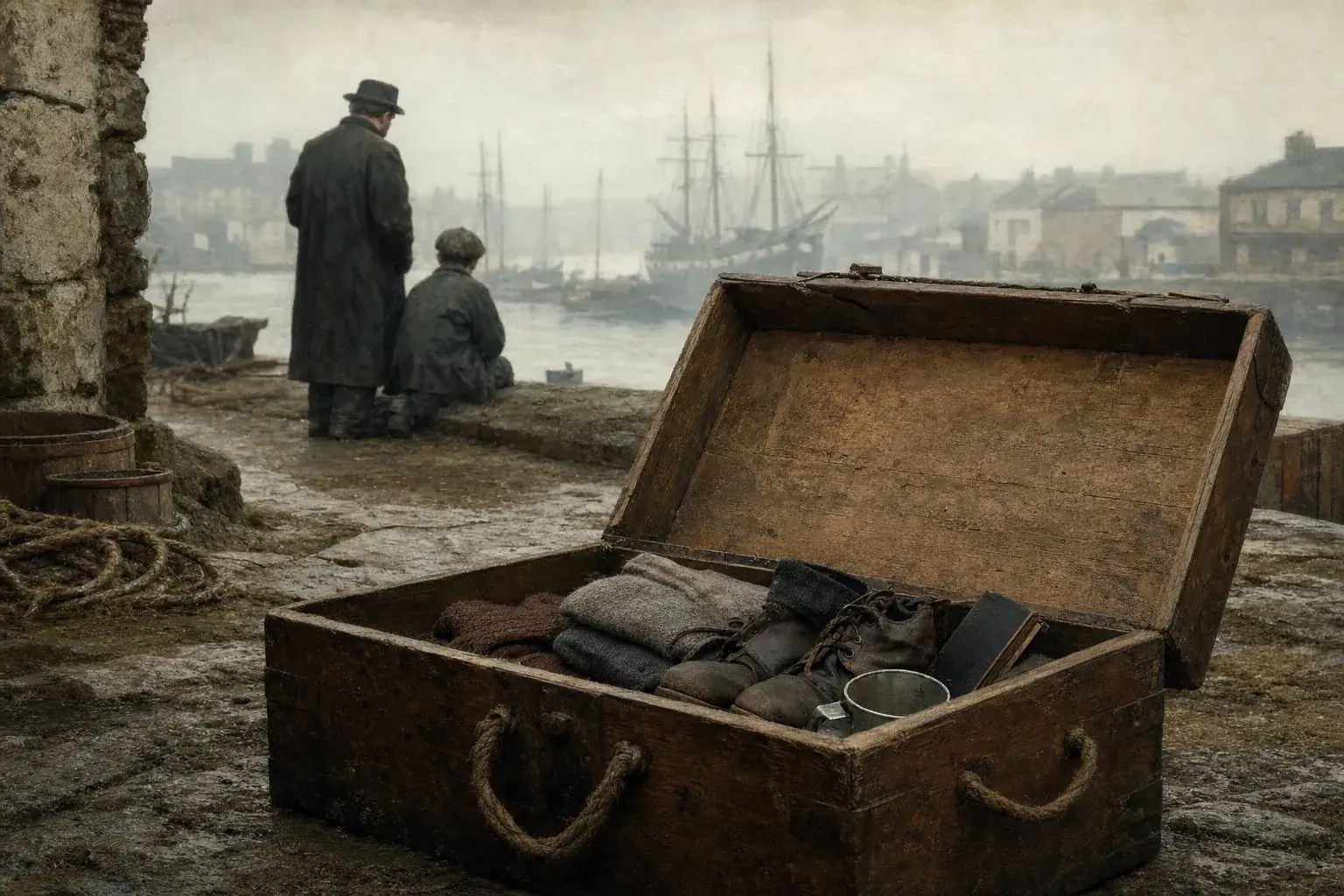
What the Crossing Actually Cost
The fare, the food, the weeks at sea. What an Atlantic steerage crossing actually cost, and what a passenger carried to survive it.
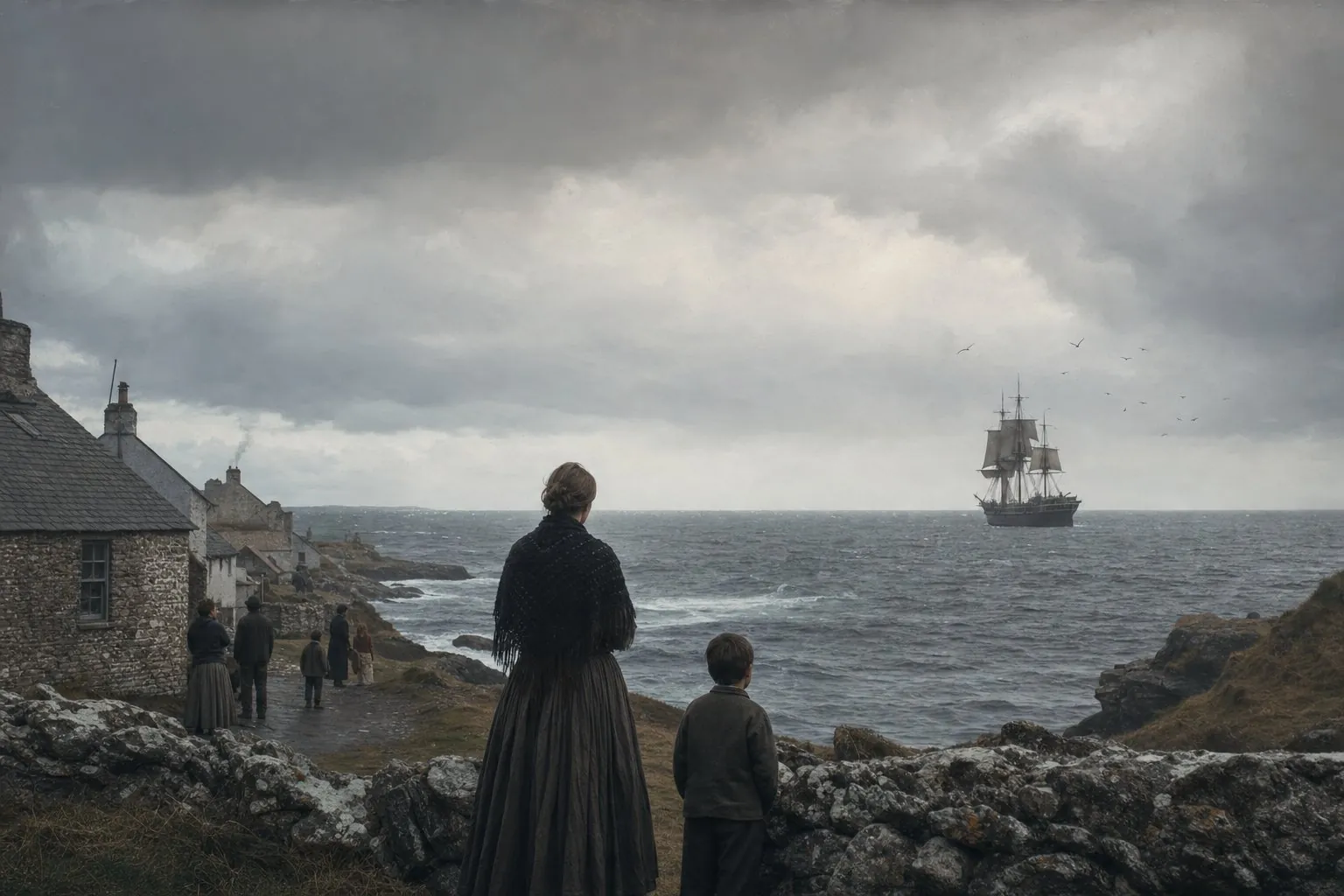
The Coffin Ships: Crossing the Atlantic in Black '47
What the famine-era Atlantic crossing was really like, and why the ships earned their name. Handled with the gravity it is owed.
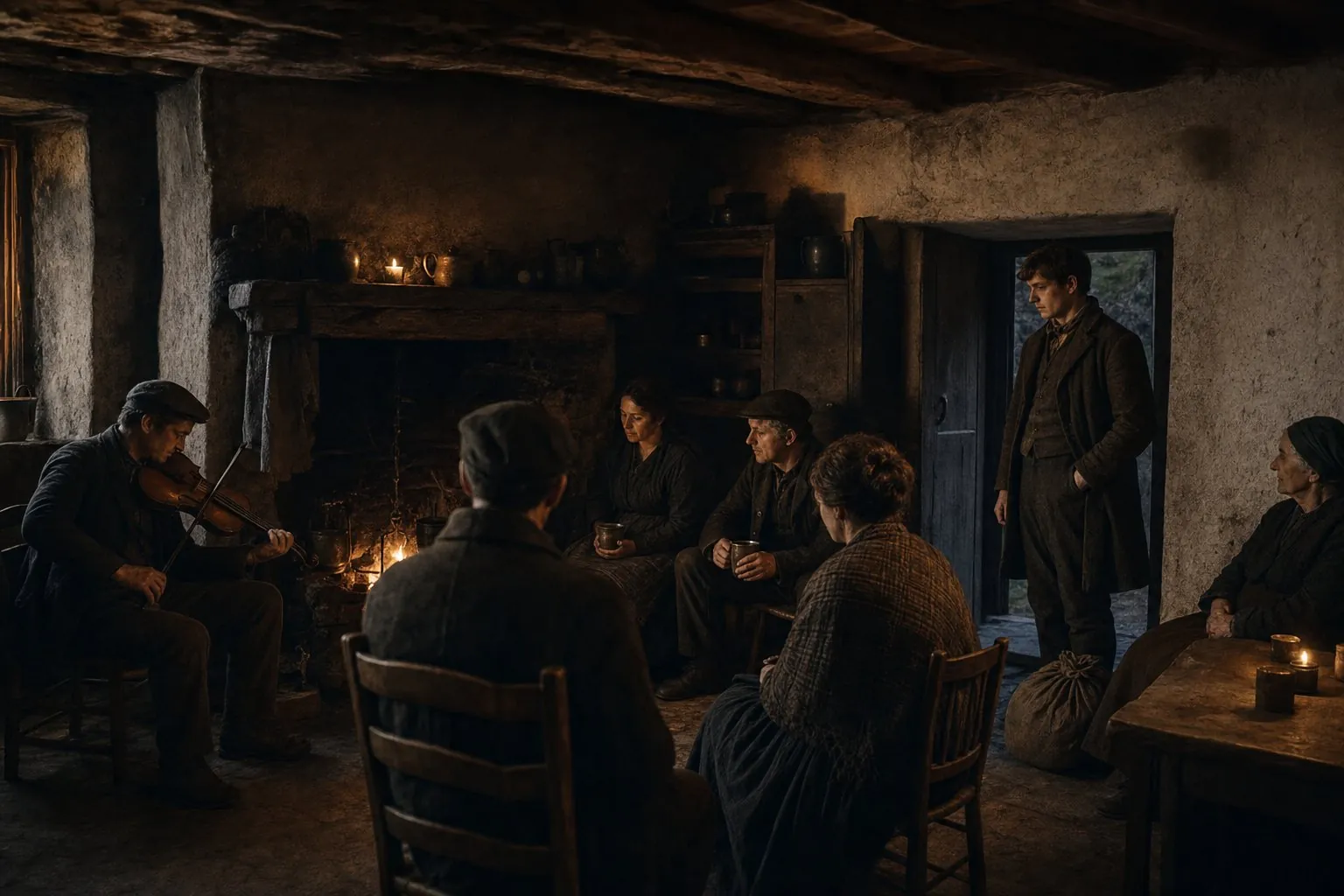
What Was an American Wake? The Irish Farewell
What an American wake was: the all-night send-off rural Ireland held for emigrants it never expected to see again, keening included.
Begin the story
$24.95 a month, or $249 once and keep $50. Your first envelope is posted from Ireland within five working days of your order.
Choose your plan Give it as a gift
One complete story, beginning to end. 30 day money back guarantee.