THE JOURNAL · COUNTY MAYO
North Mayo in the 1840s: Land, Marriage and Leaving
Ballycastle sits on the north Mayo coast, between Downpatrick Head and the bogland that runs west towards Belmullet. In the 1840s it was a small market village surrounded by townlands of tenant farmers, cottiers and labourers, most of them Irish speakers, almost all of them living on the potato.
Land decided everything. A farm went to one son, usually the eldest, and a daughter's future depended on a match made between families, with land and a dowry weighed against each other. A second son with no land coming to him had few choices: labour for others, enlist, or go. That is the situation Patrick O'Donnell starts from, and it was the situation of thousands of young men in the county.
The entries below describe that world as the record shows it: what a townland was, what the inside of a north Mayo cabin looked like, how dependent the county was on one crop, how far the Irish language and literacy reached, and how matches were made. Later entries follow Mayo into the Land War of 1879, which began in the county and gave the English language the word boycott.
If you are tracing a family from the area, the genealogy guide lists the records that survive for north Mayo and how to use them.
In this subject
Ballycastle, County Mayo in the 1840s
Ballycastle, County Mayo in the 1840s: fishing and kelp economy, the parishes of Kilbride and Doonfeeny, and how the famine reshaped Tirawley barony.
Genealogy sources for north Mayo families
Where north Mayo genealogy sources sit: Killala diocesan registers, Ballina Union workhouse records, Griffith's Valuation for Tirawley, and their gaps.
A rural Irish house in the 1840s: daily life inside a north Mayo cabin
What a rural Irish house looked like in the 1840s: the one-room cabin, the byre shared with cattle, and what a Mayo family actually ate.
Irish-speaking Mayo and the question of literacy
Irish speaking Mayo literacy 1840s: what the 1851 census, hedge schools and national schools reveal about a county caught between two languages.
Made matches: land, marriage and second sons in Ireland
Made matches Ireland marriage: how post-Famine inheritance rules tied a wedding to a farm's fate and left younger sons with little choice but to leave.
Farming and potato dependence in pre-famine Mayo
Potato dependence in pre-famine Ireland peaked in Mayo, where subdivided holdings, conacre lettings, and the lumper variety left no margin for failure.
What is a townland in Ireland, and why it still matters
What is a townland in Ireland? A working guide to its smallest land division, how it differs from a parish, and why Griffith's Valuation still runs on it.
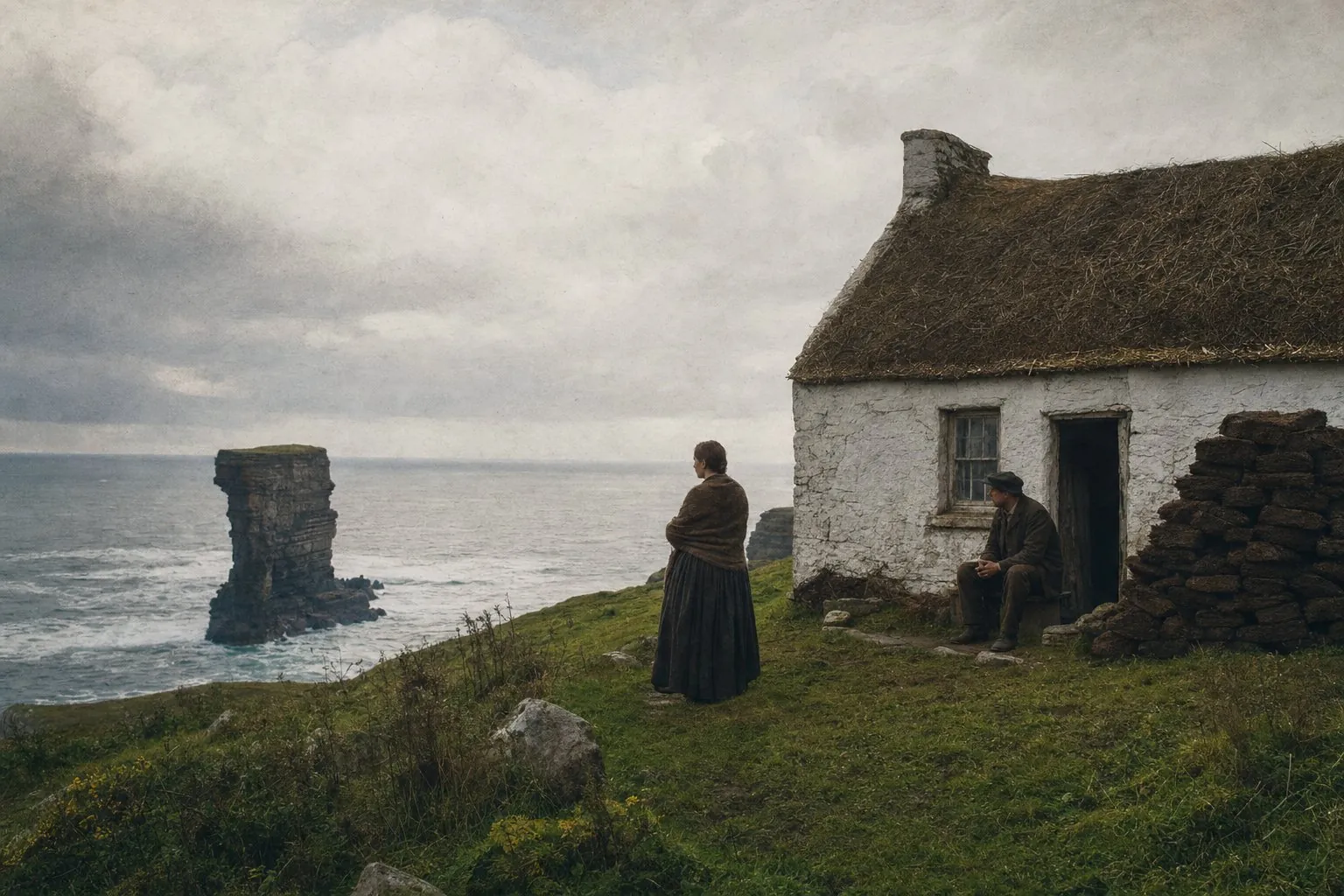
County Mayo emigration history: the Great Emigration
County Mayo's population fell by close to a third between 1841 and 1851. The emigration history behind that collapse, and where the county's people went.
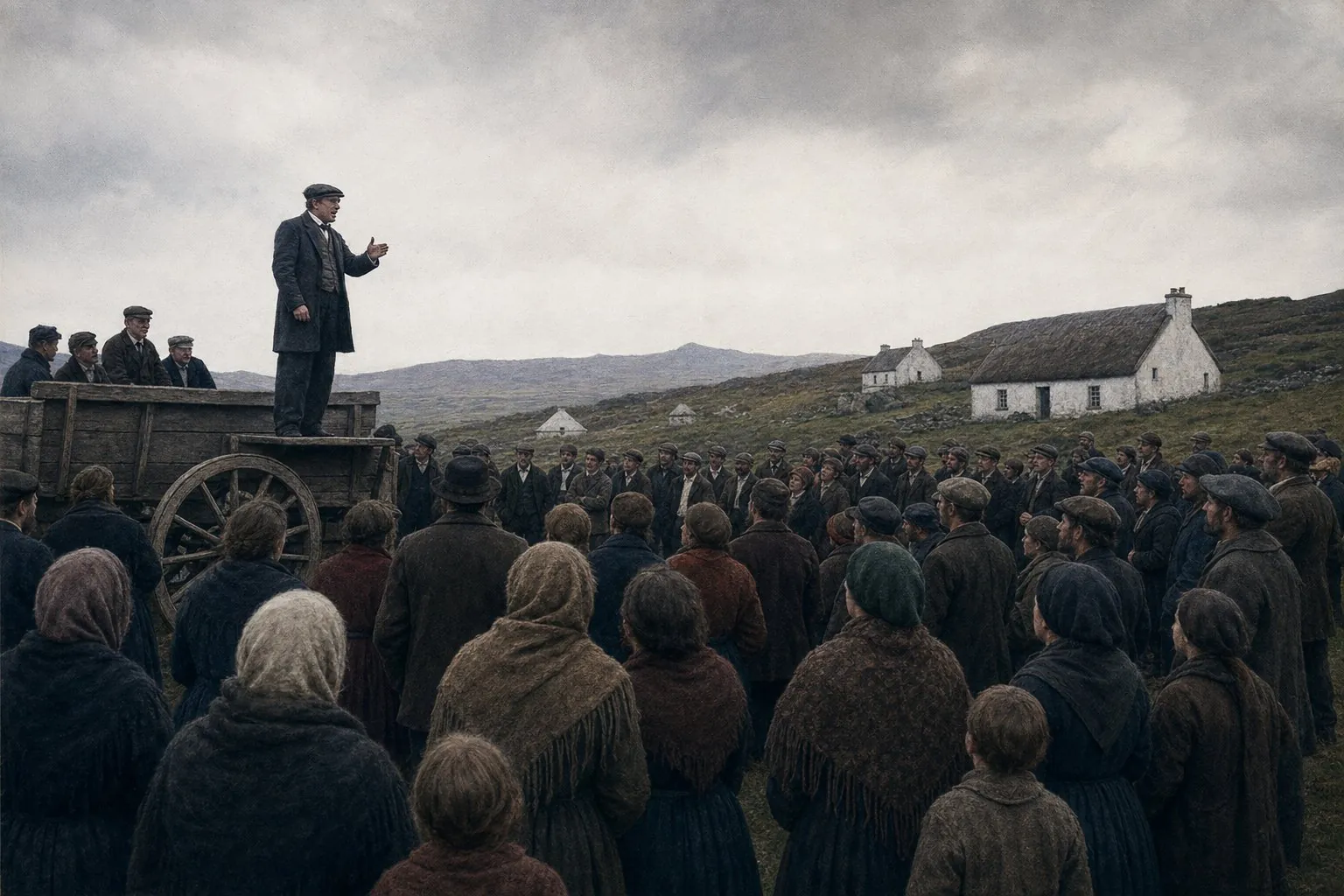
The Land War: How Mayo Started the Fight for the Land
The Land League began in County Mayo in 1879 and changed who owned Ireland. Michael Davitt, Irishtown and the fight for tenant rights.
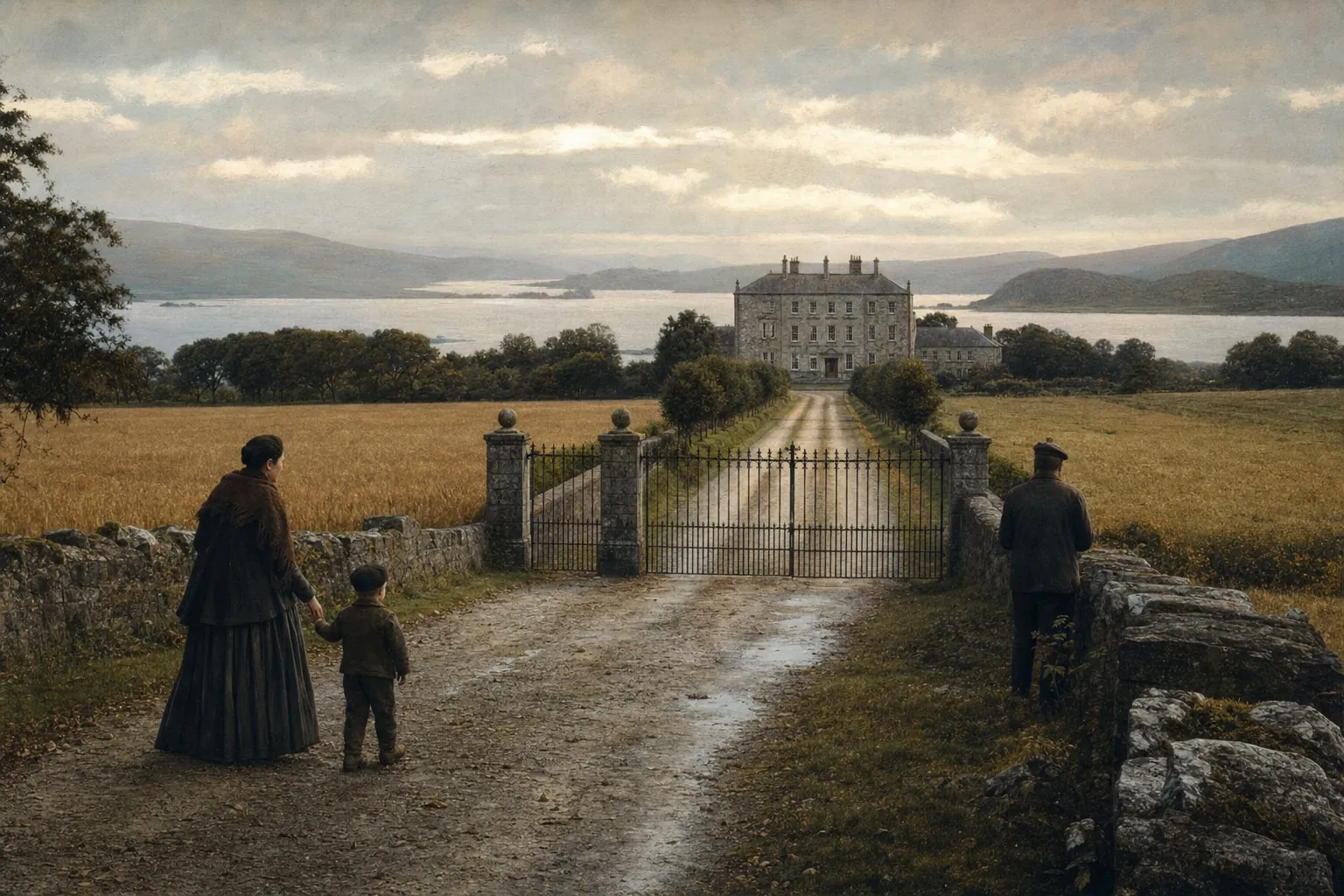
Where the Word "Boycott" Comes From: Lough Mask, Mayo
One County Mayo land agent gave his name to the English language in 1880. The true story of Captain Boycott and Lough Mask.
Begin the story
$24.95 a month, or $249 once and keep $50. Your first envelope is posted from Ireland within five working days of your order.
Choose your plan Give it as a gift
One complete story, beginning to end. 30 day money back guarantee.